
Bangladesh Relations – Conrad Sangma Highlights Northeast Growth and Regional Stability
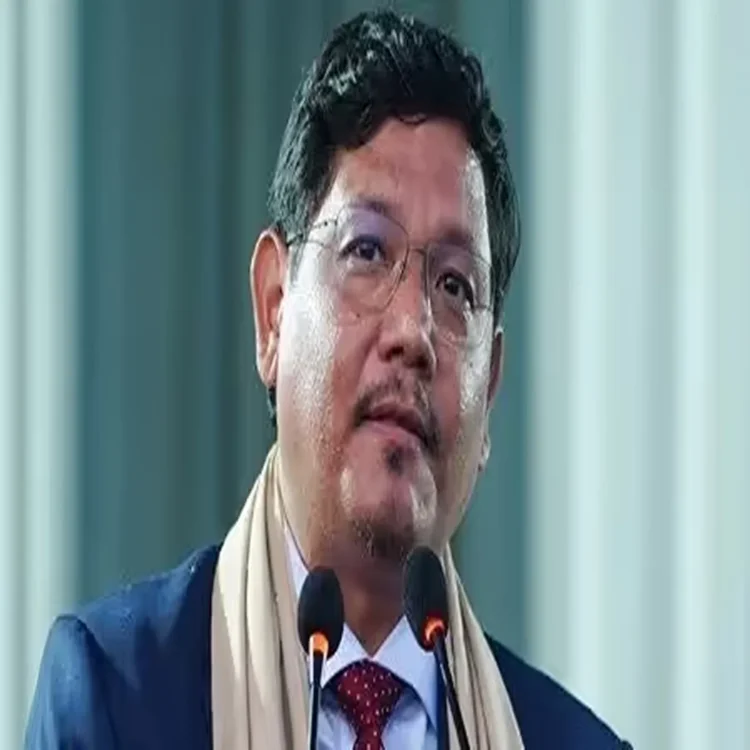
Bangladesh Relations – Meghalaya Chief Minister Conrad K Sangma has underlined the importance of stronger cooperation between India and Bangladesh, stating that long-term regional growth depends on better connectivity, trade, and peaceful relations among neighbouring countries. He also stressed that restoring peace in Manipur remains essential for sustaining development across the Northeast.
Focus on Region-Specific Connectivity Policies
Speaking about India’s long-standing “Look East” approach, Sangma rejected the view that the policy has failed to deliver results. According to him, progress should not be measured only through official announcements or paperwork, as efforts to improve ties with neighbouring countries are still ongoing.
He suggested that states in the Northeast should adopt customised regional engagement strategies based on their geographical positions. Meghalaya, which shares proximity with Bangladesh, could benefit from what he described as an “Act South” approach. Similarly, he said states bordering Myanmar should focus on stronger eastern partnerships, while Arunachal Pradesh could strengthen cooperation towards Bhutan.
Sangma recalled his visits to Bangladesh shortly after taking office in 2018, where he met entrepreneurs, farmers, and youth groups to explore economic opportunities. He pointed to the reopening of old trade routes and better transport connectivity as practical steps that could improve economic activity in border regions.
Trade Potential Between India and Bangladesh
The Meghalaya Chief Minister acknowledged that relations between India and Bangladesh are currently passing through a difficult phase, but he expressed confidence that both countries would eventually work together for mutual growth.
He said the long-term interests of both nations are closely connected and highlighted the large economic potential that exists through expanded trade and smoother cross-border movement. Sangma also noted that reopening trade corridors could significantly improve local economies in border areas and encourage commercial cooperation.
At the same time, he defended India’s right to strengthen border security measures, saying national safety remains a priority for every country. According to him, such measures should not be interpreted as a barrier to future cooperation or people-to-people engagement.
Progress on Meghalaya-Assam Border Discussions
Addressing the long-pending border issue between Meghalaya and Assam, Sangma said that meaningful progress has already been achieved. He explained that out of the twelve disputed locations identified in earlier reports, six areas have already been resolved.
He added that the Survey of India is currently working on the official demarcation process for those settled regions. Discussions on the remaining six areas are expected to continue, although he admitted that some of them remain highly complicated.
Sangma said his government intends to resume talks with the Assam administration in an effort to reach mutually acceptable solutions in the unresolved sectors.
Concerns Over Violence in Manipur
The Chief Minister also spoke about the continuing instability in Manipur and admitted that the situation remains one of the biggest challenges for the Northeast.
He acknowledged that violence and social tensions have slowed the region’s ability to realise its full economic potential. Sangma said he has personally travelled across Manipur to understand the situation better and described the trust deficit between communities as a serious concern.
According to him, restoring peace is necessary before development projects can fully move forward. He noted that ordinary citizens are increasingly tired of unrest and want stability, growth, and normal life to return.
Sangma stated that the central government has continued outreach efforts and is taking several measures to reduce tensions. He also confirmed that discussions were held before President’s Rule was imposed in the state.
Changing Investor Confidence in the Northeast
Speaking about the broader challenges facing the Northeast, Sangma said that mindset and lack of confidence had historically slowed progress in the region. However, he believes perceptions are now changing due to growing infrastructure investments and economic projects.
He referred to major developments such as the establishment of a large semiconductor facility in Assam, expansion of road infrastructure, and the construction of a major football stadium in Meghalaya as examples of rising confidence in the region’s future.
According to Sangma, investors, government officials, and local communities are showing stronger belief in the Northeast’s development potential than ever before.