
Aviation – DGCA Acts After Delhi Airport Aircraft Collision Incident
Aviation – India’s aviation regulator has initiated strict action following a recent ground collision between two commercial aircraft at Delhi’s Indira Gandhi International Airport, raising fresh concerns about operational safety on busy airport surfaces.
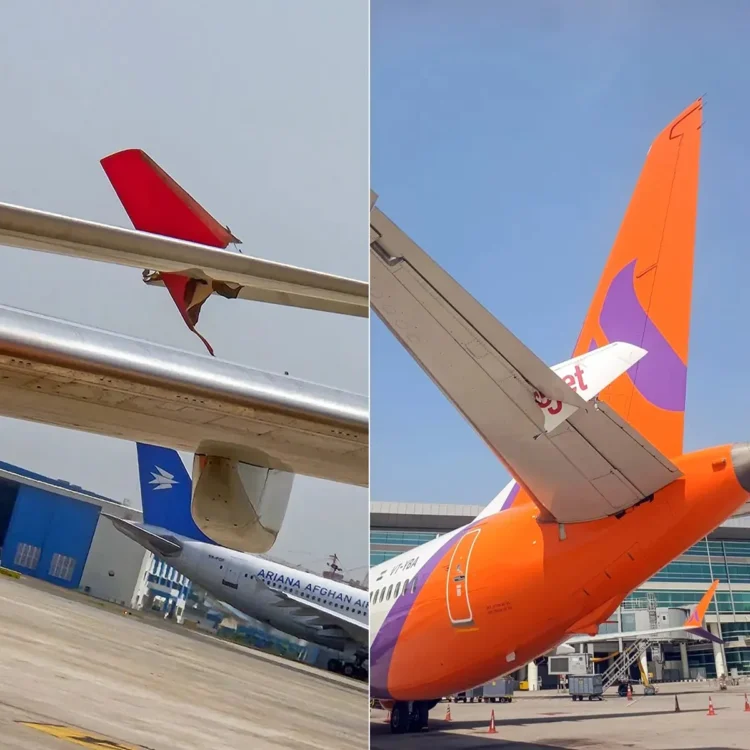
Regulator Removes Personnel Pending Probe
The Directorate General of Civil Aviation (DGCA) has taken immediate steps by removing an Air Traffic Control officer from duty, along with the pilots of the SpiceJet aircraft involved in the incident. Officials familiar with the matter indicated that preliminary findings point towards a possible lapse by a Surface Movement Controller (SMC), prompting swift disciplinary action.
The SMC, responsible for managing aircraft movement on the ground, was reportedly taken off duty as a precaution while investigations are underway. Authorities have not yet issued a final conclusion, but early assessments suggest that the controller’s role will be closely examined.
Critical Role of Surface Movement Controllers
At any major airport, Surface Movement Controllers play a key role in ensuring safe aircraft operations on the ground. Their responsibilities include directing planes across taxiways, runways, and parking bays, while maintaining safe distances between moving aircraft.
These controllers rely not only on visual monitoring but also on advanced systems such as surface movement radar to track aircraft positions in real time. Any misjudgment or communication gap at this stage can lead to serious safety risks, particularly at high-traffic airports like Delhi.
According to officials, the SpiceJet aircraft arriving from Leh had been instructed to move toward its designated parking bay. At the same time, an Akasa Air aircraft was positioned nearby after pushback, preparing for departure to Hyderabad. Ensuring adequate separation between the two aircraft falls squarely within the SMC’s responsibilities.
Details of the Aircraft Damage
The incident resulted in visible damage to both aircraft. The right winglet of the SpiceJet plane sustained impact, while the Akasa Air aircraft suffered damage to its left horizontal stabiliser. Fortunately, no injuries were reported, and passengers remained safe.
While the damage appears limited to structural components, such incidents are taken seriously due to the potential risks involved in aircraft ground operations.
Pilots Likely Followed Instructions
Aviation experts suggest that pilots may not have been directly responsible for the mishap. Experienced pilots note that cockpit visibility is restricted primarily to the forward view, making it difficult to judge distances on either side of the aircraft.
As a result, pilots rely heavily on instructions from ground controllers. They follow precise directions relayed through communication systems, especially when navigating congested airport areas. Experts believe that the pilots involved were likely acting in accordance with guidance provided by ATC.
Despite this, the pilots have been temporarily removed from active duty as part of standard protocol following such incidents.
Investigation to Determine Exact Cause
The DGCA has initiated a detailed investigation to establish the exact sequence of events. Both airlines involved are also expected to conduct internal reviews to assess operational procedures and identify any lapses.
SpiceJet has declined to comment on the matter so far, while officials have stated that a comprehensive report will be prepared once all evidence is reviewed. The findings are expected to clarify whether the incident resulted from human error, procedural gaps, or communication failures.
Focus on Strengthening Safety Measures
This incident has once again highlighted the importance of precision and coordination in airport ground operations. Aviation authorities are expected to review existing protocols and reinforce training standards for personnel handling aircraft movement.
As air traffic continues to grow across major Indian airports, ensuring seamless coordination between pilots and ground controllers remains essential for maintaining high safety standards