
Article 370 – Security Tightened Across Jammu and Kashmir on Seventh Anniversary
Article 370 – Authorities have strengthened security arrangements across Jammu and Kashmir as the Union Territory marks the seventh anniversary of the abrogation of Article 370. Additional personnel have been deployed at key locations, while security agencies are maintaining close surveillance to ensure law and order.
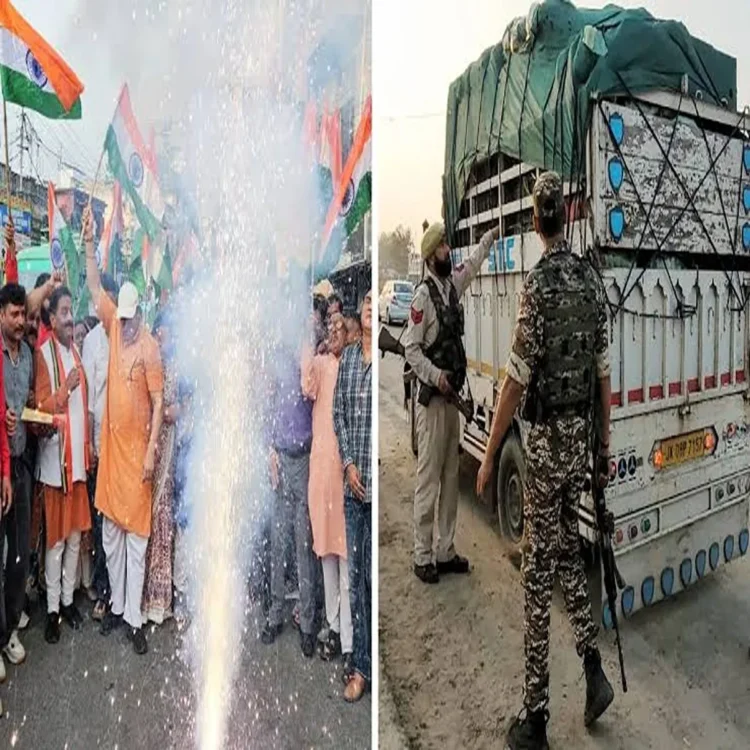
Multi-layered Security Measures in Place
Officials have implemented a comprehensive security plan across the Union Territory, with increased deployment in sensitive areas as well as along the international border. The enhanced arrangements are intended to prevent any disruption and ensure public safety during the anniversary.
Security checks have also been intensified on major highways. Personnel from the Central Reserve Police Force (CRPF) carried out inspections along the Jammu-Srinagar National Highway in Ramban. Meanwhile, Kulgam Police increased vehicle inspections and identity verification on National Highway 44 as part of the broader security exercise.
Background of the Constitutional Decision
On August 5, 2019, the Central government led by Prime Minister Narendra Modi revoked Article 370, ending the special constitutional status previously granted to Jammu and Kashmir. The decision also reorganized the former state into two Union Territories—Jammu and Kashmir and Ladakh.
The constitutional move marked one of the most significant policy decisions concerning the region in recent decades and continues to be a subject of political discussion.
Parliamentary Debate Recalled
The anniversary also brings attention to the parliamentary proceedings held in 2019, when Union Home Minister Amit Shah introduced the resolution in the Rajya Sabha seeking the removal of Article 370. During the debate, he criticized several opposition parties, including the National Conference, the Peoples Democratic Party, and the Congress, alleging that a handful of political families had dominated the region’s politics for decades.
Shah also argued that Jammu and Kashmir’s accession to India was completed through the Instrument of Accession signed by Maharaja Hari Singh in October 1947, stating that Article 370 was introduced later.
What Article 370 Provided
Before its repeal, Article 370 granted Jammu and Kashmir a distinct constitutional position within India. The provision restricted the application of several central laws to the region and limited Parliament’s legislative powers in certain matters. It also imposed restrictions on property ownership by individuals from outside the former state.
Authorities Restrict Protest Permissions
According to officials, permission has not been granted for protest demonstrations at several locations during the anniversary period. Security agencies remain on alert and are closely monitoring the situation to prevent any incidents that could affect public order.
Political Leaders Share Their Views
Bharatiya Janata Party Member of Parliament Ghulam Ali Khatana said the decision to revoke Article 370 addressed long-standing governance issues. He stated that the constitutional change expanded rights for several sections of society, including women and Other Backward Classes, while also contributing to higher tourism, international engagement, investment opportunities, and infrastructure development. He further pointed to recent elections and voter participation as indicators of growing public confidence.
Shiv Sena (UBT) spokesperson Anand Dubey also reflected on the anniversary, describing the removal of Article 370 as a significant political milestone. While welcoming what he described as progress in tourism and governance, he expressed hope that Jammu and Kashmir would be granted full statehood in the future. Dubey said such a step could further strengthen development and administrative stability in the region.