
AravalliCommittee – Experts Raise Concerns Over Newly Formed Aravalli Panel
AravalliCommittee – A growing number of scientists, conservationists, former civil servants, and environmental organisations have approached the Chief Justice of India, urging a review of the recently constituted committee responsible for matters related to the Aravalli range. Over the past two days, at least ten separate representations have been submitted, questioning the structure of the panel and calling for broader expert participation.
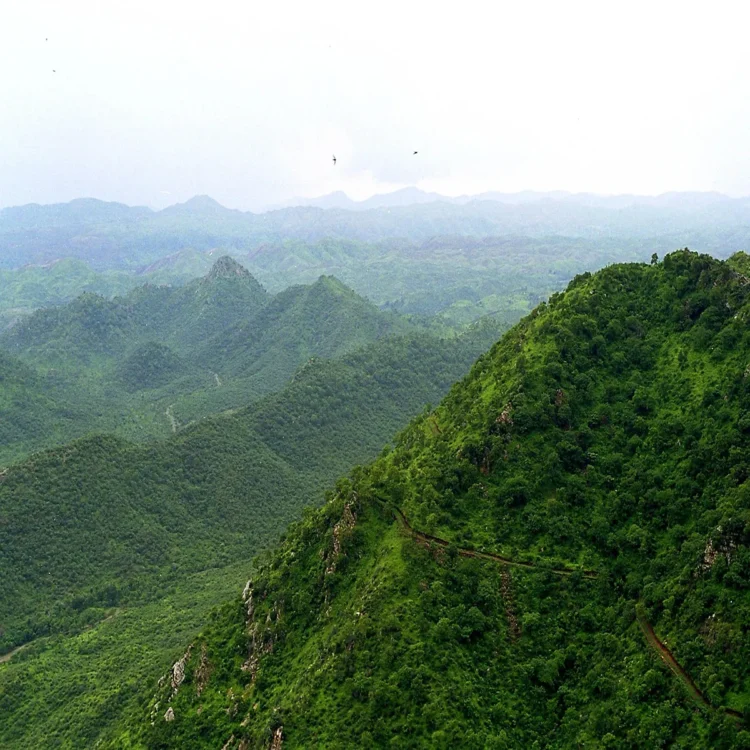
Calls for Greater Diversity in Expertise
The signatories argue that the newly formed committee lacks sufficient independent specialists and may not provide a balanced assessment of issues affecting the ecologically sensitive Aravalli region. They have requested that the panel be expanded to include professionals from environmental science, ecology, hydrology, public health, and rural livelihood sectors.
According to those raising objections, decisions concerning the Aravalli ecosystem require multidisciplinary inputs because the region’s environmental challenges affect biodiversity, water resources, local communities, and long-term sustainability.
Composition of the New Committee
The committee was established on May 25, 2026, and is chaired by Kanchan Devi, Director General of the Indian Council of Forestry Research and Education (ICFRE). Other members include former Forest Survey of India Director General Dr. Subhash Ashutosh, former Geological Survey of India Director Dr. Rajendra Kumar Sharma, former Ministry of Environment official Brij Mohan Singh Rathore, and former Delhi University Botany Department head Ashok K. Bhatnagar.
The panel reports to the Secretary of the Union Ministry of Environment, Forest and Climate Change. Critics have highlighted that the ministry secretary had earlier overseen a committee that adopted a definition of the Aravalli Hills based on landforms rising at least 100 metres above surrounding terrain.
That interpretation later formed the basis of a Supreme Court order and has remained a subject of debate among environmental groups, particularly because it permits certain mining activities in areas not covered under the definition.
Conflict of Interest Allegations Raised
Among those who wrote to the Chief Justice is former Indian Forest Service officer Prakruti Srivastava. In her communication, she expressed concerns about the institutional relationship between the committee chair and the ministry.
She argued that because the head of ICFRE functions under the administrative framework of the Environment Ministry, questions could arise regarding the ability of the committee to independently evaluate findings linked to decisions taken by the same ministry. Her letter suggested that such an arrangement could create perceptions of conflict of interest and potentially affect public confidence in the committee’s work.
Former Committee Chair Voices Reservations
Environmental scientist Dr. Ravi Chopra, who previously led two Supreme Court-appointed committees related to the Aravallis, also shared reservations regarding the new panel’s structure.
Drawing from his experience, Chopra stated that committees dominated by retired government officials or experts associated with publicly funded institutions may find it difficult to take positions that significantly differ from those of the government. He indicated that independence of assessment remains essential when dealing with environmentally sensitive matters of national importance.
Conservation Groups Seek Independent Representation
Environmental advocacy organisation Vanashakti, known for pursuing legal efforts to protect ecosystems across India, has also questioned whether the newly constituted body qualifies as a genuinely high-powered expert committee.
The organisation pointed out that several members have forestry backgrounds but limited direct experience working in Haryana and Rajasthan, the two states that contain significant portions of the Aravalli landscape. According to the group, local knowledge and region-specific expertise are critical for addressing challenges such as land degradation, mining pressures, water scarcity, and habitat conservation.
As discussions continue, stakeholders are urging the judiciary to consider a broader and more independent panel that can address the complex environmental and social issues associated with one of India’s most important mountain ecosystems.