
FuelPrices – Congress Targets Centre Over Rising Petrol and CNG Costs
FuelPrices – Congress leaders stepped up criticism of the central government on Tuesday over the continuing increase in petrol, diesel and CNG prices, claiming that ordinary citizens are facing severe financial stress while public sector oil companies continue to report strong earnings.
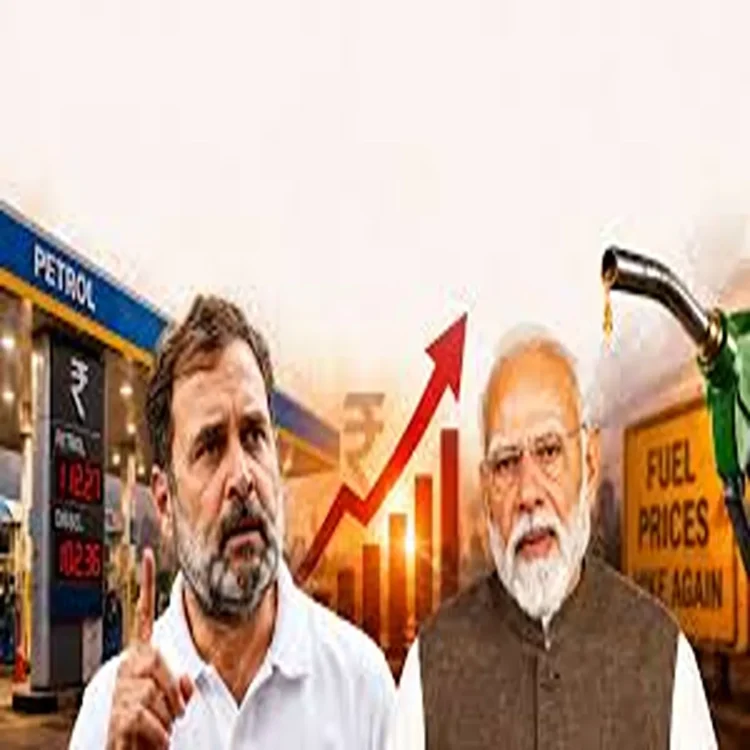
Opposition Raises Questions Over Fuel Price Burden
Congress MP Manish Tewari accused the government of failing to control inflation and questioned why fuel prices were rising despite repeated public concerns. Speaking to reporters, he said the sharp increase in petrol, diesel and CNG rates was placing additional pressure on middle-class and lower-income families already dealing with rising household expenses.
Tewari argued that the situation was unfair for consumers, pointing out that oil marketing companies were recording large profits at a time when people were struggling with higher transportation and daily living costs. He noted that petrol prices had crossed Rs 100 per litre in several parts of the country, while diesel prices were approaching Rs 90 per litre in many cities.
The Congress leader also referred to recent remarks made by Finance Minister Nirmala Sitharaman regarding challenges linked to fuel imports, fertiliser costs and foreign exchange pressures. According to Tewari, the government should have taken earlier corrective measures to reduce the economic burden on citizens.
Congress Alleges Rising Inflation Across Sectors
Senior Congress MP Pramod Tiwari also criticised the Narendra Modi-led administration, alleging that repeated fuel price increases were worsening inflation across the country.
Tiwari claimed that petrol and diesel prices had increased significantly within a short span, while CNG rates had also seen steep revisions. He warned that the higher fuel costs would eventually affect transportation charges, food prices and other essential goods, impacting nearly every section of society.
According to opposition leaders, the continuous rise in fuel prices has become a major concern for urban commuters, transport operators and small businesses that depend heavily on fuel-based services.
Fuel Prices Continue to Climb in Major Cities
The criticism from Congress comes at a time when fuel prices have witnessed another upward revision in several states. In Delhi, petrol prices crossed the Rs 100 mark after the latest increase, while diesel rates also moved closer to Rs 95 per litre. CNG prices in the national capital similarly recorded a noticeable jump following the recent revision.
The rising fuel costs have triggered broader concerns about inflation, especially as transportation expenses directly influence the prices of food products, goods delivery and public services.
Centre Defends Tax Measures on Fuel
The central government, however, defended its approach and stated that it had already reduced excise duties to provide relief to consumers affected by fluctuations in international crude oil prices.
According to Sujata Sharma, Joint Secretary in the Petroleum Ministry, the Centre had reduced excise duty on petrol and diesel by Rs 10 per litre earlier this year. Officials said the move resulted in a significant loss of tax revenue for the government but was necessary to reduce the impact of rising global crude oil prices linked to tensions in West Asia.
Government representatives maintained that international market conditions and geopolitical instability have played a major role in pushing up energy costs worldwide.
Prime Minister Highlights Global Economic Challenges
Earlier this month, Prime Minister Narendra Modi said India was facing economic pressure due to ongoing global developments, including geopolitical tensions in West Asia and the aftereffects of the COVID-19 pandemic.
Addressing an event in Gujarat, Modi stated that global conflicts and economic uncertainty were affecting several countries, including India. He added that the government was working to reduce the impact of international crises on the daily lives of citizens and ensure economic stability despite difficult global conditions.