
WorldCup – Iranian Diaspora Divided as National Team Opens Tournament Campaign
WorldCup – Hundreds of Iranian Americans gathered outside Iran’s opening World Cup fixture on Monday, staging demonstrations that called for political change in Tehran while displaying the historic lion-and-sun flag associated with the period before the 1979 revolution. At the same time, thousands of football supporters entered the stadium to watch Iran begin its tournament journey in a match that ended in a 2-2 draw against New Zealand.
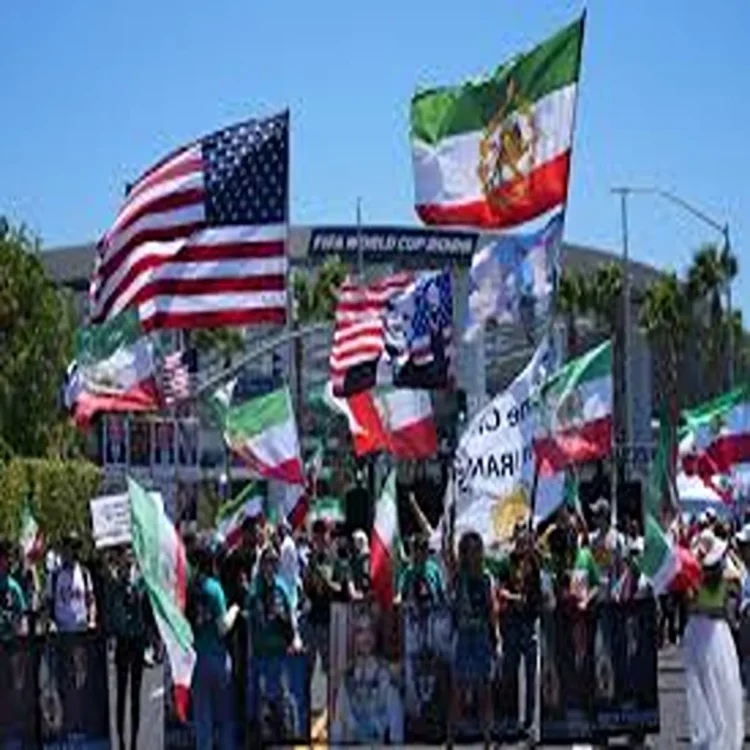
Demonstrations Highlight Deep Community Divisions
The event unfolded in Southern California, home to the largest Iranian community outside Iran. The atmosphere reflected the differing perspectives within the diaspora, with some protesters arguing that the national football team represents the current Iranian leadership, while many supporters insisted they were attending solely to support the sport.
During the pre-match period, reactions inside the stadium were mixed when Iran’s national anthem was played. Cheers and boos echoed from different sections of the crowd, illustrating the contrasting opinions among spectators. Despite a recent court ruling that upheld FIFA’s restrictions on the lion-and-sun flag at tournament venues, several attendees managed to display the flag from prominent seating areas.
Tensions Emerge Around the Stadium
Security personnel were required to intervene on multiple occasions as verbal confrontations broke out between demonstrators and football fans. Local law enforcement officers were also deployed before kickoff to help maintain order.
Outside the venue, emotions occasionally spilled over. In one incident, protesters seized an official Iranian flag from a supporter, tearing and trampling it. Meanwhile, many fans wearing team colors and face paint continued toward the stadium, emphasizing that they wished to separate football from political disputes.
Los Angeles resident Rameileh Jaffrey, who emigrated from Iran more than a decade ago, said she does not view the current national team as representing her personally. Others, however, argued that athletes should not be judged solely through a political lens.
Fans and Activists Share Different Goals
Among those attending the match was Ella Bah, who entered the stadium while carrying a lion-and-sun flag concealed beneath additional clothing. She explained that her purpose was not to support the team on the field but to draw attention to people living in Iran.
By contrast, many supporters said they came to enjoy an international sporting event with family and friends. Some noted that football has long served as a source of national pride for Iranians worldwide, regardless of political beliefs.
Team captain Mehdi Taremi addressed the issue before the match, stating that the squad aims to represent all Iranians, both inside the country and abroad. He said the players hope to bring moments of happiness to people despite differing viewpoints within the global Iranian community.
Impact of Regional Conflict on the Team
Iran’s World Cup participation has taken place against the backdrop of regional tensions and conflict involving the United States and Israel. The situation has complicated preparations for the tournament, including adjustments to training arrangements and travel-related challenges for some officials.
The broader conflict has also influenced how members of the Iranian diaspora view the national team. While some see the players as symbols of national unity, others believe the squad cannot be separated from political realities.
Debate Over National Symbols Continues
One of the most visible points of disagreement has centered on the use of the lion-and-sun flag. Advocacy groups sought legal avenues to challenge FIFA’s restrictions on displaying the symbol during World Cup matches. Although the court decision allowed the ban to remain in place, supporters of the flag continued to display it during the game.
At the same time, other attendees carried the official flag of Iran, underscoring the diverse political and cultural identities present within the Iranian American community. The contrasting symbols became a powerful reflection of the ongoing debate over representation, national identity, and the role of sport during a period of political uncertainty.