
Venezuela Earthquake – Families Race to Identify Victims in La Guaira
Venezuela Earthquake – Families in Venezuela’s coastal state of La Guaira are facing an urgent and painful search for relatives after two powerful earthquakes caused widespread destruction. Authorities say at least 2,295 people have died, while thousands remain unaccounted for as rescue teams continue working through collapsed buildings and damaged neighbourhoods.
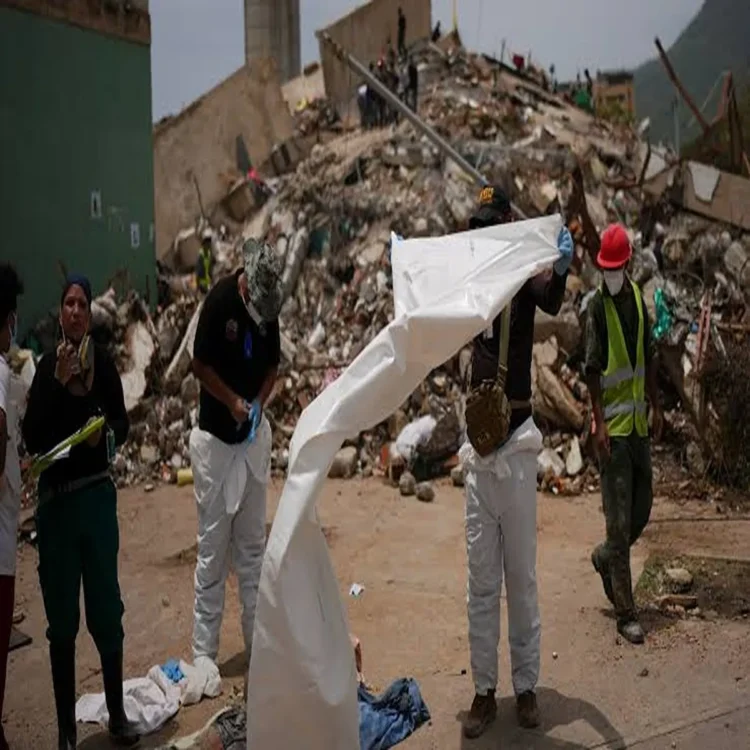
Rosa López, a former nurse, said she was unprepared for the scenes she encountered while helping her daughter look for her missing husband. She described walking through an area where bodies lay in the open heat, many covered with sheets or blankets and still awaiting identification.
Her son-in-law, 25-year-old José Antonio Toledo, was working as a security guard when the earthquakes struck. His body was recovered from beneath the building where he had been stationed, but the family struggled to trace where it had been taken as hospitals and temporary facilities became overcrowded.
Family Secures Burial Before Space Runs Out
Toledo’s body was first moved to a hospital, then transferred to another facility before eventually being placed in an outdoor parking area. With assistance from a forensic doctor, López and her daughter found him several days later.
The family then faced another challenge: the cost of funeral arrangements. A funeral home quoted them about $450, an amount they could not afford. Late on Saturday, the mayor’s office informed them that a free burial plot was available at a local cemetery, but the offer required an immediate decision.
López and her daughter made their way up the hill to the cemetery during the night and buried Toledo shortly after arriving. López remembered him as a helpful and caring young man. The family feared that without quick action, his remains could have been placed in a collective burial site.
Recovery Teams Expect Search to Continue for Months
Forensic technician Joel Mirabal has been involved in recovery work for seven consecutive days. He said many bodies can be identified by relatives, neighbours or friends, but the process is often difficult because victims have been trapped under rubble for extended periods.
According to Mirabal, families frequently rely on tattoos, scars, footwear or clothing to recognise loved ones. When identification is not possible, remains are transferred to forensic teams operating near the La Guaira seaport.
Private companies have provided refrigerated containers to help preserve bodies, but the number of victims being recovered continues to increase. Mirabal said mass burials may become necessary because of the scale of the disaster and the large amount of debris still covering damaged areas.
He expects recovery operations could continue for as long as three months. Teams travel daily through affected communities after receiving reports from rescue crews and residents who have found or spotted victims.
Residents Join Rescue and Recovery Efforts
Local residents have played a major role in the response, helping search damaged structures and alerting authorities when bodies are discovered. Mirabal said many recovery efforts have depended on ordinary people assisting emergency workers in the hardest-hit locations.
Outside work, Mirabal is a dog trainer and has previously helped authorities locate missing people and illegal drugs. He said returning home to his dogs provides some comfort after long days spent witnessing the aftermath of the earthquake.
Families Wait Outside Temporary Morgue Facilities
At a government health facility in La Guaira, dozens of bodies recovered from flattened buildings were placed in a parking area while relatives waited to identify them. Funeral workers said more than 200 bodies were held there at one point as officials tried to manage the growing number of victims.
On Thursday, families gathered outside the La Guaira seaport, where authorities had established a temporary morgue. Funeral vehicles, trucks and vans formed lines near the site as officials continued bringing in bodies recovered across the state.
Robert Rodríguez waited there for his daughter to identify her husband, Rafael Alvarado. Alvarado had worked at a grocery store deli counter and was trapped inside the building when it collapsed.
Rodríguez said he recognised Alvarado by his shoes after the family found him in the rubble. The family plans to cremate his remains and scatter his ashes on Isla de Margarita, the island he considered home.