
UnitedNations – Espinosa Outlines Reform Agenda in UN Leadership Race
UnitedNations – The race to lead the United Nations entered another important phase as the UN General Assembly hosted its fifth interactive dialogue with a candidate seeking to become the organization’s next secretary-general. The latest session featured Maria Fernanda Espinosa, a former president of the General Assembly and former foreign and defence minister of Ecuador, whose candidacy was put forward by Antigua and Barbuda earlier this year.
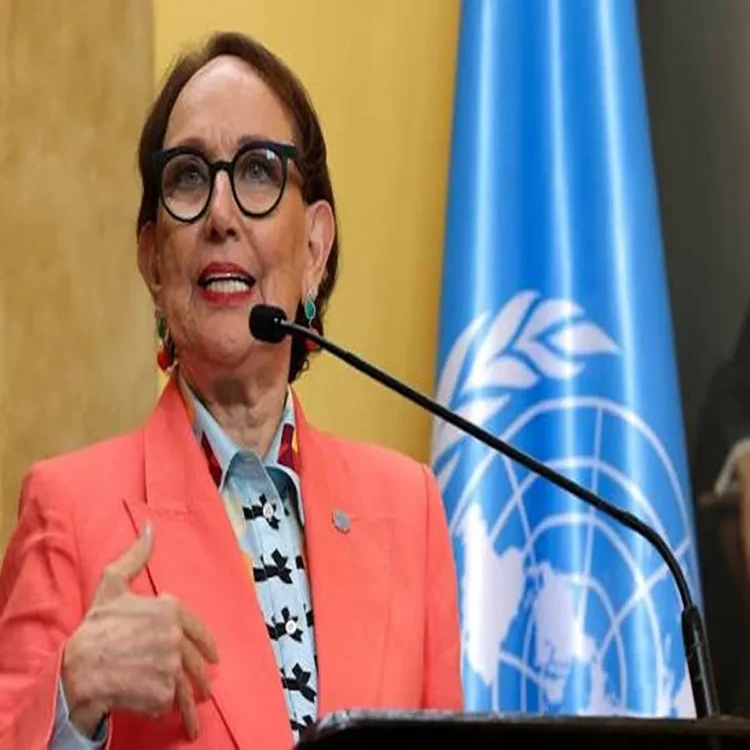
Candidate Presents Roadmap for UN Leadership
During Monday’s dialogue, Espinosa shared her priorities for the future of the United Nations and responded to questions from member states and representatives of civil society organizations. Discussions focused on her leadership experience, management capabilities, proposals for institutional reform, and her approach to the UN’s core responsibilities, including peace and security, human rights, and sustainable development.
Addressing delegates, Espinosa said the international community is facing a period that requires practical outcomes rather than renewed declarations of support for multilateral cooperation. According to her, the organization must improve its ability to anticipate crises, coordinate responses more effectively, and deliver tangible results that strengthen trust in collective global action.
Five Key Areas of Transformation
Espinosa outlined a framework built around five connected priorities that she believes are essential for the United Nations in the coming years. These include strengthening peace and security efforts, advancing development goals, accelerating digital and energy transformation, improving implementation of commitments, and rebuilding confidence in the institution.
She emphasized that her proposal should not be viewed as a detailed blueprint covering every aspect of UN operations. Instead, she described it as a focused vision identifying areas where the secretary-general can make the greatest impact while working within the authority granted to the office.
According to Espinosa, meaningful political direction and financial commitments must continue to come from member states. However, she argued that effective leadership from the secretary-general can help improve performance and reinforce the organization’s credibility through measurable achievements.
Broader Competition for the Top UN Post
Espinosa is one of several prominent international figures seeking the organization’s highest office. Earlier this year, the General Assembly conducted a two-day series of dialogues involving four other candidates.
Among them were Michelle Bachelet, the former president of Chile and former UN High Commissioner for Human Rights, whose candidacy was backed by Brazil and Mexico. Also participating was Rafael Grossi, the current Director General of the International Atomic Energy Agency, nominated by Argentina.
The candidate list additionally includes Macky Sall, the former president of Senegal, nominated by Burundi, and Rebeca Grynspan, an economist and former vice president of Costa Rica, who was nominated by her home country.
Transition Planned for 2027
The selection process comes as the tenure of current UN Secretary-General Antonio Guterres approaches its conclusion. Guterres, who serves as the ninth secretary-general in the history of the United Nations, is scheduled to complete his term at the end of this year.
The individual ultimately chosen for the position will officially assume office on January 1, 2027. As consultations and candidate dialogues continue, member states are expected to closely examine each contender’s vision for addressing global challenges and strengthening the effectiveness of the United Nations in an increasingly complex international environment