
School Violence – Rising Classroom Attacks Raise Concerns Across Russia
School Violence – Reports of violent incidents inside Russian schools are increasing as educators and mental health specialists warn that prolonged exposure to conflict and social tension may be affecting student behavior across the country.
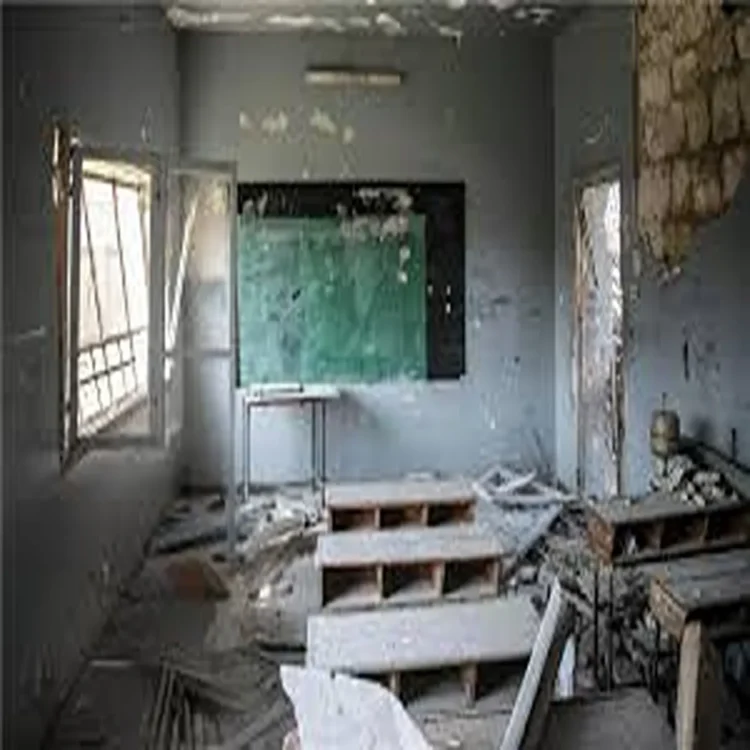
A disturbing rise in violent incidents inside Russian schools has sparked concern among teachers, psychologists, and education officials, with experts linking the trend to growing social pressure and the broader impact of the war in Ukraine on young people.
One recent case involved a teacher at a school in northwestern Russia who was threatened by a 16-year-old student after she attempted to wake him during class. According to the teacher, the student later approached her from behind and pressed a medical scalpel against her throat, causing minor injuries. The educator, who spoke anonymously, said the teenager warned her that future consequences could be worse.
Increase in School-Related Violence
Data collected by independent media organizations shows that Russia has already recorded at least 14 attacks in schools and educational institutions during 2026. That figure is close to the total number reported throughout all of 2025, highlighting a noticeable increase within a short period.
Several of the recent incidents have involved weapons or planned assaults. In southern Russia’s Krasnodar region, a teenager reportedly opened fire with an air pistol at a primary school. In another case, a teacher was fatally stabbed, while in Siberia, a female student allegedly set fire to a classroom before attacking classmates with a hammer.
Researchers monitoring these cases say almost half of all school attacks documented in Russia over the last quarter-century have taken place since the beginning of the Ukraine conflict in 2022.
Experts Point to Social and Psychological Factors
Russian authorities have blamed online influence and external manipulation for many of the attacks. Speaking earlier this year, an official from the interior ministry said young people were often affected by harmful online environments and negative outside influence.
However, independent specialists believe the reasons are more complex. Psychologists say many incidents are linked to bullying, emotional isolation, personal frustration, and a desire for revenge. They also argue that the atmosphere created by years of military conflict may be contributing to aggression among teenagers.
Former school psychologist Yuri Lapshin, now living in France, said increasing exposure to military themes and wartime messaging could be shaping how children understand violence. According to him, students who grow up surrounded by conflict-related narratives may gradually see aggression as a normal part of life.
Military Themes Becoming Common in Schools
Since the start of the Ukraine war, Russian schools have increasingly introduced patriotic programs, military-themed activities, and meetings with former soldiers. Critics argue that these initiatives may unintentionally normalize violent behavior among impressionable students.
Olga Zhuravskaya, associated with an anti-bullying initiative, said children are receiving mixed messages. While schools promote kindness and cooperation, students are also growing up in an environment heavily influenced by war and insecurity.
She warned that constant exposure to discussions about conflict and death could alter how young people view their future and their relationships with others.
Teachers Describe Fear and Pressure
Several teachers interviewed anonymously said fear has become more common among school staff. Some educators claim they avoid strict discipline or poor grades because they worry about retaliation from students.
A physics teacher from the Moscow region admitted that some colleagues hesitate to confront aggressive pupils. “There is always concern about how a student might react later,” she said.
The teacher attacked with the scalpel claimed school administrators discouraged her from reporting the incident to police. Although security measures such as metal detectors and surveillance cameras were later installed, she said many staff members preferred silence to avoid conflict with management.
Questions Over Security Measures
Schools across Russia have introduced emergency drills designed to prepare students and teachers for armed attacks, explosions, or drone threats. During these exercises, classrooms are locked, furniture is pushed against doors, and students hide in silence.
Despite these efforts, some educators question whether current safety procedures are effective. One speech therapist from central Russia criticized the quality of security equipment, saying some detectors react to harmless objects while potentially missing dangerous items.
Mental health experts continue to stress that prevention requires more than surveillance. They argue schools need better counseling systems, more support for vulnerable students, and enough staff time to identify children facing bullying, loneliness, or emotional distress before situations escalate further.