
Sanctions – US-Led Naval Blockade Tightens Pressure on Iranian Ports
Sanctions – As geopolitical strains deepen in West Asia, the United States has launched a large-scale naval blockade targeting Iranian ports, marking a significant escalation in the region’s security environment.
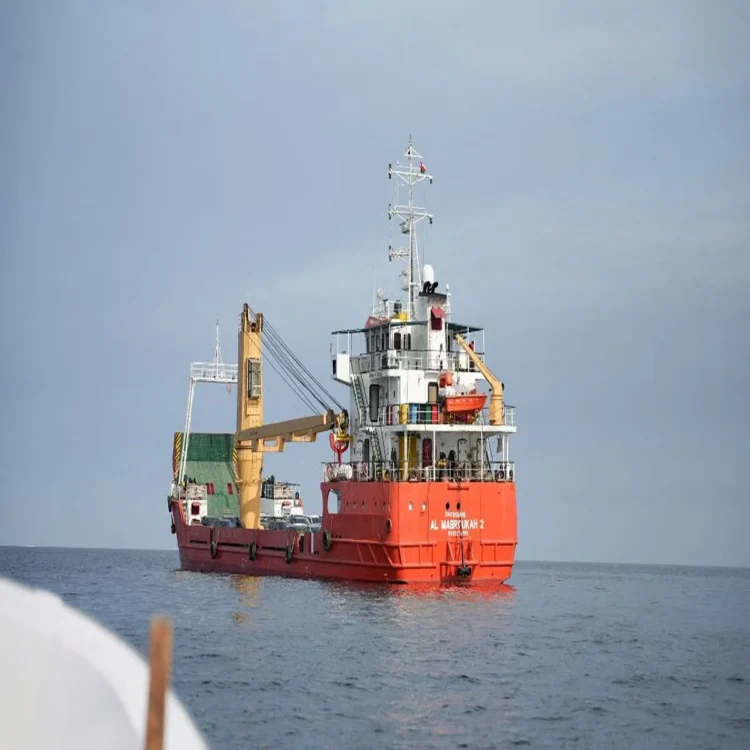
Large-Scale Naval Deployment Enforces Blockade
According to a statement from US Central Command, the operation involves more than 10,000 military personnel, including Sailors, Marines, and Airmen. The mission is being supported by a fleet of over a dozen warships along with numerous aircraft. The objective is to restrict maritime access to and from Iranian ports across key waterways.
The move follows the expiration of a deadline issued by US President Donald Trump, after which Washington initiated the blockade. Officials confirmed that enforcement began immediately, with strict monitoring of vessels approaching Iranian coastal areas.
No Vessel Movement in Initial Phase
In an update shared on social media, US Central Command reported that during the first 24 hours of the operation, no ships were able to cross the blockade. At least six commercial vessels were instructed to change course and return to Iranian ports located along the Gulf of Oman.
The enforcement applies to ships of all nationalities attempting to enter or leave Iranian ports, including those situated along the Arabian Gulf and the Gulf of Oman. However, US forces emphasized that maritime traffic passing through the Strait of Hormuz toward non-Iranian destinations continues to be allowed under the principle of freedom of navigation.
Maritime Alerts Highlight Regional Impact
Earlier, the United Kingdom Maritime Trade Operations (UKMTO) confirmed receiving multiple reports regarding restricted maritime access in areas surrounding Iran. These restrictions affect not only ports along the Arabian Gulf and Gulf of Oman but also extend to sections of the Arabian Sea east of the Strait of Hormuz.
Shipping operators have been advised to exercise caution, as the evolving situation could disrupt established trade routes and increase operational risks in one of the world’s busiest maritime corridors.
Strait of Hormuz Becomes Strategic Focus
The Strait of Hormuz, a crucial passage for global energy supplies, has once again emerged as a focal point of international concern. The situation intensified following the collapse of recent peace discussions linked to regional disputes.
Before the escalation, nearly 20 percent of the world’s oil supply passed through this narrow waterway. Any disruption to its operations has immediate consequences for global energy markets, contributing to rising oil prices and economic uncertainty.
International Efforts to De-escalate Crisis
In response to the growing tensions, France and the United Kingdom have announced plans to convene a joint international conference. The meeting is expected to bring together representatives from more than 40 countries with the aim of ensuring safe and uninterrupted navigation through the Strait of Hormuz.
French President Emmanuel Macron confirmed that the virtual conference will be held in Paris later this week. The initiative is described as a multilateral and defensive effort designed to safeguard maritime routes and stabilize the region.
India Engages in Diplomatic Dialogue
Amid these developments, Indian Prime Minister Narendra Modi held a conversation with US President Donald Trump to discuss the evolving security situation. Both leaders highlighted the importance of maintaining open and secure shipping lanes, particularly through the Strait of Hormuz, given its significance to global trade and energy supply.
The ongoing blockade and diplomatic engagements indicate a critical phase in West Asia, where military actions and international negotiations are unfolding simultaneously. The coming days are expected to play a key role in determining whether tensions escalate further or move toward resolution.