
Retirement – Trump Signs Order to Expand Savings Access Nationwide
Retirement – US President Donald Trump has approved a new executive order designed to widen access to retirement savings options, particularly for Americans who do not have employer-backed plans or belong to lower-income groups.
Expanding Access to Savings Plans
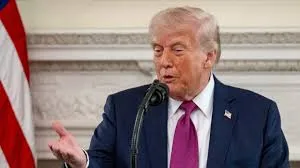
The announcement marks a significant policy move aimed at addressing gaps in the current retirement system. Speaking at the signing, Trump described the decision as a major step toward ensuring broader financial security. He said the initiative would open up retirement savings opportunities similar to those enjoyed by federal employees, extending them to millions who have historically been left out.
The policy focuses especially on workers in informal or non-traditional employment, including gig workers and those without steady employer benefits. For many in these categories, access to structured retirement plans has remained limited.
Financial Support for Low-Income Workers
A key feature of the programme is financial assistance for lower-income individuals. According to details shared by the administration, eligible participants could receive matching contributions of up to $1,000 annually, directly deposited into their retirement accounts.
Officials believe this matching mechanism could encourage consistent savings among those who might otherwise struggle to set aside funds for the future. The approach aims to reduce financial inequality by offering additional incentives to those earning below a certain income threshold.
Long-Term Impact on Personal Wealth
Trump highlighted the potential long-term benefits of regular contributions, offering a hypothetical example to explain the impact. He noted that a young individual contributing a modest monthly amount could accumulate substantial savings by retirement age, illustrating how consistent investment over decades can build financial stability.
This projection was presented as evidence of how even small, disciplined contributions can grow significantly when combined with matching funds and long-term investment returns.
Policy Focus on Structural Gaps
National Economic Council Director Kevin Hassett emphasized that the initiative is designed to address long-standing structural challenges in the US retirement system. He pointed out that many low-income workers earning below $35,000 annually have historically lacked access to such benefits.
Hassett also confirmed that discussions are underway with lawmakers to broaden the programme’s reach. The administration is exploring ways to extend similar benefits to middle-income groups, although this would require legislative backing.
Need for Congressional Support
While the executive order establishes the framework for the programme, further expansion will depend on approval from Congress. Trump acknowledged that bipartisan cooperation would be necessary to take the initiative further and make it more inclusive.
Lawmakers from both parties have shown growing interest in improving retirement access in recent years, suggesting that the proposal could gain wider support if structured effectively.
Inclusion of Charitable Contributions
Another notable aspect of the policy is the provision allowing charitable organizations to contribute to individual retirement accounts. This feature is intended to create additional avenues for support, enabling third parties to assist individuals in building their retirement savings.
Officials say this could encourage community-driven financial support systems, particularly for vulnerable groups.
Broader Economic Context
The administration linked the initiative to broader economic indicators, including employment growth and investment trends. Trump stated that strong job numbers and economic activity provide a favorable backdrop for encouraging long-term savings.
The US retirement framework has traditionally relied on employer-sponsored plans, which has left segments such as freelance workers and part-time employees with limited options. Policymakers have increasingly recognized this gap, leading to renewed efforts to create more inclusive systems.
This latest executive order represents one such effort to modernize retirement access and make it more adaptable to today’s workforce dynamics.