
Politics – Hungary Election Delivers Historic Shift After Orbán Era Ends
Politics – Hungary witnessed a dramatic political turning point on Sunday as voters brought an end to Viktor Orbán’s 16-year tenure as prime minister, choosing a new leadership direction that signals a shift toward stronger ties with Europe.
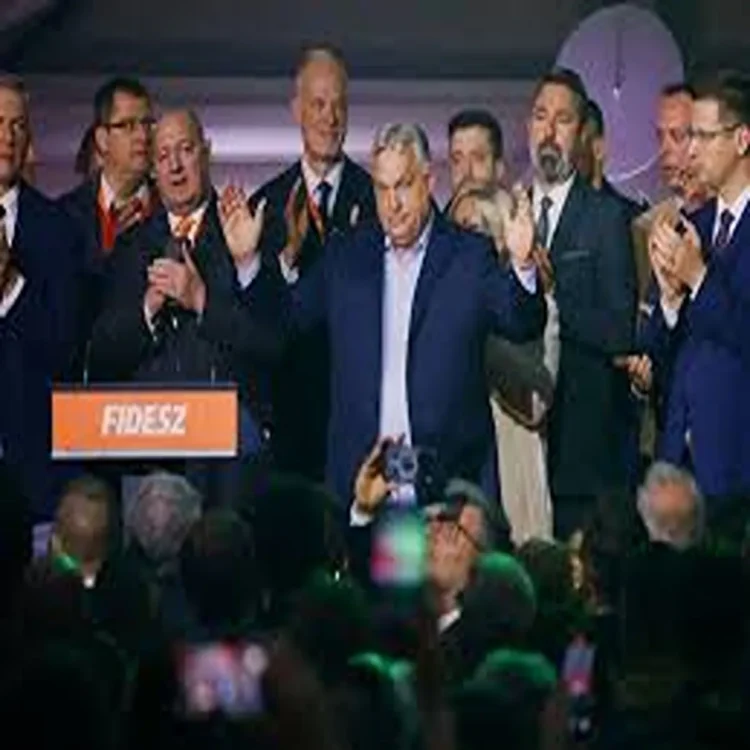
The election result marked a significant change in the country’s political landscape, with Péter Magyar emerging as the winner. A former ally of Orbán, Magyar campaigned on promises of tackling corruption and improving public services such as healthcare and transportation. His victory reflects growing public demand for institutional reforms and closer cooperation with European partners.
A decisive result with international impact
Orbán, who had long been a prominent figure among nationalist leaders globally, conceded defeat shortly after early results became clear. Calling the outcome “painful,” he acknowledged the electorate’s decision. His administration had maintained close relationships with leaders such as former U.S. President Donald Trump and Russian President Vladimir Putin, positioning Hungary as an outlier within the European Union.
Magyar’s win is expected to reshape Hungary’s role within the EU, where Orbán had frequently blocked collective decisions. European leaders quickly welcomed the result, expressing hope for renewed cooperation on key issues.
Public celebrations signal a shift in mood
In Budapest, thousands gathered along the Danube River to celebrate the outcome. Supporters of Magyar described the moment as historic, with many expressing optimism about the country’s future direction. Streets filled with cheering crowds, car horns, and chants reflecting a desire for change.
The high voter turnout—close to 80 percent—underscored the importance of the election. It was one of the highest participation rates recorded in Hungary’s post-Communist era, indicating strong public engagement in determining the nation’s political path.
A choice between geopolitical directions
The election was widely seen as a referendum on Hungary’s foreign policy stance. Under Orbán, the country had taken a more Russia-friendly position, often diverging from EU consensus, particularly on support for Ukraine.
Magyar has pledged to restore Hungary’s relationships with both the EU and NATO. His approach is expected to align more closely with broader European policies, especially regarding regional security and energy independence.
Observers are now watching closely to see how Hungary’s stance on Ukraine evolves under the new leadership.
Domestic concerns drive voter decisions
While foreign policy played a role, many voters were primarily motivated by domestic issues. Rising concerns over public services, governance transparency, and economic challenges shaped the campaign narrative.
Magyar’s message focused on practical reforms and accountability. His rapid rise—from a political insider to Orbán’s main challenger—highlighted shifting dynamics within Hungary’s political system.
Challenges ahead for the new government
Despite the victory, questions remain about Magyar’s ability to implement major reforms. It is not yet confirmed whether his party will secure the two-thirds parliamentary majority needed to enact significant legislative changes.
Additionally, Hungary’s political environment remains complex. Orbán’s party has maintained strong influence over media and electoral structures, which could pose challenges for the incoming administration.
End of an era, beginning of uncertainty
Orbán’s leadership was marked by sweeping changes to Hungary’s institutions, media landscape, and governance model. His policies drew both strong support and sharp criticism, particularly from advocates of liberal democracy.
The election result represents not only a leadership change but also a broader shift in public sentiment. For many voters, it was an opportunity to redefine Hungary’s place in Europe and its approach to governance.
As Péter Magyar prepares to take office, attention will turn to how effectively he can deliver on his promises and navigate the political and economic challenges ahead.