
OilPrices – Red Sea Tanker Attacks Trigger Sharp Jump in Global Crude Markets
OilPrices – Global crude oil prices recorded a sharp rise on Thursday after renewed security concerns in the Red Sea raised fears of possible disruptions to international energy supplies.
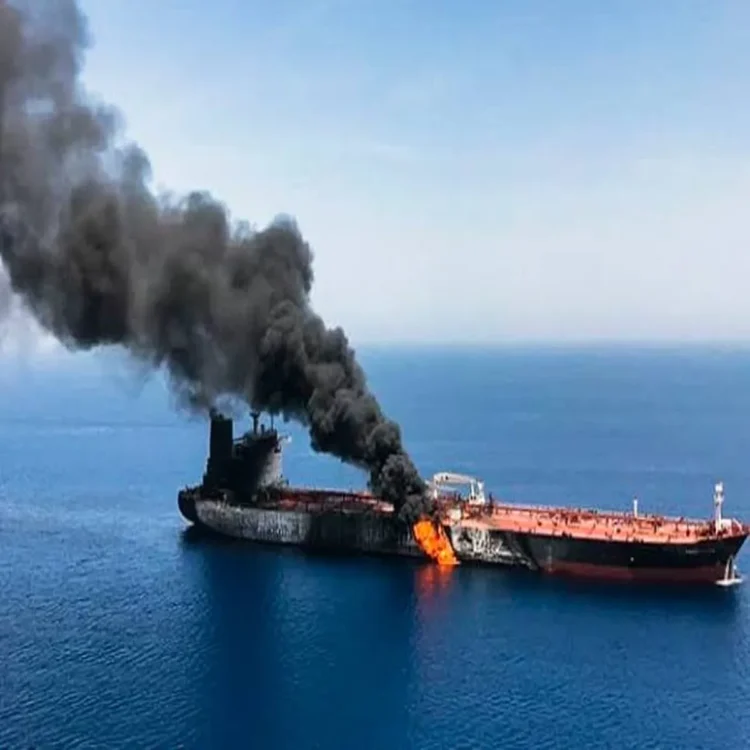
Global crude benchmarks climbed more than two percent after Iran-backed Houthi militants claimed responsibility for targeting two Saudi Arabian oil tankers in the Red Sea. The developments intensified concerns over the stability of oil shipments through one of the world’s most strategically important maritime routes, prompting fresh buying in energy markets.
Brent and WTI extend gains
Brent crude, the international benchmark for oil prices, advanced by around 2.5 percent, gaining approximately $2.42 to move above the $96-per-barrel level. The increase came after the benchmark had already reached its highest level in nearly six weeks during the previous trading session.
Meanwhile, US benchmark West Texas Intermediate (WTI) also posted strong gains. The contract rose by more than two percent, adding roughly $1.84 to trade close to $88 per barrel as investors reacted to the heightened geopolitical tensions.
Houthi group claims responsibility
The Houthi movement stated that it had launched missile and drone attacks against the Saudi oil tankers identified as Encelia and Layla. According to the group, the vessels had allegedly violated a blockade imposed by the Houthis in the region.
The claims have not only raised concerns over the safety of commercial shipping but have also highlighted the growing risks facing energy transportation through the Red Sea. The latest incident marks a significant escalation in attacks involving vessels carrying crude oil.
Maritime agency reports vessel strike
Before the Houthi announcement, the United Kingdom Maritime Trade Operations (UKMTO) reported that a commercial vessel had been struck by a projectile near Al Shuqaiq along Saudi Arabia’s Red Sea coastline. The impact reportedly caused a fire onboard the ship, although the agency did not disclose the vessel’s identity.
The incident has added to mounting concerns among shipping companies and energy traders, who have been closely monitoring security developments across the region.
Strategic importance of the Red Sea
The Red Sea has become an increasingly vital export corridor for Saudi Arabia’s crude shipments. It offers an alternative route that allows tankers to avoid the Strait of Hormuz, a narrow waterway through which a substantial share of the world’s oil exports normally passes.
Any disruption in the Red Sea therefore has the potential to affect global supply chains and increase transportation risks for oil exporters. Market participants have responded cautiously as uncertainty surrounding the region continues to grow.
Analysts warn of further price pressure
Market analysts believe the latest attacks have strengthened concerns over tightening global crude supplies. Brent crude has already gained close to 30 percent during the current month, reflecting persistent worries about geopolitical instability and production risks.
Experts caution that if tensions continue to escalate and oil shipments face prolonged disruptions, crude prices could once again approach the $100-per-barrel mark. Such a move would likely have broader implications for inflation, fuel costs and economic growth across several importing nations.
For India, where a significant portion of crude oil demand is met through imports, sustained high oil prices remain an important macroeconomic challenge. Analysts note that elevated energy costs could increase inflationary pressures, widen the import bill and place additional strain on the country’s external balances if prices remain elevated for an extended period.