
NuclearPolicy – Kim Jong Un Reaffirms North Korea’s Nuclear Commitment
NuclearPolicy – North Korean leader Kim Jong Un has declared that his country will not abandon its nuclear weapons programme, reinforcing Pyongyang’s long-standing position amid rising global tensions. Speaking at a recent parliamentary session, Kim signalled a tougher stance toward South Korea and criticised the United States for its international military actions.
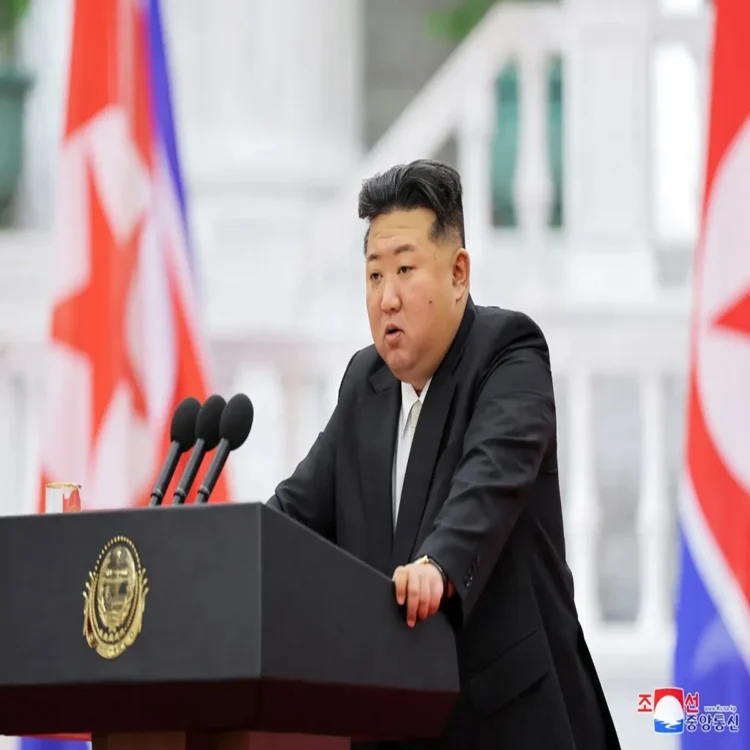
Firm stance on nuclear capabilities
During his address to the Supreme People’s Assembly, Kim emphasised that North Korea’s nuclear status is permanent and non-negotiable. He described the country’s nuclear arsenal as a vital deterrent against external threats and stated that efforts would continue to strengthen and expand this capability.
According to state media reports, Kim highlighted that the nation’s constitution mandates the development of its self-defensive nuclear forces. He reiterated that these weapons serve as a safeguard against what he described as hostile foreign policies.
Sharp criticism of the United States
Kim also accused the United States of engaging in aggressive military actions globally, referring to them as acts of “state terrorism.” His remarks appeared to reference recent US military operations, including those targeting countries like Iran.
He argued that such actions only reinforce North Korea’s determination to maintain and enhance its nuclear programme. Analysts believe these comments reflect Pyongyang’s deep concern over shifting geopolitical dynamics and perceived threats from Western powers.
Relations with South Korea worsen
In a significant escalation of rhetoric, Kim indicated that North Korea may formally label South Korea as its “most hostile state.” He stated that Pyongyang would no longer engage with Seoul and would respond strongly to any perceived provocation.
This development comes despite recent efforts by South Korean President Lee Jae Myung to reopen dialogue without preconditions. North Korea has so far shown no interest in these overtures, signalling a continued freeze in inter-Korean relations.
Kim warned that any actions against North Korea would be met with a swift and uncompromising response, underscoring the growing strain between the two neighbours.
Military strength and technological advances
Despite years of international sanctions, North Korea has continued to develop its military capabilities. Experts estimate that the country possesses dozens of nuclear warheads and has made significant progress in missile technology.
Recent advancements include solid-fuel intercontinental ballistic missiles, which can be launched with minimal preparation time. These developments have heightened concerns among global powers about regional security and the potential for escalation.
North Korea has conducted six nuclear tests to date, demonstrating its ongoing commitment to strengthening its defence systems.
Economic ambitions alongside defence spending
Alongside his focus on military strength, Kim also outlined economic goals for the coming years. He stated that the country aims to increase industrial output by 1.5 times, highlighting improvements in key manufacturing sectors.
Kim claimed that the nation has made notable economic progress despite external challenges, including sanctions and limited international trade. He pointed to upgrades in machinery and production facilities as evidence of resilience.
However, defence remains a priority, with 15.8 percent of the national budget for 2026 allocated to military spending, slightly higher than the previous year.
Leadership and long-term strategy
Kim, who has led North Korea since 2011, continues to consolidate power while maintaining a dual focus on military and economic development. As the third-generation leader of the ruling Kim family, his policies reflect a long-standing emphasis on self-reliance and national security.
Observers suggest that North Korea’s continued investment in nuclear capabilities is unlikely to change in the near future, especially given current global tensions and stalled diplomatic efforts.
The latest statements from Pyongyang highlight the challenges facing international negotiations and raise fresh concerns about stability in the region.