
MiddleEastTensions – Khamenei Warns Against Future US Military Presence
MiddleEastTensions – Iran’s Supreme Leader Mojtaba Khamenei issued a strong message on Tuesday, saying countries across the Middle East would no longer act as protective ground for American military bases. His remarks were delivered in a written statement aired by Iranian state television during the Eid al-Adha holiday period.
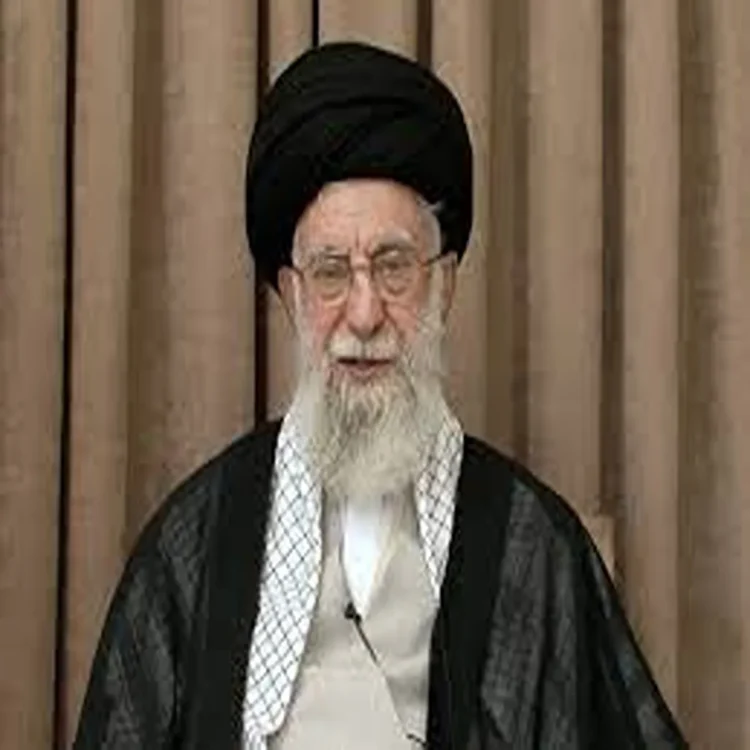
The statement marked one of Khamenei’s most direct comments on regional military tensions since assuming leadership in March. He took over following the death of his father, former Supreme Leader Ali Khamenei, during the initial wave of US-Israel military strikes launched on February 28.
Iran Signals Shift in Regional Security Position
In his message, Mojtaba Khamenei stated that political realities in the region had changed permanently and suggested that the influence once held by the United States was steadily weakening. He argued that regional governments and territories would no longer serve strategic American military interests as they had in previous years.
Khamenei also claimed that Washington was increasingly losing its former standing in the Middle East, adding that the United States no longer enjoyed secure operational positions for military activities within the region.
His comments arrived at a sensitive moment as diplomatic contacts between Tehran and Washington continue behind the scenes. Both sides have been involved in indirect exchanges focused on ending the conflict that erupted earlier this year and later spread into neighboring areas.
Ceasefire Remains Fragile Amid Continuing Military Activity
Although a ceasefire has technically been in place since April 8, tensions remain high. Iranian officials have repeatedly warned that the truce remains unstable and vulnerable to further escalation.
Iran’s Foreign Ministry recently acknowledged that negotiators had achieved progress on several important issues connected to a possible settlement. However, officials also cautioned that a final agreement was still not close and that major differences remain unresolved.
On Tuesday, Iran’s Revolutionary Guards announced that they had intercepted and destroyed an American drone while also opening fire on additional aircraft allegedly attempting to enter Iranian airspace. The statement did not provide exact dates or operational details regarding the reported incidents.
Revolutionary Guards Issue Warning to Washington
The Revolutionary Guards used the announcement to deliver another warning to the United States military. Iranian commanders stated that any violation of the ceasefire agreement would trigger what they described as a legitimate reciprocal response from Tehran.
The warning followed claims from the US Central Command a day earlier that American forces had targeted missile positions in southern Iran as well as boats suspected of attempting to deploy naval mines. According to US officials, the operations were carried out despite the ongoing ceasefire arrangement.
Iranian authorities have not formally confirmed those attacks. However, Iranian state media reported explosions in Bandar Abbas, a key southern port city located near the Strait of Hormuz. The reports did not specify what caused the blasts.
Leadership Change Continues to Influence Regional Politics
Mojtaba Khamenei, aged 56, became Iran’s supreme leader after the death of Ali Khamenei during the opening phase of the conflict earlier this year. The initial strikes carried out by US and Israeli forces were followed by Iranian retaliatory attacks across several parts of the region, significantly widening the confrontation.
Since taking office, Mojtaba Khamenei has maintained a lower public profile compared to his predecessor. Tuesday’s statement therefore attracted considerable attention both inside Iran and internationally, especially given the ongoing diplomatic efforts surrounding the ceasefire.
Political analysts believe the coming weeks could prove critical for determining whether the current truce develops into a broader agreement or whether military tensions once again intensify across the Middle East.