
MiddleEast – US Carrier Operations Intensify Amid Rising Iran Tensions
MiddleEast – The United States has stepped up its naval operations in West Asia, with the aircraft carrier USS Abraham Lincoln actively engaged in monitoring maritime movement near Iranian waters.
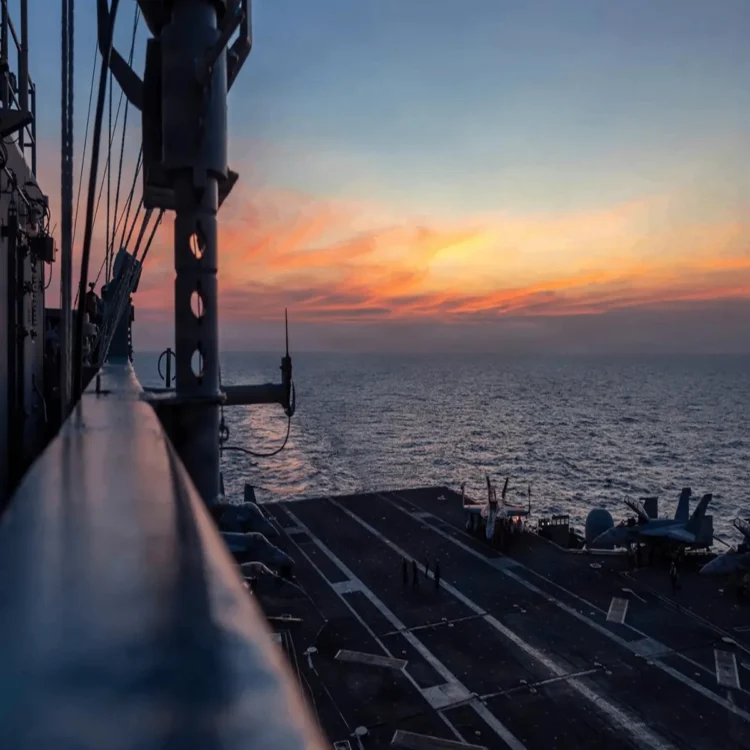
The United States Central Command confirmed that the USS Abraham Lincoln (CVN 72) is currently positioned in the Arabian Sea, where it is playing a key role in enforcing restrictions on vessels linked to Iranian ports. The carrier recently conducted a vertical replenishment operation, receiving supplies from the USNS Carl Brashear on April 18. This logistical exercise highlights the sustained operational readiness of US naval forces in the region.
Ongoing Naval Operations in Strategic Waters
According to official statements, the replenishment process involved transferring essential supplies via aerial methods while both ships remained operational at sea. Such activities are crucial for maintaining prolonged deployments without requiring port access. The Arabian Sea has become a focal point for these operations, reflecting the scale and persistence of US naval engagement.
The presence of the USS Abraham Lincoln underscores Washington’s intent to maintain a strong maritime posture near Iran. The enforcement of restrictions on ships entering or leaving Iranian ports is part of broader efforts to exert pressure amid ongoing geopolitical tensions.
Political Statements Add to Tensions
The situation has been further intensified by remarks from former US President Donald Trump, who claimed that the United States holds a dominant position in its conflict with Iran. He stated that American military efforts have significantly weakened Iran’s capabilities, including its naval and air forces.
Trump also criticised sections of the media, accusing them of misrepresenting the situation. He asserted that the blockade on Iran would remain in place until a formal agreement is reached, suggesting that the strategy is central to US pressure tactics.
Iran Responds with Strong Opposition
Iranian leadership has responded sharply to these developments. Mohammad Baqer Ghalibaf, Iran’s parliamentary speaker and a key negotiator, accused the United States of undermining diplomatic efforts through aggressive actions and rhetoric. He stated that Iran would not engage in negotiations under pressure, describing the current approach as an attempt to force submission.
Ghalibaf also warned that Tehran could escalate its response if tensions continue to rise. His remarks indicate that Iran is prepared to take further steps if it perceives threats to its sovereignty or security interests.
Diplomatic Efforts Face Uncertainty
The standoff comes at a critical moment, with a temporary ceasefire set to expire on April 22. Although the truce has paused direct conflict, both sides remain deeply mistrustful of each other. Long-standing disputes over Iran’s nuclear programme and the security of the Strait of Hormuz continue to complicate negotiations.
The Strait of Hormuz remains a vital route for global oil shipments, making stability in the region a matter of international concern. Any disruption could have far-reaching economic consequences.
Regional Talks Under Strain
Adding to the uncertainty, Iranian state media has indicated that Tehran may withdraw from upcoming talks in Islamabad. Reports suggest dissatisfaction with what Iran views as inconsistent demands from the United States.
Iranian Foreign Minister Abbas Araghchi has also raised concerns about repeated ceasefire violations, stating that such actions undermine trust and hinder progress toward peace. During discussions with Pakistan’s Foreign Minister Ishaq Dar, Araghchi emphasised that meaningful dialogue cannot occur without mutual respect and adherence to agreements.
A Fragile Situation Ahead
As the ceasefire deadline approaches, both Washington and Tehran remain firmly positioned, with little indication of compromise. The combination of military activity and strained diplomacy has created a volatile environment.
The outcome of upcoming negotiations remains uncertain, and the possibility of renewed conflict continues to loom over the region. Observers note that the coming days will be critical in determining whether tensions escalate further or move toward a more stable resolution.