
Leadership – Kim Jong Un Reappointed as Party Chief at Congress
Leadership – North Korean leader Kim Jong Un has been reappointed as general secretary of the ruling Workers’ Party during the country’s Ninth Party Congress, according to state media reports. The announcement, carried by the Korean Central News Agency and cited by Yonhap News Agency, underlined his continued authority over the party and the state’s policy direction for the coming years.
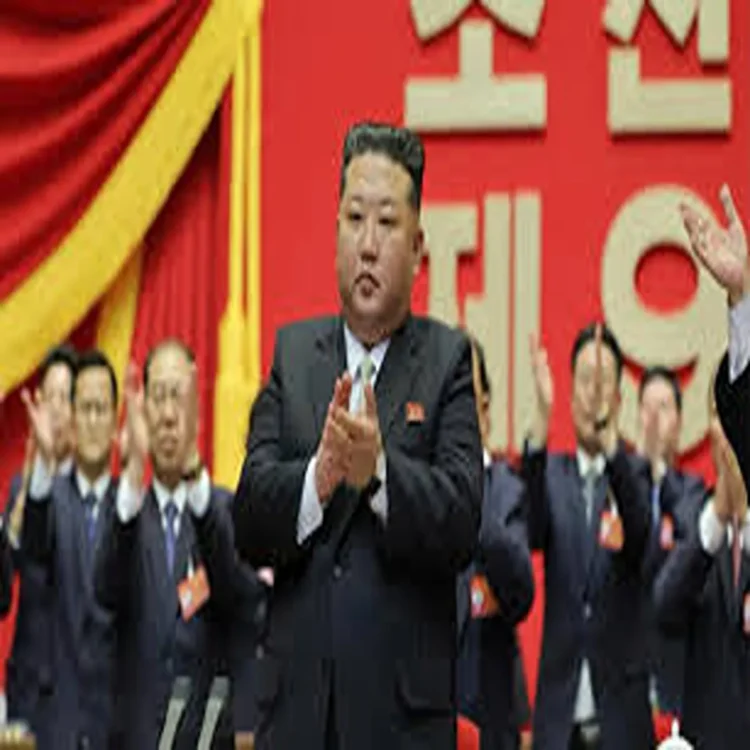
Decision Taken at Key Party Gathering
The Korean Central News Agency said delegates at the congress voted to re-elect Kim as head of the Workers’ Party of Korea, describing the move as a reflection of broad backing from party members, citizens and the military. The decision was made on the fourth day of the multi-day assembly, which began last week and is regarded as North Korea’s highest political forum.
Under party rules, the position of general secretary is confirmed during a party congress. Such meetings, typically held every few years, set strategic priorities for economic planning, defence capabilities and diplomatic engagement. The current congress is the first of its kind since the eighth gathering in 2021.
Focus on Defence and Nuclear Policy
In its coverage, state media highlighted what it described as rapid progress in strengthening the country’s defence posture. Reports credited Kim with expanding nuclear-based deterrence and modernising armed forces to respond independently to external threats. The congress praised the military for being prepared for a range of conflict scenarios and said the country’s war deterrence had been significantly reinforced despite international sanctions and other pressures.
The emphasis on defence aligns with North Korea’s long-standing strategy of prioritising military strength as a core pillar of national policy. Over the past several years, the country has conducted multiple missile tests and advanced weapons development, moves that have drawn criticism from neighbouring countries and the wider international community.
Senior Officials Offer Public Praise
During the congress, party secretary Ri Il-hwan delivered remarks applauding Kim’s leadership. He said the party had achieved notable progress under Kim’s guidance and portrayed him as central to advancing national goals. According to the official account, Ri stated that Kim’s leadership was essential for sustaining long-term development and transformation.
State media also reported that North Korea had withstood external sanctions and strengthened its standing, presenting itself as a resilient state capable of managing internal and external challenges.
Changes in Party Structure
The congress adopted amendments to party regulations, though detailed information about those changes has not been disclosed publicly. Observers noted that revisions to party rules can signal adjustments in governance structure or policy priorities.
New members were also appointed to the party’s central committee. Some senior figures were not included in the updated list, including prominent official Choe Ryong-hae. Analysts have interpreted these omissions as a possible sign of leadership reshuffling or generational change within the upper ranks of the party.
Limited External Messaging
South Korea’s Ministry of Unification commented that the congress appeared to concentrate primarily on consolidating internal leadership rather than sending strong messages abroad. Spokesperson Yoon Min-ho said that public communication about foreign relations was kept to a minimum, and details released by North Korean media were limited.
The restrained external tone contrasts with previous congresses where international relations featured more prominently. Analysts in Seoul are closely monitoring whether the final outcomes of the congress will include specific policy announcements affecting inter-Korean relations or regional security dynamics.
Outlook for the Next Five Years
As the Ninth Party Congress continues, attention is turning to the policy framework expected to guide North Korea over the next five years. Historically, such gatherings have outlined objectives for economic management, defence investment and diplomatic positioning.
While detailed policy documents have yet to be released, the reaffirmation of Kim Jong Un’s leadership signals continuity in the country’s political direction. Observers expect further announcements once the congress concludes, offering greater clarity on economic targets and defence planning.
For now, the reappointment underscores Kim’s firm grip on the party structure and the central role of the Workers’ Party in shaping North Korea’s governance and national strategy.