
Israel – Airstrike in Beirut Targets Hezbollah Aerial Unit Member
Israel – The Israeli Air Force announced that it carried out an airstrike in Beirut that resulted in the death of an individual it identified as a member of Hezbollah’s aerial unit. According to Israeli authorities, the operation took place on Thursday, March 12, 2026, during the ongoing regional tensions between Israel and the Lebanon-based militant group.
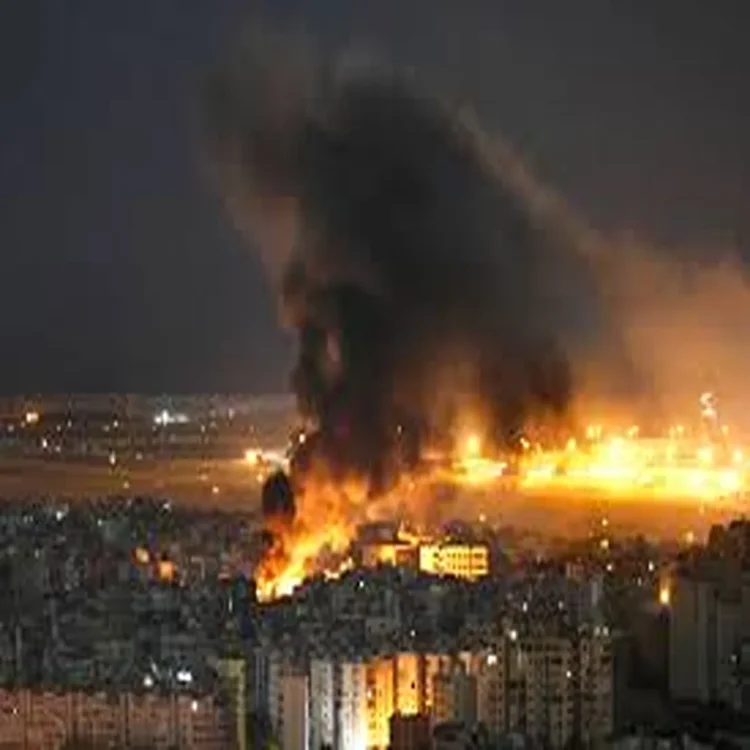
Israeli Military Announces Targeted Strike
In a statement released on Saturday, the Israeli military said the airstrike was conducted based on intelligence gathered by military intelligence units. The Israeli Air Force stated that the operation targeted Marthsa Hussein Sarour near the Lebanese University in Beirut.
According to the Israeli statement, Sarour was described as an operative affiliated with Hezbollah’s aerial division. The military said the strike was intended to neutralize an individual believed to be involved in the group’s weapons development activities.
The Israeli Air Force shared the update on its official social media account, noting that the strike was carried out with the guidance of intelligence agencies monitoring Hezbollah’s operations.
Alleged Role in Hezbollah’s Weapons Development
Israeli officials claim Sarour held an important technical role within Hezbollah’s aerial unit. The military alleged that he contributed to the production of weapon systems used by the organization and possessed specialized expertise related to arms development.
The statement described him as a central figure involved in supporting the group’s weapons manufacturing capabilities. Israeli authorities have long accused Hezbollah of investing in domestic weapons production facilities to reduce reliance on external supply chains.
While Israel has presented Sarour as a key operative, independent verification of these claims has not been publicly confirmed by Lebanese authorities.
Family Connection to Hezbollah Leadership
The Israeli military also linked Sarour to another senior Hezbollah member previously killed during an Israeli campaign. According to the statement, he was the brother of Muhammad Hussein Sarour, who Israel described as the commander of Hezbollah’s aerial unit.
Muhammad Hussein Sarour was reportedly killed during a previous Israeli military operation known as Operation “Arrows from the North.” Israeli officials have said that the operation targeted infrastructure and personnel connected to Hezbollah’s aerial capabilities.
By highlighting the family connection, Israeli authorities suggested that both brothers played roles within the same operational network tied to the group’s aerial activities.
Academic Position at Lebanese University
In addition to his alleged militant activities, Israeli officials said Sarour worked as a chemistry lecturer at the Lebanese University in Beirut. The Israeli statement claimed that some individuals affiliated with Hezbollah also hold positions within academic institutions across Lebanon.
According to the Israeli military, these individuals allegedly provide technical knowledge that may support weapons research and production for the organization. Israel argued that such dual roles allow operatives to contribute scientific expertise while maintaining civilian careers.
Lebanese academic institutions have not publicly responded to the claims regarding Sarour’s professional role or the broader allegations made by the Israeli military.
Claims About Hezbollah Infrastructure in Civilian Areas
The Israeli military further alleged that Hezbollah maintains weapons production infrastructure at several locations across Lebanon. According to Israeli officials, these facilities are intended to strengthen the group’s ability to produce weapons domestically.
Israel also accused Hezbollah of embedding its personnel and operational facilities within civilian environments. The statement claimed that the group operates within residential and public spaces across Lebanon, including areas near educational institutions.
Hezbollah has previously denied similar accusations, stating that Israel frequently makes such claims to justify military operations.
Ongoing Regional Tensions
The reported strike in Beirut reflects the continuing volatility between Israel and Hezbollah, which has seen repeated exchanges of attacks in recent years. The situation has raised concerns among international observers about the risk of wider escalation in the region.
As of now, Lebanese authorities and Hezbollah have not issued detailed responses regarding the Israeli claim about the strike or the identity of the individual killed.