
Iran – US Expands Airstrikes on Iranian Military Sites Near Hormuz
Iran – The United States has carried out a major round of military strikes on Iranian targets, marking one of the most significant escalations between Washington and Tehran since the ceasefire reached in April. A US official told Axios that the latest operation was several times larger in scale and firepower than the strikes launched around 10 days earlier.
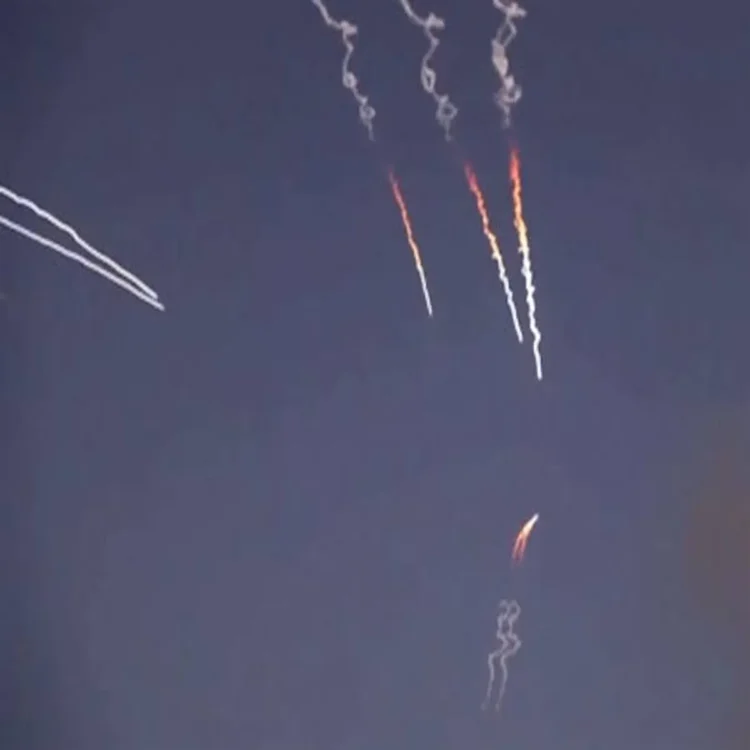
The official said the mission could continue for several more hours, suggesting that the operation was not expected to end quickly. The strikes are being described as the strongest US military action against Iran since the April truce, which had briefly reduced tensions between the two sides.
US Officials Describe Operation as a Punitive Response
A separate American official told CNN that the purpose of the operation was not limited to a measured response. The official described the campaign as punitive and said further strikes could still be underway.
“This is punishment. It won’t be over for a bit,” the official said, according to CNN.
The comments indicate that the US administration is seeking to impose a stronger military cost on Iran following recent incidents involving commercial shipping in the Strait of Hormuz.
Military Sites Near Strait of Hormuz Targeted
The US military said the attacks focused on Iranian military facilities located near the Strait of Hormuz, one of the world’s most important energy shipping corridors. American officials said the strikes followed renewed attacks and threats against commercial vessels moving through the waterway.
According to details shared by a US official, the targets included air defence systems, coastal surveillance networks, surface-to-air missile sites, anti-ship cruise missile positions, drone launch facilities and port-related infrastructure.
The Strait of Hormuz is a vital route for global oil and gas supplies. Any disruption in the region can affect international shipping, energy markets and trade flows across several countries.
Explosions Reported in Bandar Abbas, Sirik and Qeshm
Iranian state media reported explosions in several coastal locations after the US strikes. Blasts were reported in Bandar Abbas and Sirik, while Qeshm Island also witnessed explosions, according to the reports.
State media further said fires broke out near the Sirik pier and at Shahid Haqqani Port in Bandar Abbas. There was no immediate independent confirmation of the full extent of the damage, casualties or disruption caused by the strikes.
The affected areas are located close to the Strait of Hormuz, where Iran maintains a significant military presence and operates surveillance, naval and missile infrastructure.
CENTCOM Links Strikes to Attacks on Commercial Ships
US Central Command said the airstrikes were launched in response to Iranian attacks on three commercial vessels in the Strait of Hormuz on Tuesday. The command said the action was intended to protect international shipping and prevent further threats in the region.
CENTCOM also warned that those involved in targeting commercial vessels would face serious consequences. The statement reflected growing concern in Washington over the security of maritime traffic through the narrow waterway.
The latest military action could increase pressure on shipping companies and insurers operating in the Gulf region, especially if the conflict leads to further attacks or restrictions on vessel movement.
Iran Accuses Washington of Breaking Agreement
Iran’s Foreign Ministry strongly criticised the US operation and accused Washington of repeatedly violating a memorandum of understanding signed between the two countries. The ministry said Tehran would take whatever measures it considered necessary to protect its security and national interests.
Iran has not yet provided detailed information on its planned response. However, the ministry’s statement suggested that Tehran views the latest strikes as a serious breach of the fragile understanding that had helped reduce direct confrontation in recent months.
Ceasefire Faces Fresh Pressure
The new confrontation has placed the April ceasefire under severe strain and raised concerns about a wider conflict in West Asia. Diplomatic efforts to contain the crisis now face a more difficult environment as both countries exchange warnings and military activity increases.