
Iran – Khamenei’s Death Exposes Deep Divisions Across Iranian Society
Iran -The death of Ayatollah Ali Khamenei has brought Iran’s political and social fractures into sharper view, with public mourning by loyalists unfolding alongside widespread anger, grief and uncertainty among many other citizens.
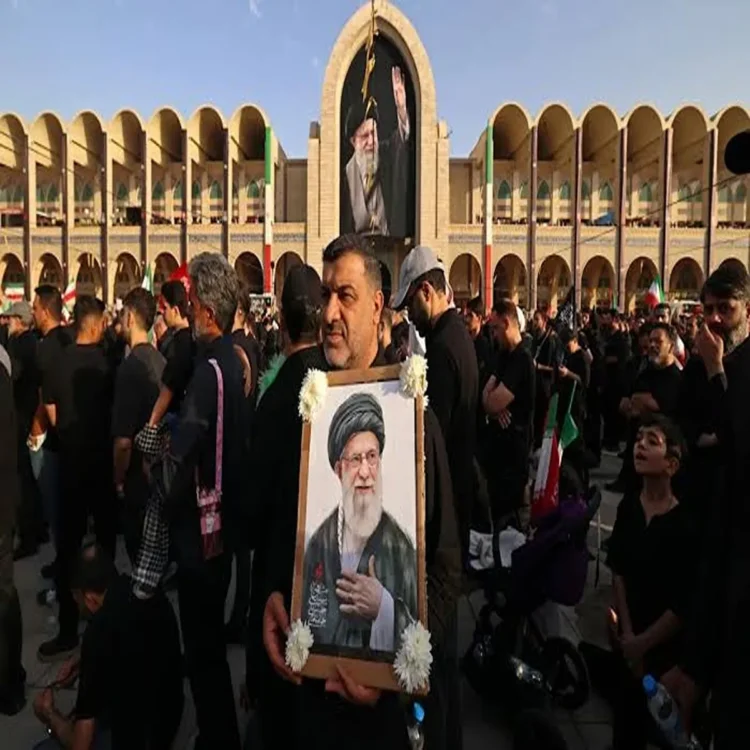
Khamenei, who led the Islamic Republic for more than three decades, was killed in Israeli strikes on February 28. His burial is scheduled for Thursday, following funeral processions in Tehran and several other cities that drew large crowds of supporters. For hard-line supporters, his death has reinforced his image as a leader who defended Iran’s clerical system against the United States, Israel and Western pressure.
Divisions Reach Into Families
For others, Khamenei’s legacy is associated with political repression, economic hardship and restrictions on daily life. A Tehran-based technology worker, whose family has longstanding religious ties, said political and religious differences have become so severe that discussions with close relatives are now difficult.
Born in Qom, a major center of Shiite religious learning, he grew up in a household that supported the Islamic Republic. By his late 20s, however, he had rejected clerical rule and stopped observing religious practices. He said the country’s divisions are now visible inside homes as well as in public life.
The man, speaking anonymously because of security concerns, said frustration has been building for years amid sanctions, poor economic management and repeated crackdowns on dissent.
A Legacy Shaped by Power and Resistance
Khamenei became supreme leader in 1989, succeeding Ayatollah Ruhollah Khomeini, who led the 1979 revolution that removed Iran’s U.S.-backed shah. During his leadership, Iran expanded its nuclear activities, missile capabilities and regional network of allied armed groups despite international sanctions.
At home, Khamenei strengthened conservative clerical authority and expanded the influence of the Revolutionary Guard in military, political and economic affairs. Reformist movements were gradually weakened, while authorities maintained strict controls over public behavior, dress and political expression.
Supporters attending the funeral described him as a symbol of resistance. Some mourners repeated calls for retaliation against the United States and Israel. Hossein Akbari, a 60-year-old participant in Tehran, said those attending wanted to demonstrate that Iran would not yield to outside pressure.
Protests Changed the Political Landscape
The disputed presidential election of 2009 marked a major turning point. Demonstrations over allegations of vote manipulation were violently suppressed, with dozens killed. The crackdown deepened public distrust and weakened hopes that political reform could be achieved through elections.
Iranian officials have also acknowledged the country’s growing polarization. Ali Rabiei, a senior aide to President Masoud Pezeshkian, said recently that Iran was divided between committed supporters of the Islamic Republic and those seeking its removal. He argued that many citizens remained between those two positions and could still support gradual change.
Election turnout has fallen to historic lows in recent years, reflecting declining confidence among many voters. Yet both conservative and reformist candidates continue to attract millions of votes, highlighting the complexity of Iran’s political landscape.
Economic Strain and Personal Loss
The latest wave of unrest in January began over worsening economic conditions before expanding into calls for Khamenei’s removal. Security forces responded with force, and thousands were reportedly killed during nationwide protests.
Families of those killed say the impact has been devastating. The sister of a protester shot in Tehran described Khamenei’s legacy as one of injustice, saying rising prices, job losses and grief have left many households struggling to meet basic needs.
Videos shared online during Ashoura observances have shown some participants carrying photographs of relatives killed in the crackdown. The images reflected a quieter but visible expression of dissent during religious ceremonies.
Uncertain Future for the Islamic Republic
Iran’s leadership has survived Khamenei’s death and the wider U.S.-Israeli military campaign, while pursuing an interim agreement with Washington. The arrangement could lead to sanctions relief if a final nuclear deal is reached, though negotiations remain uncertain.
Political analysts say the coming period may test the system more than wartime did. Ali Vaez of the International Crisis Group said external pressure had created temporary unity among Iran’s ruling institutions, but longstanding problems of governance, unemployment and public dissatisfaction remain unresolved.