
GlobalVision – RSS Leader Highlights Civilisational Outlook and Global Engagement Strategy
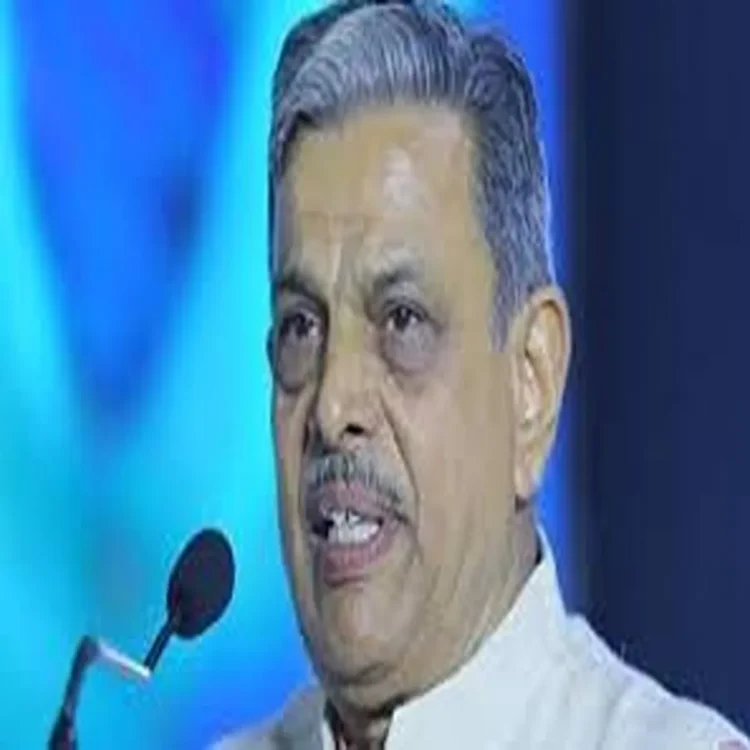
GlobalVision – Rashtriya Swayamsevak Sangh (RSS) General Secretary Dattatreya Hosabale presented a broad perspective on global cooperation, cultural identity, and social unity during a discussion at a policy forum in Washington. While addressing questions on international affairs, he maintained that the organisation does not interfere in the Indian government’s foreign policy decisions, choosing instead to focus on long-term societal values and civilisational understanding.
Distinction Between Organisation and Government Policy
Hosabale clarified that the RSS does not participate in shaping day-to-day governmental strategies, including matters related to neighbouring countries such as Pakistan. He explained that the organisation’s position aligns with what benefits India overall but does not extend to direct political involvement. According to him, the RSS operates independently of official policymaking processes while remaining supportive of national interests.
Perspective on Regional Tensions
Addressing questions about India’s relations with its neighbours, Hosabale suggested that existing tensions are largely influenced by political and historical circumstances rather than deeper cultural divides. He pointed out that mistrust among political leadership in certain countries has contributed significantly to strained ties.
At the same time, he underlined that relationships between ordinary people across borders continue to remain largely positive. He described these interpersonal connections as resilient, noting that societal bonds often endure despite diplomatic challenges. However, he acknowledged that issues with one neighbouring country remain particularly complex due to historical developments.
Civilisational Identity and Inclusive Outlook
A central theme of Hosabale’s remarks was the idea of civilisational identity. He described the RSS’s understanding of Hindu identity as rooted in cultural and historical traditions rather than confined to religious definitions. According to him, this identity reflects a broader worldview that emphasises harmony between humans and nature, as well as shared human values.
He rejected any notion of cultural superiority, instead promoting the idea that all people belong to a global family. This perspective, he said, encourages coexistence and mutual respect among diverse societies.
Expanding Dialogue with the West
Hosabale also highlighted the organisation’s efforts to engage with international audiences, particularly in Western countries. He noted that outreach initiatives have been expanded to connect with intellectual and policy communities abroad. The aim, he explained, is to foster better understanding of India’s cultural framework and the principles guiding the RSS.
He emphasised that meaningful global partnerships must be built on trust and respect. Recognising each nation’s unique priorities, he said, is essential for sustaining long-term cooperation. Without such mutual understanding, international relationships could face difficulties over time.
Focus on Social Values and Sustainability
On the domestic and global front, Hosabale identified several key priorities that he believes are essential for stability and progress. These include promoting social harmony, encouraging environmentally responsible lifestyles, strengthening family structures, and emphasising civic responsibilities.
He described these principles as universal in nature, applicable not only within India but also across different societies worldwide. According to him, reinforcing these values can contribute to a more stable and balanced global environment.
Vision for Nation Building and Global Contribution
Hosabale concluded by stressing that a strong and confident nation is better positioned to contribute positively to the world. He suggested that internal strength, built on unity and shared values, enables a country to support others during times of hardship.
His remarks were part of a larger conference examining India’s growing influence in global affairs and its engagement with major international partners. The discussion reflected an attempt to present a broader philosophical framework alongside ongoing geopolitical developments.