
Geopolitics – US Intelligence Flags Rising China Russia Tech Driven Threats
Geopolitics – The United States intelligence community has raised concerns about a rapidly evolving global threat environment, where technological advancements and geopolitical rivalries are becoming increasingly intertwined.
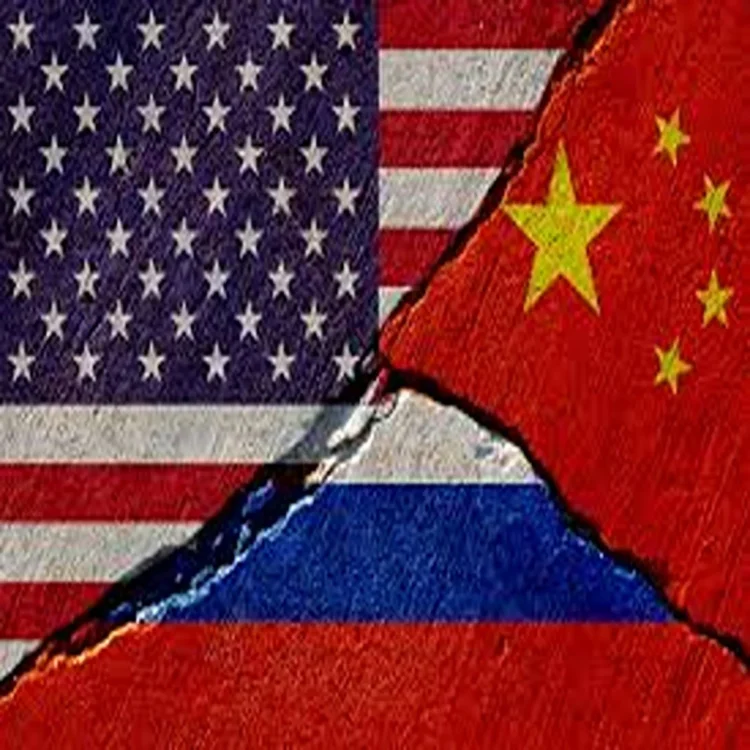
US Director of National Intelligence Tulsi Gabbard informed lawmakers that China and Russia remain the most consistent and capable strategic competitors facing the United States. Speaking during a Congressional hearing, she emphasized that the convergence of emerging technologies and traditional power struggles is creating a more unpredictable and hazardous international landscape.
Growing Role of Artificial Intelligence in Global Competition
Gabbard highlighted that China has made significant progress in artificial intelligence, positioning itself as a leading competitor in this critical field. According to the intelligence assessment, AI is no longer limited to civilian innovation but is increasingly shaping military operations and national security strategies.
She noted that rival nations are incorporating artificial intelligence into cyber activities, intelligence collection, and battlefield decision-making processes. This shift is expected to accelerate the complexity and scale of cyber threats in the coming years, making them harder to detect and counter.
China and Russia Identified as Primary Security Challenges
The intelligence community’s findings point to China and Russia as the most active players in both cyber and military domains. Both countries continue efforts to breach US government systems as well as private sector networks, raising concerns about data security and infrastructure vulnerability.
Officials stressed that these nations are not only enhancing their cyber capabilities but are also investing heavily in advanced military technologies designed to challenge US defence systems.
Expanding Missile Threats Raise Alarm
One of the key warnings from the assessment relates to the rapid increase in global missile capabilities. The number of missiles capable of threatening the United States is projected to grow significantly over the next decade, with estimates suggesting a rise from over 3,000 currently to more than 16,000 by 2035.
China and Russia are reportedly developing sophisticated delivery systems that could bypass or weaken existing US missile defence mechanisms. This development is seen as a major factor contributing to future strategic instability.
North Korea and Iran Add to Security Concerns
While China and Russia remain central to the threat landscape, North Korea and Iran continue to play important roles. North Korea is advancing its nuclear weapons programme alongside expanding its missile capabilities, while Iran retains the technical expertise needed to develop long-range missile systems if it chooses to do so.
These developments add further complexity to an already challenging global security environment.
Cyber Threats Becoming More Aggressive and Complex
Cybersecurity risks are also intensifying, with both state and non-state actors increasing the frequency and sophistication of their attacks. According to the intelligence report, North Korea alone is believed to have stolen around $2 billion in cryptocurrency in 2025, using these funds to support its weapons programmes.
At the same time, ransomware groups are evolving their tactics, shifting toward faster and larger-scale attacks that are more difficult to identify and prevent. These groups are targeting critical sectors, including healthcare and public services, raising concerns about potential disruptions to essential systems.
Emerging Domains: Space and Arctic Gain Strategic Importance
The assessment also draws attention to growing competition in newer strategic areas such as space and the Arctic. China and Russia are investing in capabilities designed to challenge US assets in space, making this domain increasingly contested.
In the Arctic region, Russia is expanding its military presence by building new infrastructure and deploying additional forces. Meanwhile, China is seeking to strengthen its economic and strategic influence in the region, signaling a broader shift in global power dynamics.
Increasing Global Instability and Use of Force
The intelligence community warns that the overall international environment is becoming more unstable, with armed conflicts becoming more frequent. Nations are increasingly combining military strength with economic and technological tools to advance their strategic goals.
This evolving approach reflects a broader transition toward multi-domain competition, where artificial intelligence, cyber capabilities, and advanced weapon systems are deeply interconnected with traditional geopolitical rivalries.
The report underscores the need for continued vigilance as the global security landscape grows more complex and unpredictable.