
GazaConflict – Fresh Israeli Airstrikes Claim Lives in Gaza City
GazaConflict – Israeli airstrikes carried out in Gaza City early Thursday resulted in the deaths of at least eight people, according to officials from the Palestinian civil defence authority. The latest incident adds to the ongoing instability in the region despite a ceasefire agreement that remains formally in place.
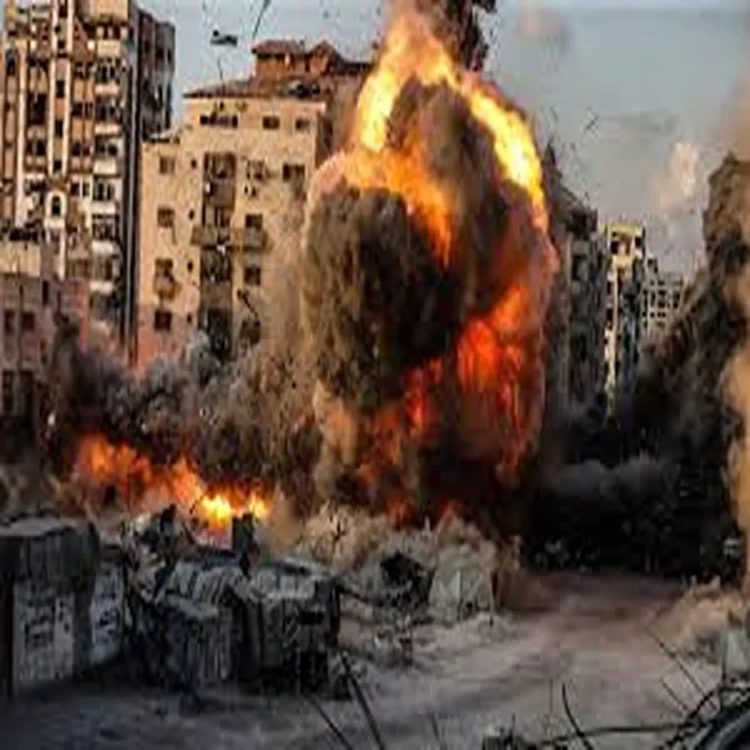
Casualties Reported After Dawn Strikes
Mahmoud Bassal, spokesperson for Gaza’s civil defence agency, said seven people lost their lives when residential buildings in Gaza City were targeted during the early morning hours. Another person was killed in the Al-Shati refugee camp located west of the city. Emergency response teams were deployed to affected areas following the attacks.
Local health officials stated that several injured residents were transported to medical facilities for treatment. According to information provided by Al-Shifa Hospital, at least 15 individuals sustained injuries in the strikes and received medical care.
Ceasefire Continues Amid Ongoing Violence
Although a ceasefire arrangement has technically remained in effect since October, violence has continued across the Gaza Strip. The region has witnessed repeated military operations and security incidents, raising concerns about the durability of the truce.
Large sections of Gaza remain under Israeli military control, a situation that has become a major point of disagreement between the parties involved. The continuing clashes have complicated efforts to restore stability and move forward with the next phase of negotiations.
Rising Death Toll Since Truce Agreement
Data released by Gaza’s health ministry indicates that at least 936 people have been killed since the ceasefire came into force. The ministry operates under the Hamas administration in Gaza, and its casualty figures are frequently referenced by international organizations, including the United Nations.
The continued loss of life has intensified international concern over the humanitarian situation in the territory. Aid groups and diplomatic observers have repeatedly called for stronger measures to prevent further civilian casualties and preserve the terms of the ceasefire.
Mutual Allegations Over Violations
Both Israel and Hamas have accused one another of failing to uphold commitments outlined in the ceasefire agreement. The exchange of allegations has contributed to delays in implementing additional stages of the arrangement.
The initial phase of the deal focused on the release of Israeli hostages held by Hamas in exchange for Palestinians detained by Israeli authorities. While that part of the agreement saw progress, subsequent steps have encountered significant obstacles.
Negotiations Remain Stalled
Plans for a second phase of the ceasefire envisioned the gradual withdrawal of Israeli forces from Gaza and discussions surrounding the disarmament of Hamas. However, negotiations connected to those objectives have remained at a standstill for several months.
The lack of progress has fueled uncertainty regarding the future of the ceasefire and the possibility of reaching a longer-term political and security framework for the region.
Israeli Operations and Hamas Leadership Losses
Last week, Israeli Prime Minister Benjamin Netanyahu announced that he had instructed the military to establish control over approximately 70 percent of the Gaza Strip. The statement highlighted Israel’s continuing military strategy in the territory.
Meanwhile, Hamas has faced additional setbacks within its military leadership. Mohammed Odeh, identified as the latest commander of the group’s armed wing in Gaza, was killed in an Israeli strike last week. His death came roughly one month after the reported killing of his predecessor, marking another significant development in the ongoing conflict.