
Diplomacy – Trump’s Pearl Harbor Remark Causes Unease During Japan Talks
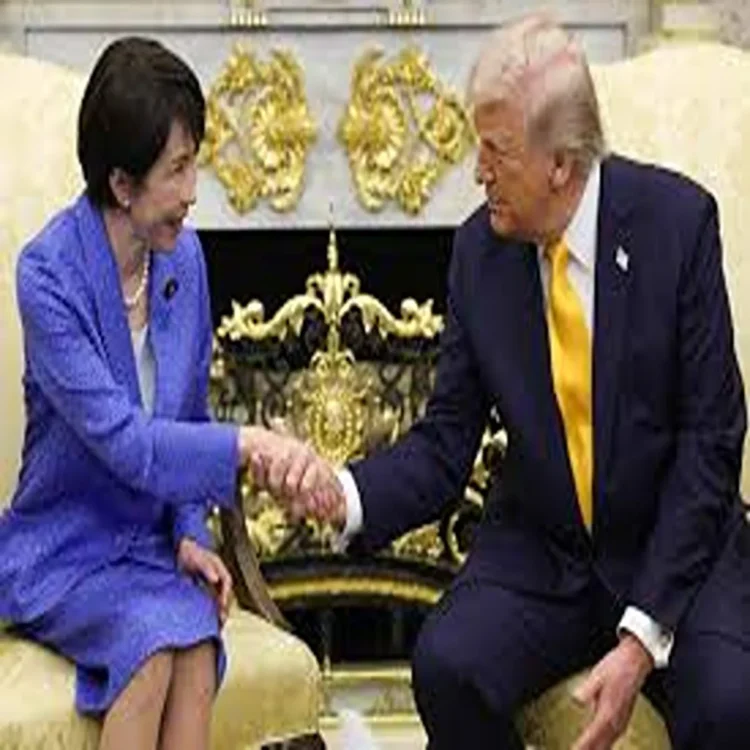
Diplomacy – The meeting between US President Donald Trump and Japanese Prime Minister Sanae Takaichi at the White House briefly took an unexpected turn after a historical reference introduced discomfort into an otherwise cordial exchange.
Unexpected Historical Reference Raises Tension
The moment unfolded when President Trump addressed questions about why key allies in Europe and Asia, including Japan, were not informed ahead of recent US military strikes on Iran. He emphasized the importance of maintaining operational secrecy, explaining that surprise was essential to the mission’s success.
While making his point, Trump drew a comparison to Japan’s 1941 attack on Pearl Harbor, suggesting that the concept of surprise in military strategy was well understood historically. The comment, though intended to underline tactical reasoning, introduced a sensitive reference during a high-level diplomatic meeting.
Visible Reaction from Japanese Prime Minister
According to reports from journalists present at the meeting, Prime Minister Takaichi appeared visibly taken aback by the remark. Observers noted a sudden shift in her expression, with her demeanor becoming more reserved following the comment.
Despite the unexpected moment, she did not address the reference publicly during the discussion. The exchange stood out sharply against the otherwise warm and carefully managed tone of the visit.
Strategic Justification for Secrecy
President Trump defended the decision to withhold advance information about the strikes, arguing that prior disclosure could have compromised the operation. He stated that maintaining confidentiality allowed US forces to achieve a significant advantage in the initial phase of the mission.
According to his remarks, early outcomes of the operation exceeded expectations, reinforcing his argument that secrecy played a crucial role in its effectiveness.
Strong Personal Rapport Highlighted
Beyond the brief moment of tension, both leaders emphasized the strength of their relationship. President Trump repeatedly praised Prime Minister Takaichi, describing her leadership in positive terms and highlighting the strong ties between the two nations.
At an official dinner later in the day, he continued to commend her presence and leadership, reinforcing a message of partnership and mutual respect.
Takaichi also expressed confidence in their working relationship, suggesting that their cooperation would help advance shared strategic goals. Her remarks reflected a focus on collaboration and forward-looking diplomacy.
Expectations on Regional Security Role
During the discussions, President Trump also signaled expectations for Japan to take a more active role in matters affecting its national interests, particularly in relation to the Strait of Hormuz. He pointed out Japan’s reliance on energy supplies passing through the region, indicating that such dependencies may require greater involvement in ensuring stability.
The comments highlighted ongoing conversations about burden-sharing among allies, especially in regions critical to global energy flows.
Japan’s Measured Position on China
On broader regional issues, including relations with China, Prime Minister Takaichi maintained a cautious and balanced stance. She reiterated Japan’s commitment to dialogue and expressed hope that stable US-China relations would contribute positively to regional security and global supply chains.
Her remarks reflected Japan’s consistent diplomatic approach of maintaining open channels while navigating complex geopolitical dynamics.
Historical Context Remains Sensitive
The reference to Pearl Harbor carried particular weight given its historical significance. Although the United States and Japan have built a strong alliance in the decades following World War II, the event remains a deeply sensitive chapter in shared history.
Today, both nations cooperate closely across defense, trade, and regional security, making such historical comparisons especially delicate in diplomatic settings.