
Conflict – US clarifies USS Abraham Lincoln continues Iran operations
Conflict – The United States military has rejected recent claims made by Iran regarding the movement of one of its aircraft carriers, asserting that operations in the region are continuing without disruption. The clarification came shortly after Iranian naval officials suggested that the USS Abraham Lincoln had been compelled to alter its course following missile activity.
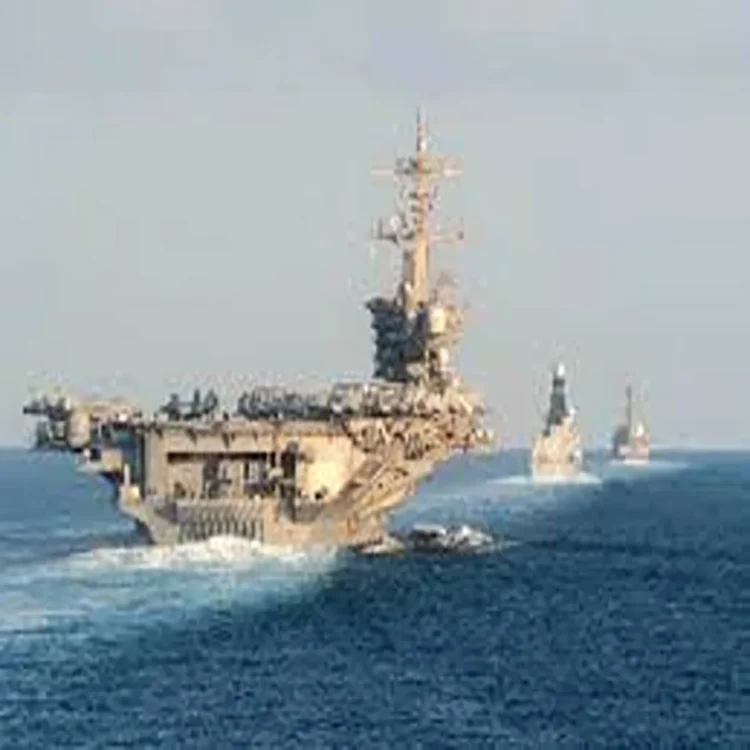
US Military Responds to Iranian Claims
In a statement shared on social media platform X, US Central Command (CENTCOM) confirmed that the USS Abraham Lincoln remains actively engaged in mission operations. According to the statement, the carrier continues to conduct flight operations targeting military objectives while navigating regional waters.
The response appears aimed at countering assertions made by Iranian authorities, who earlier claimed that their naval actions had influenced the carrier’s positioning.
Iranian Navy Issues Warning
A day prior to the US clarification, Iran’s naval leadership had issued a stern warning directed at the United States. Reports from Iranian state broadcaster Press TV indicated that the USS Abraham Lincoln is under continuous monitoring by Iranian forces.
Rear Admiral Shahram Irani, commander of Iran’s Navy, stated that the vessel could face direct action if it moves within the operational range of Iran’s missile systems. He emphasized that the aircraft carrier remains under close surveillance and would be considered a target if it approaches Iranian-controlled zones.
Broader Military Messaging from Tehran
The naval warning is part of a broader narrative from Iranian military officials, who have recently taken a strong stance against US influence in the region. Iranian commanders have portrayed Washington’s diplomatic efforts as lacking sincerity.
Lieutenant Colonel Ebrahim Zolfaqari, speaking on behalf of Iran’s Khatam al-Anbiya Central Headquarters, reportedly described what he called a shift in American power, suggesting that previous displays of strength have now weakened significantly.
Such statements reflect escalating rhetoric from Tehran amid ongoing geopolitical friction.
Shift in US Strategic Posture
The latest exchange of statements follows a notable development involving US President Donald Trump. Earlier, Trump had issued a 48-hour ultimatum threatening strikes on Iranian infrastructure, particularly targeting energy facilities.
However, the administration later stepped back from this position. The reversal reportedly came after Iran warned that any attack on its infrastructure would trigger retaliatory strikes across energy installations throughout the region.
This apparent de-escalation marked a temporary pause in direct confrontation, although tensions remain high.
Iran Maintains Hardline Position
Iran’s Foreign Minister Abbas Araghchi has reiterated that the country will continue its current strategy of resistance. In a televised interview, he made it clear that Tehran is not engaged in any negotiations and does not intend to pursue talks without firm and credible guarantees.
Araghchi emphasized that Iran’s stance remains consistent despite ongoing diplomatic contacts in the region. He dismissed suggestions of active negotiations and underscored that the country’s policy is rooted in maintaining its position against what it describes as external aggression.
Trump Signals Confidence Amid Tensions
Meanwhile, President Trump has continued to project confidence regarding US actions in the Middle East. Speaking at a fundraising event, he suggested that the United States is making significant progress in resolving conflicts globally.
He also claimed that Iran is interested in reaching an agreement but is hesitant due to internal and external pressures. Trump further remarked on the challenges of leadership in Iran, suggesting that the role comes with significant difficulties.
Continuing Uncertainty in the Region
The contrasting statements from Washington and Tehran highlight the fragile nature of the current situation. While both sides have avoided immediate escalation, the exchange of warnings and counterclaims indicates that tensions remain unresolved.
With military assets positioned in close proximity and strong rhetoric on both sides, the region continues to face uncertainty. Observers note that any miscalculation could quickly shift the situation, underscoring the importance of cautious engagement moving forward.