
Conflict – Israeli Forces Continue Large-Scale Demolitions in Southern Lebanon Villages
Conflict – Israeli military operations in parts of southern Lebanon, which remain under its control following a recent ceasefire with Hezbollah, have led to widespread destruction of residential areas. The scale of demolitions has raised alarm among residents, Lebanese authorities, and international observers, who fear that displaced civilians may find their homes gone if the fragile truce holds.
Widespread Damage Raises Concerns
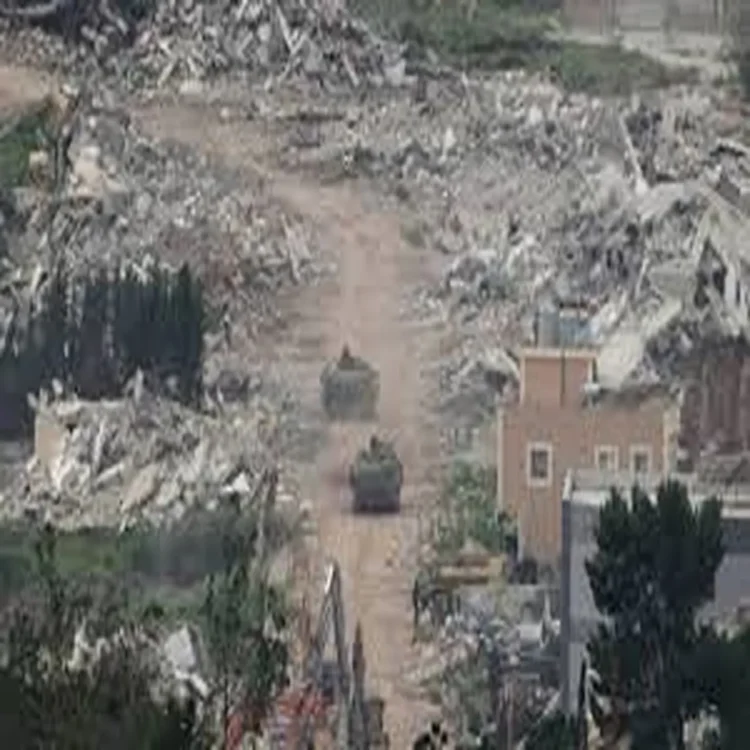
In the village of Beit Lif, located a few kilometers north of the Israel-Lebanon border, the extent of destruction is stark. Journalists visiting the area observed that much of the settlement has been reduced to rubble. Once home to thousands, the village now shows little sign of intact housing.
Residents from nearby areas say the demolition unfolded gradually. According to local accounts, buildings were systematically torn down until even central parts of the village were flattened. This pattern has been reported in several other locations across southern Lebanon.
Issue to Be Raised in Talks
Lebanese officials are preparing to address the ongoing demolitions during ceasefire discussions with Israeli representatives in Washington. These talks mark a rare instance of direct engagement between the two sides in recent decades.
Due to restricted access and ongoing security risks, a comprehensive assessment of the damage has not yet been completed. However, reports from observers and peacekeeping forces suggest that entire neighborhoods in multiple villages have been affected.
Fragile Ceasefire Under Strain
The current 10-day ceasefire began after a period of intense conflict involving Israel, Hezbollah, and broader regional tensions linked to Iran. Hostilities escalated earlier in March when Hezbollah launched missile strikes into northern Israel. This followed internal pressure within Lebanon for the group to disarm after previous conflicts.
Israel responded with extensive airstrikes and a ground offensive in southern Lebanon. The fighting led to significant casualties, with thousands reported dead, including civilians, and forced large-scale displacement across the region.
Although the ceasefire has reduced large-scale combat, violations have been reported from both sides. Hezbollah has cited ongoing Israeli actions, including demolitions, as justification for its continued strikes.
Military Justification and Civilian Impact
Israeli authorities maintain that the demolitions are aimed at eliminating Hezbollah infrastructure. According to official statements, the operations target locations believed to have been used as militant outposts, and are conducted in line with international law.
Maps released by the Israeli military indicate plans to maintain a forward defense zone extending into southern Lebanon. This area includes numerous villages whose residents have not yet been allowed to return.
For civilians, however, the consequences are immediate and severe. Many who fled during the fighting are uncertain whether their homes still stand. Some residents who have briefly returned describe witnessing ongoing demolition work using heavy machinery, including bulldozers and tanks.
Additional Destruction Compounds Earlier Damage
The latest demolitions come on top of damage from earlier conflicts, including the 2024 war between Israel and Hezbollah. Reconstruction efforts in border areas had already been limited, leaving many communities partially damaged even before the current escalation.
Recent reports from Lebanon’s official news agency indicate that infrastructure, roads, and residential districts in towns such as Khiam have been heavily impacted. Similar destruction has been noted in other areas, including Bint Jbeil and surrounding villages.
International peacekeeping forces operating in southern Lebanon have confirmed observing demolition activities in several locations since the ceasefire began.
Uncertain Path Ahead
Lebanese leadership has emphasized the urgency of halting further destruction. Officials plan to press this issue during ongoing diplomatic discussions, which are expected to focus not only on extending the current truce but also on establishing a longer-term framework for stability.
As negotiations continue, the situation on the ground remains tense. The future of displaced residents—and whether they will have homes to return to—depends largely on how both sides navigate the delicate ceasefire in the coming days.