
Cinema – Shekhar Suman Raises Concern Over Hindi Usage in Film Industry
Cinema – The Hindi film industry is witnessing growing concern over declining language accuracy and expression among actors.
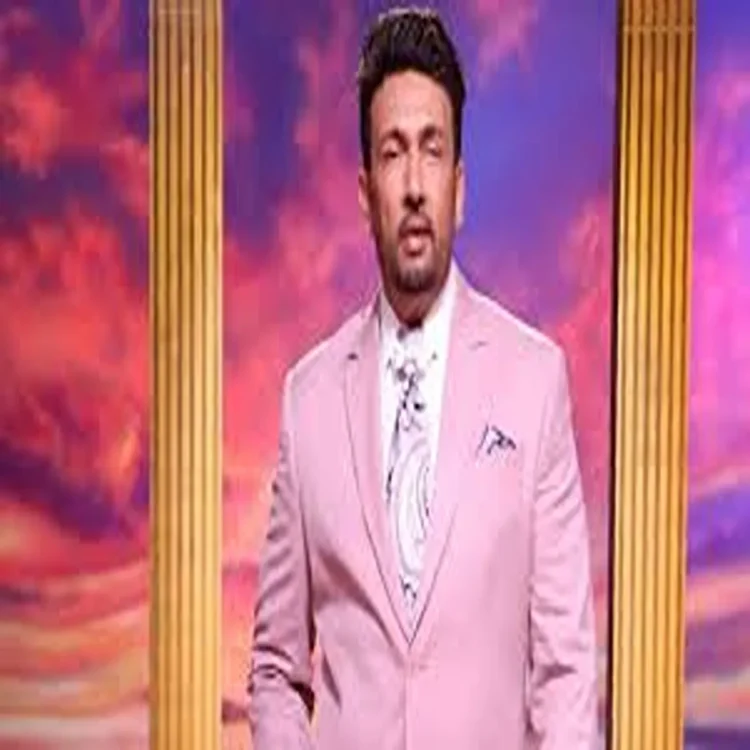
Veteran actor Shekhar Suman has expressed unease about what he sees as a steady decline in the proper use of Hindi within the entertainment industry. Speaking in a recent interaction, he highlighted how even widely used words are often mispronounced by artists working in Hindi cinema, raising questions about linguistic discipline in a language-driven field.
Concern Over Language and Performance Standards
Suman emphasized that acting is not limited to expressions and body language alone, but is deeply connected to speech and clarity of words. According to him, language plays a defining role in shaping an actor’s credibility and performance. He pointed out that many contemporary actors fail to maintain basic pronunciation standards, something that earlier generations treated with seriousness and respect.
Referring to legendary performers such as Dilip Kumar and Amitabh Bachchan, Suman noted that their command over Hindi significantly contributed to their enduring appeal. Their dialogue delivery, diction, and understanding of language became benchmarks for excellence in cinema.
Global Comparisons Highlight Importance of Speech
Drawing parallels with international cinema, Suman mentioned actors like Robert De Niro, Al Pacino, and Anthony Hopkins, who are widely respected not just for their performances but also for their strong command over language. He stressed that globally, an actor’s speech, behavior, and performance are interconnected, forming a complete artistic identity.
New Initiative to Address the Gap
In response to these concerns, Suman recently introduced the Shekhar Suman Film Academy. The institution aims to offer structured training that goes beyond acting techniques, incorporating lessons on speech, language comprehension, and overall personality development.
He explained that the goal is to create a comprehensive learning environment where aspiring actors can understand the meaning of the words they speak, rather than simply memorizing lines. According to him, many performers today deliver dialogues without fully grasping their context or significance, which weakens the authenticity of their performances.
Questions Over Language Choices in Public Platforms
Suman also raised concerns about the growing trend of using English at award ceremonies within the Hindi film industry. He questioned why professionals working primarily in Hindi cinema choose to communicate in another language during such events.
He described this shift as something that requires immediate attention, suggesting that preserving linguistic identity is a shared responsibility among artists, filmmakers, and audiences alike.
Script Writing Practices Under Scrutiny
Another issue highlighted by Suman relates to the format of film scripts. He expressed disappointment over the increasing use of Roman script instead of Devanagari for Hindi dialogues. According to him, this practice distances actors from the true phonetic and cultural essence of the language.
Suman added that he personally insists on receiving scripts written in Devanagari, as it helps maintain accuracy in pronunciation and ensures a deeper connection with the text.
Call for Collective Responsibility
Concluding his remarks, Suman underlined that improving language standards in the industry is not the responsibility of a single individual or institution. Instead, it requires a collective effort from all stakeholders to restore the importance of Hindi in its own cinematic space.
His observations have sparked a broader conversation about how language shapes storytelling and performance, and whether the industry needs to revisit its approach to linguistic training and authenticity