
Markets – Indian Benchmark Indices Slide as Oil Rally and Global Jitters Weigh
Markets –Domestic equity markets witnessed a weak start on Friday as investors reacted to mounting global uncertainties and a sharp jump in crude oil prices. The surge in Brent crude above the $100-per-barrel level, combined with caution across international financial markets, triggered broad-based selling in Indian equities, dragging both benchmark indices lower during early trade.
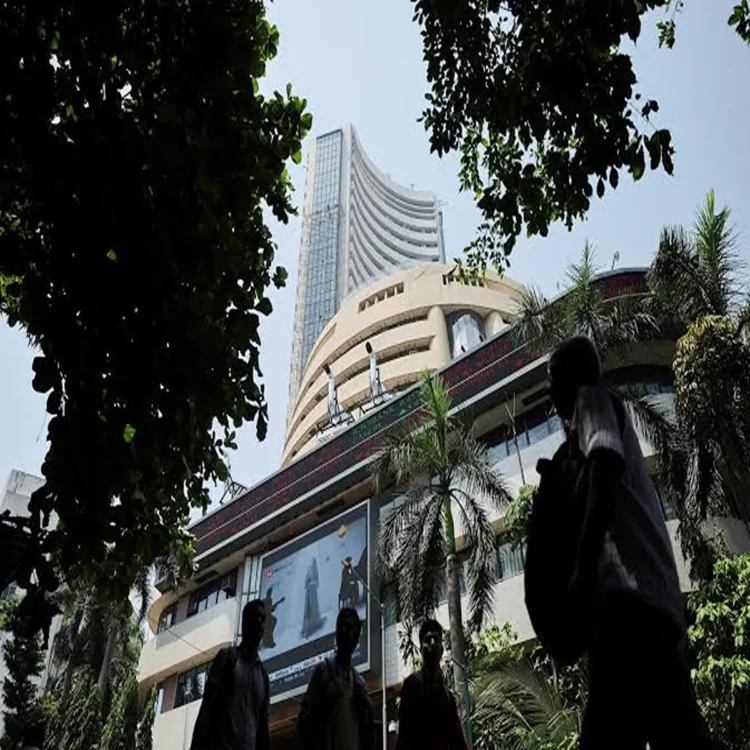
Indian benchmark indices opened with notable losses, reflecting the cautious mood among investors. The BSE Sensex fell 683.20 points, or 0.89 per cent, to begin the session at 75,708.19. The NSE Nifty50 also started on a weaker note, declining 203.25 points, or 0.85 per cent, to 23,666.35. The decline came as investors assessed the potential impact of higher energy prices and global economic risks on market sentiment.
Broad-Based Selling Across Key Sectors
Selling pressure was visible across nearly every major sector, indicating a widespread risk-off approach in the market. Realty, metal and financial stocks were among the biggest losers during the opening session. The Nifty Realty index slipped 0.95 per cent, while the Nifty Metal index dropped 0.92 per cent.
Other sectors also faced pressure. Nifty Consumer Durables declined 0.76 per cent, Nifty PSU Bank lost 0.75 per cent and Nifty Auto eased 0.74 per cent. Banking, information technology and fast-moving consumer goods stocks also traded lower, with Nifty Private Bank, Nifty IT and Nifty FMCG posting losses of up to 0.60 per cent.
Crude Oil Surge Raises Fresh Concerns
Market analysts believe the latest spike in crude oil prices remains the biggest concern for investors. Brent crude climbed above the $100-a-barrel mark following reports of attacks on Saudi oil tankers in the Red Sea by Iran-backed Houthi forces. The development has intensified worries over global energy supplies and pushed oil prices sharply higher.
Experts caution that sustained elevated crude prices could put additional pressure on India’s external finances, particularly its Balance of Payments, since the country depends heavily on imported crude oil. Rising energy costs may also increase inflationary pressures and complicate the economic outlook over the coming months.
Higher US Bond Yields Add to Market Pressure
Apart from crude oil, analysts are also monitoring the movement in US government bond yields. The yield on the benchmark 10-year US Treasury has climbed to around 4.7 per cent, making fixed-income investments relatively more attractive and prompting investors to reduce exposure to equities.
This combination of expensive oil and elevated bond yields has contributed to increased volatility across global financial markets, limiting investor confidence and encouraging cautious trading.
Technical Indicators Suggest Key Levels
Technical analysts noted that the Nifty has slipped below important moving averages, signalling weakness in the short term. According to market experts, the index is now approaching a support zone between 23,645 and 23,500. On the upside, the range between 24,000 and 24,100 is expected to serve as a significant resistance area, making it an important level for traders to watch in the coming sessions.
Global Markets Mirror Risk-Off Sentiment
The weakness in Indian equities followed sharp declines across major overseas markets. Asian markets witnessed heavy selling, with Japan’s Nikkei dropping nearly 3 per cent. Hong Kong’s Hang Seng Index fell more than 3 per cent, while South Korea’s KOSPI recorded losses exceeding 5 per cent.
The negative trend extended from Wall Street, where overnight trading ended in the red. The S&P 500 closed 1.21 per cent lower, while the technology-heavy Nasdaq Composite declined 2.15 per cent, reflecting investor concerns over global economic risks.
Meanwhile, international energy markets remained firm. Brent crude continued trading above the $100-per-barrel level after gaining 0.43 per cent, while US West Texas Intermediate (WTI) crude rose 0.69 per cent to $92.83 per barrel, reinforcing concerns that elevated energy prices could remain a challenge for financial markets.