
Politics – Bihar Leadership Change Sparks Debate Over Democratic Process
Politics – The political atmosphere in Bihar turned tense on Tuesday as the state Congress accused the central leadership of influencing the selection of a new Chief Minister, raising concerns over democratic principles and constitutional values.
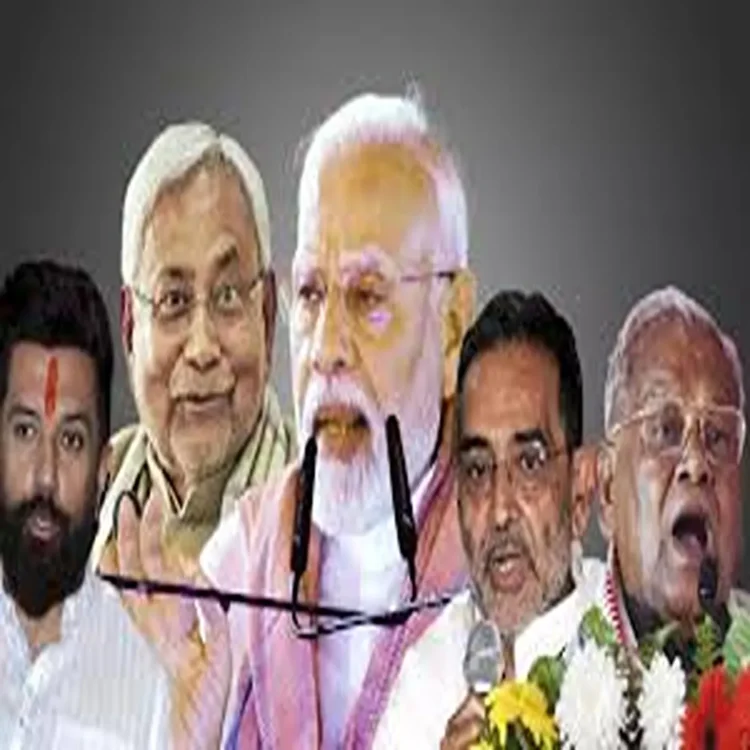
Allegations Over Leadership Imposition
The Bihar unit of the Congress party claimed that the process of appointing a new Chief Minister was being directed by Prime Minister Narendra Modi and Union Home Minister Amit Shah. According to party leaders, the decision did not reflect the will of the people or the mandate given during elections.
Rajesh Rathore, who heads the party’s media department in the state, described the situation as deeply troubling. He argued that replacing an elected Chief Minister under such circumstances undermines democratic norms. He further remarked that the timing of the development, coinciding with the birth anniversary of Dr. B.R. Ambedkar, added to the seriousness of the issue.
Questions Raised on Timing and Intent
Congress leaders questioned why such a significant political move was taking place on a day associated with the architect of the Indian Constitution. They suggested that the choice of date could be seen as symbolic, alleging it reflected disregard for constitutional values.
The party also pointed out that the name of the new Chief Minister had not been made public immediately, adding to speculation and uncertainty. Leaders claimed that the announcement was expected later in the day, further fueling political debate.
Opposition Voices Concern Over Mandate
Tejashwi Prasad Yadav, Leader of the Opposition in the Bihar Assembly, echoed similar concerns a day earlier. He argued that the new government, expected to be led by a BJP Chief Minister, would lack a genuine public mandate.
He noted that the National Democratic Alliance had contested the previous Assembly elections under the leadership of Nitish Kumar. Therefore, any change in leadership without fresh public approval, he said, raises questions about legitimacy. Yadav also suggested that key decisions regarding Bihar’s leadership were being influenced by leaders outside the state.
Claims on Governance and Financial स्थिति
Yadav further criticized the outgoing administration, alleging that Bihar was facing financial strain during the transition of power. He claimed that the state treasury was under pressure, with reports suggesting delays in payments, including salaries for legislators.
He also alleged that development-related expenditures had slowed down and that payments to contractors had been halted. According to him, the lack of recent Cabinet meetings pointed to administrative stagnation during a crucial period.
Broader Criticism of Governance Record
The opposition leader went on to highlight broader concerns about governance over the past two decades. He claimed that Bihar continues to lag behind in key sectors such as education, healthcare, and industrial growth.
He also raised concerns about rising crime rates and increasing instances of corruption. According to Yadav, these issues reflect deeper structural challenges that have not been adequately addressed by the ruling alliance.
Background of Electoral Victory
The NDA secured a strong mandate in the 2025 Assembly elections, winning 202 out of 243 seats. Analysts had attributed part of this success to welfare measures introduced by the Nitish Kumar-led government, including financial assistance schemes for women.
However, opposition parties had criticized these initiatives, arguing that they were designed to influence voters rather than address long-term development needs.
Ongoing Political Uncertainty
As Bihar awaits the official announcement of its new Chief Minister, the political debate continues to intensify. The developments have sparked wider discussions about federalism, democratic accountability, and the role of central leadership in state politics.
The coming days are likely to shape the direction of governance in Bihar, while also influencing the broader political narrative across the country.