
Hospitals – Supreme Court Orders Rs 12 Lakh Compensation in Ghaziabad Child Case
Hospitals –The Supreme Court has directed two private hospitals in Ghaziabad to pay a total of Rs 12 lakh to the family of a four-year-old girl who allegedly suffered sexual assault and later died after being denied timely medical treatment.
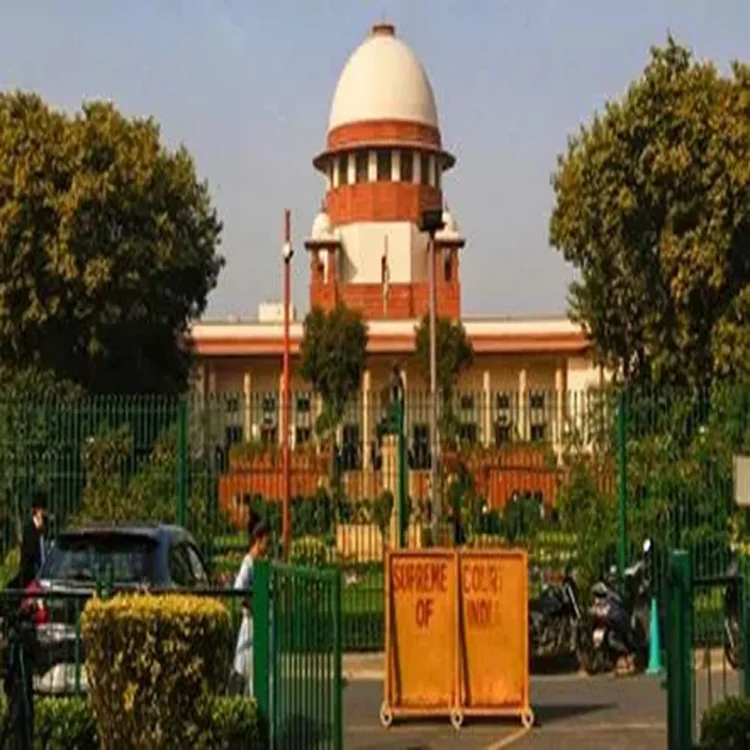
Court directs hospitals to pay compensation
A bench comprising Chief Justice of India Surya Kant, Justice Joymalya Bagchi and Justice V Mohana ordered St Joseph Hospital to pay Rs 10 lakh and Khajan Singh Manvi Healthcare to pay Rs 2 lakh. The court directed that the payments be made to the victim’s family within four weeks.
The order came after the court examined allegations that the hospitals failed to provide necessary medical assistance to the child when she was brought for treatment. The Supreme Court also expressed serious concern over the manner in which the case was handled.
Guidelines planned for police and hospitals
The bench said the court would consider framing detailed guidelines for hospitals and police authorities dealing with victims of serious crimes. The proposed directions are intended to address the gap between legal requirements and their implementation on the ground.
The court invited the amicus curiae assisting it in the matter to submit suggestions on measures that could improve the response of medical institutions and law enforcement agencies in such cases.
Child allegedly assaulted on March 16
The case relates to an incident reported on March 16, 2026. According to the submissions before the court, the four-year-old girl was allegedly taken away by a neighbour after being offered chocolate. She was subsequently discovered unconscious and bleeding in a field located behind a school.
Senior Advocate Hariharan, appearing before the Supreme Court, submitted that the child remained alive for around five hours following the alleged assault. He argued that both hospitals had the necessary facilities but allegedly declined to admit her and transferred her without providing basic emergency treatment, including a blood transfusion.
Court stresses importance of immediate treatment
Hariharan highlighted the critical importance of prompt medical intervention in cases involving severe injuries. Drawing a comparison with the recognised emergency response required for heart attack patients, he submitted that the child also needed urgent treatment during the crucial initial period.
Justice Joymalya Bagchi observed that Article 21 of the Constitution, which protects the right to life, places an obligation on hospitals to take steps to preserve life. The judge stressed that victims of sexual assault require immediate medical attention and that hospitals cannot simply decline responsibility when emergency care is needed.
Police officials previously summoned
The Supreme Court had earlier directed the Commissioner of Police, Ghaziabad, and the Station House Officer of Nandgram Police Station to appear personally before the bench. The direction followed the court’s concerns over what it described as a careless and irresponsible approach by authorities while dealing with the case.
High Court raises concern over unused equipment
In another matter concerning public healthcare, the High Court on Friday expressed concern over expensive medical equipment lying unused in government hospitals. The court directed the health secretary to convene a meeting with medical superintendents and the Secretary (Services) to examine the issue.
The health department has also been asked to submit a report to the court detailing the situation and steps taken to address the problem.
Election Commission asked to respond
The High Court also sought the Election Commission’s response to a petition concerning the requirement for Booth Level Agents of political parties to submit personal undertakings.
The petition was filed by Delhi Pradesh Congress Committee chief Devender Yadav in connection with the Special Intensive Revision of electoral rolls. The court has asked the Election Commission to place its position on the matter before it.