
Conciliation – Mathura Dispute Talks Continue Ahead of Special Lok Adalat
Conciliation – Representatives of the Hindu and Muslim sides took part in formal conciliation proceedings at the District Legal Services Authority (DLSA) in Mathura, as efforts continue to explore a possible resolution to the long-running dispute. The meeting was conducted in accordance with directions issued by the Supreme Court.
The next round of discussions has been fixed for August 18. Both sides are expected to remain engaged in the process as they consider whether a mutually acceptable approach can be reached concerning the disputed site.
Supreme Court directs continued conciliation
The proceedings are part of a broader effort connected with cases that have been identified for possible settlement through the Special Lok Adalat mechanism. An order issued by the Supreme Court Coordination Committee on June 5 stated that the relevant matters were considered suitable for resolution through the process.
The move does not bring the underlying disputes to an end. Instead, the conciliation proceedings provide the parties with an opportunity to discuss possible areas of agreement while the related legal matters continue through the judicial system.
Special Lok Adalat scheduled in August
The Supreme Court is also preparing to hold a Special Lok Adalat under the name ‘Samadhan’. The event is scheduled to take place on the Supreme Court premises on August 21, 22 and 23.
Before the Special Lok Adalat, notices were sent to representatives of both sides asking them to participate in pre-Lok Adalat conciliation proceedings. The notices informed the parties that their cases had been identified as matters that could be considered during the special settlement process.
According to the notice, the wider ‘Samadhan Samaroh’ was scheduled to begin on April 21, 2026, before concluding with the Special Lok Adalat in August. The proceedings are intended to provide an additional avenue for resolving cases through structured settlement efforts.
Three disputes included in the process
The matters associated with the proceedings involve claims concerning religious sites in Uttar Pradesh. Hindu petitioners in the cases have alleged that certain historic mosques were constructed on locations associated with earlier Hindu temples.
One of the disputes concerns the Gyanvapi mosque in Varanasi. Hindu litigants have maintained that the mosque stands at the site of the original Kashi Vishwanath Temple, which they claim was demolished during the Mughal period under Emperor Aurangzeb.
Mathura case focuses on disputed complex
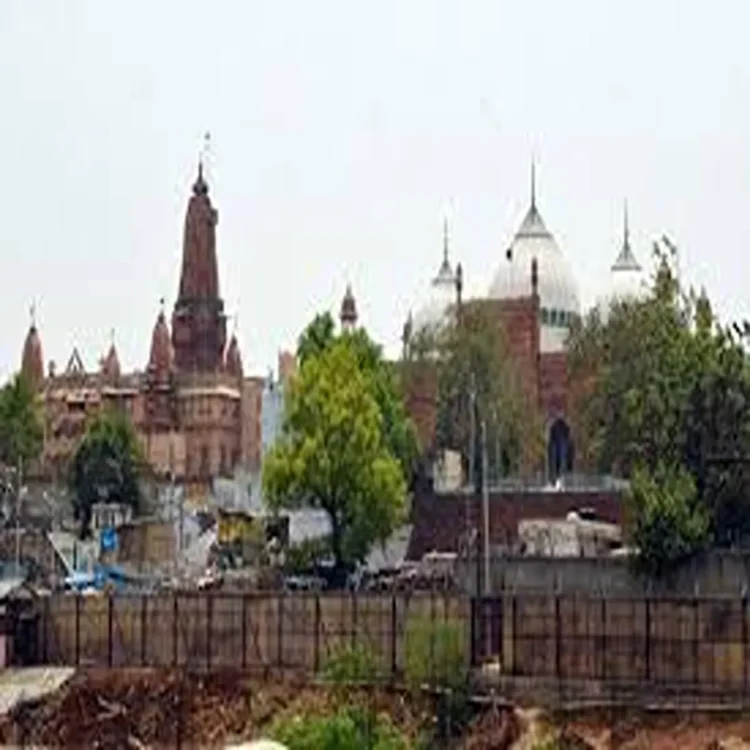
Another case concerns the Shri Krishna Janmabhumi dispute in Mathura. The litigation relates to a 13.37-acre complex and includes claims from Hindu petitioners that the Shahi Idgah mosque was constructed over the location identified in Hindu tradition as the Garbha Griha, or birthplace of Lord Krishna.
The dispute has remained before the courts, with different legal claims and petitions being considered as the judicial process continues.
Sambhal mosque case also under consideration
The third matter relates to the Shahi Jama Masjid in Sambhal and stems from a petition filed in 2024. The Hindu side has alleged that the Mughal-era mosque, said to have been completed in 1526, was built over the site of an earlier Hari Har Temple.
The latest conciliation proceedings do not determine the merits of these claims. Any settlement would depend on the participation and agreement of the concerned parties and the applicable legal process.
Legal proceedings continue alongside talks
The court-directed discussions are being closely followed because they take place alongside ongoing litigation concerning the disputed religious sites. The August 18 meeting and the subsequent Special Lok Adalat proceedings are expected to provide further clarity on whether the parties can make progress toward a mutually acceptable settlement.
For now, the disputes remain subject to the judicial process, while the conciliation mechanism offers the parties another opportunity to explore a possible resolution.