
Tariffs – Trump Introduces New Import Measures to Strengthen US Polysilicon Industry
Tariffs – The United States has announced a new trade measure aimed at strengthening domestic production of critical industrial materials, with President Donald Trump approving fresh import restrictions on products linked to polysilicon, a key raw material used in solar panels and semiconductor manufacturing.
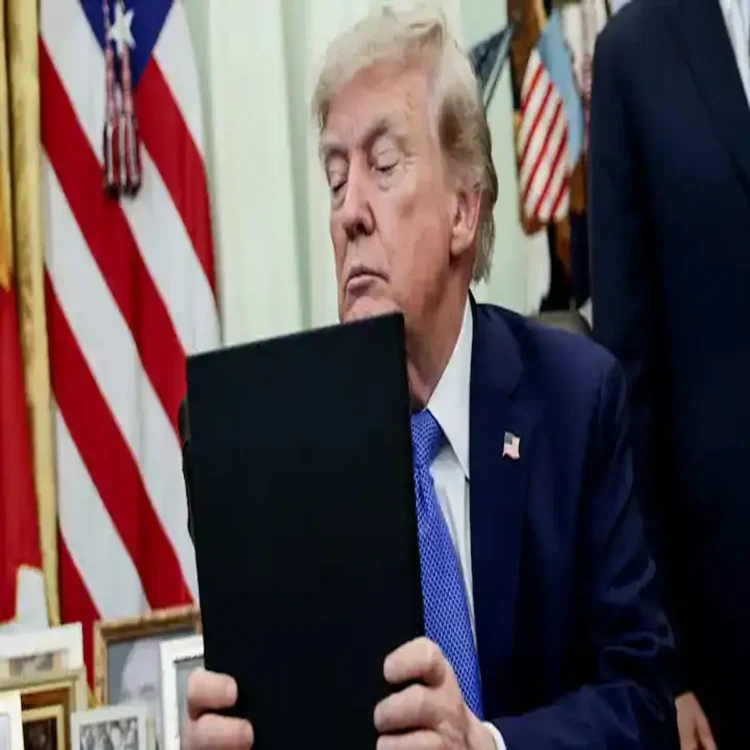
The order, signed on Thursday, establishes a minimum import price along with a new 15 percent tariff on products manufactured using polysilicon. According to the White House, both measures will come into effect on December 4. The decision also applies to several related products, including wafers and solar cells, which are considered essential components in clean energy and advanced technology manufacturing.
White House Cites Supply Chain and National Security Goals
The administration said the policy is intended to strengthen domestic production while reducing dependence on foreign suppliers for strategically important materials. In a statement, the White House described polysilicon as a critical resource not only for renewable energy technologies but also for semiconductor production, including applications connected to national defense.
Officials argued that increasing domestic manufacturing capacity would help secure supply chains that have become increasingly important for the United States in recent years. The administration also said the measures are designed to create fairer competition for American companies producing these materials.
Commerce Department Investigation Led to New Action
The announcement follows a year-long investigation conducted by the US Commerce Department under Section 232 of the Trade Expansion Act of 1962. The inquiry, launched in July 2025, examined whether imported polysilicon and related products posed risks to national security by increasing reliance on overseas production.
Commerce Secretary Howard Lutnick described polysilicon as a foundational material for the semiconductor industry. Speaking at the White House, he said the United States has developed advanced manufacturing capabilities but still depends heavily on foreign suppliers for critical parts of the production chain.
According to Lutnick, the new pricing rules and tariffs are intended to encourage companies to establish more of their supply networks within the United States rather than relying on imported materials.
US Production Has Declined Over the Years
The White House highlighted a significant decline in America’s role in global polysilicon manufacturing. It said the country’s share of worldwide production capacity has fallen from around 50 percent in 2005 to less than two percent in 2024.
Officials believe the latest policy could help reverse that trend by encouraging new investments in domestic facilities. Supporters of the move argue that rebuilding production capacity is important for both economic competitiveness and long-term industrial resilience.
China continues to dominate much of the global solar manufacturing supply chain, although the Commerce Department’s original investigation did not specifically identify any country when it was launched.
Latest Step in Trump’s Broader Trade Strategy
The new tariffs form part of President Trump’s broader effort to reshape US trade policy since returning to office. His administration has repeatedly used Section 232 investigations to justify tariffs on products viewed as strategically important, including steel, aluminum and automobiles.
Although the US Supreme Court earlier this year struck down several of Trump’s broader tariff measures affecting multiple trading partners, industry-specific duties introduced under Section 232 have remained legally valid.
Last month, the administration also introduced another round of tariffs affecting 60 trading partners through separate legal authorities, continuing its push to expand trade protections while encouraging companies to increase manufacturing within the United States.
The latest announcement signals that critical industries linked to advanced technology, renewable energy and semiconductor production are likely to remain central to the administration’s economic and trade agenda in the coming months.