
Aquaculture – El Niño-Driven Heat Triggers Major Setback for Nellore Shrimp Farmers
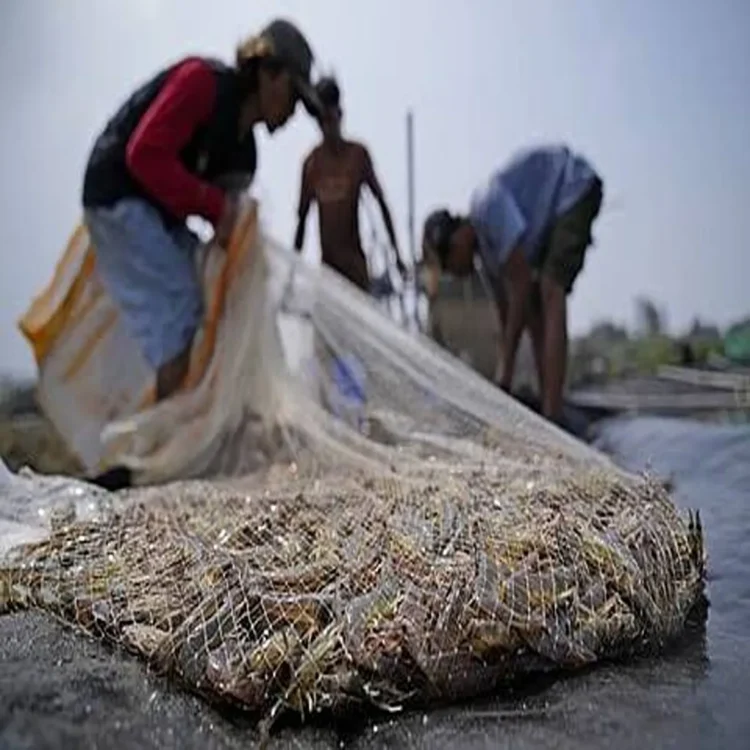
Aquaculture –Shrimp farmers across Andhra Pradesh’s Nellore district are struggling with one of the most difficult cultivation seasons in recent years as the impact of El Niño continues to disrupt aquaculture operations. Persistent high temperatures and extended heatwave conditions have altered pond environments, slowing shrimp growth, increasing disease outbreaks and leaving producers with significant financial losses.
Rising Temperatures Fuel Disease Outbreaks
Aquaculture specialists say the sharp rise in water temperatures has created ideal conditions for the spread of several diseases affecting shrimp stocks. Cases of White Spot Syndrome Virus (WSSV), Vibrio infections and White Gut disease have increased considerably across farming areas. Many farmers report that the infections are proving difficult to control despite repeated use of medicines and standard treatment methods.
According to growers, shrimp are consuming less feed, growth has slowed noticeably and mortality rates have climbed. In many cases, farmers have been forced to harvest ponds earlier than planned because the stock could no longer be sustained, resulting in lower production and reduced income.
Seed Quality Adds to Farmers’ Challenges
Industry experts believe that poor-quality shrimp seed supplied from hatcheries in Puducherry, Kota and Vakadu has further intensified the crisis. They stress that every batch of seed should undergo Polymerase Chain Reaction (PCR) testing before distribution to detect possible infections at an early stage.
However, several farmers claim they continue to receive seed that has not been properly tested. As a result, diseases often emerge only after stocking, causing heavy losses that cannot be recovered later in the cultivation cycle.
Weather and Market Pressures Deepen Losses
Apart from disease-related problems, drought-like conditions associated with El Niño have further reduced survival rates in shrimp ponds. Farmers are also facing weak market prices, making it harder to recover their investment. Some producers have alleged that price manipulation by traders has further reduced their earnings during an already difficult season.
The combination of rising production costs, lower output and subdued prices has placed considerable financial pressure on aquaculture businesses that depend on successful harvests for their annual income.
Farmer Shares Extent of Financial Damage
K. Suresh Reddy, a shrimp farmer from Kavali, described the scale of the losses he experienced this season. He said he invested around ₹2 lakh per acre across nine acres while also spending heavily on feed and other cultivation expenses.
Despite the investment, his harvest reached only about 13 tonnes, with survival rates limited to nearly 60 percent. Reddy attributed the poor performance to the extreme heat and humidity linked to El Niño, estimating his overall financial loss at approximately ₹10 lakh.
Fisheries Department Plans Awareness Drive
Assistant Director of Fisheries Chand Basha acknowledged that the unusual weather conditions have affected both shrimp and fish farming in the district. He explained that warmer water reduces dissolved oxygen levels in ponds, creating an environment that supports the rapid spread of viral infections.
He advised aquaculture farmers to adopt preventive measures and improve pond management practices to reduce disease risks. The Fisheries Department is also preparing district-level awareness programmes that will focus on disease prevention, water quality management and scientific farming practices aimed at helping farmers minimise future losses.