
Protests – Supreme Court Agrees to Review Plea Seeking New Demonstration Venue in Delhi
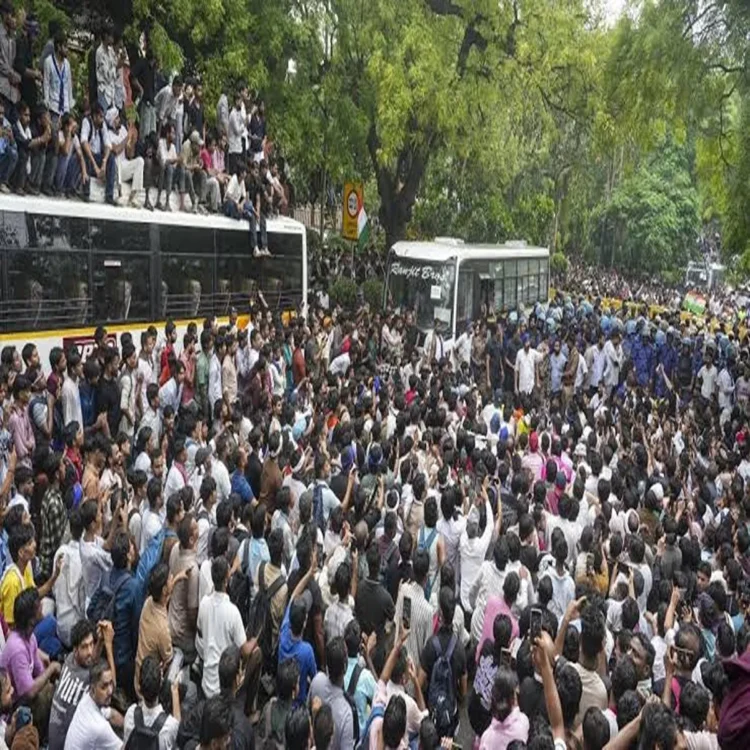
Protests –The Supreme Court has decided to examine a public interest litigation that questions whether Jantar Mantar should continue to serve as Delhi’s designated site for public demonstrations. The petition argues that the location has become unsuitable because of increasing disruption to residents, traffic movement, and the delivery of essential services.
Supreme Court Issues Notices to Authorities
A Bench led by the Chief Justice of India, along with Justices Joymalya Bagchi and V. Mohana, took up the petition on Monday and issued notices to the Union government and other concerned authorities. The court also requested Solicitor General Tushar Mehta to obtain instructions from the relevant departments regarding the concerns highlighted in the petition. The matter has now entered the judicial process for further examination, with responses expected from the authorities.
Petition Raises Concerns Over Public Convenience
The public interest litigation, filed by Satish Chand Kaushik, contends that demonstrations at Jantar Mantar have increasingly affected the daily lives of people living and working nearby. According to the plea, frequent protests create traffic bottlenecks, restrict movement in the surrounding area, and interfere with the transportation of essential supplies. It further argues that emergency services, including medical assistance and the movement of critical healthcare resources, may also face delays because of congestion caused during large gatherings.
Court Notes Issues Related to Access
During the hearing, the Chief Justice observed that the petition raises important questions concerning access to and from the area. Referring to the submissions made before the court, the Bench noted that the concerns are not limited to traffic alone but also involve the uninterrupted movement of essential services. The court indicated that these issues deserve careful consideration before arriving at any conclusion regarding the suitability of the existing protest venue.
The Bench acknowledged that the petition specifically claims Jantar Mantar may no longer be an appropriate place for demonstrations because of difficulties related to entry and exit, along with the possible impact on the supply of medical necessities. These observations formed an important part of the court’s decision to seek responses from the concerned authorities.
Reference to Proposed Political March
During the proceedings, counsel appearing for the petitioner referred to a proposed political march towards the Prime Minister’s residence. The lawyer urged that a situation similar to an incident mentioned during the hearing should not be repeated. However, the Supreme Court chose not to express any opinion on the proposed event. Instead, the Bench made it clear that matters relating to law and order would be handled by the competent authorities whenever such situations arise.
Separate Hearing Ordered
Rather than combining the matter with any other pending proceedings, the Supreme Court directed that the petition be listed separately for hearing. This indicates that the issues raised in the plea will receive independent consideration after the responses from the Centre and other authorities are placed before the court.
The outcome of the case could influence future discussions on balancing the constitutional right to peaceful protest with the need to ensure smooth public movement and uninterrupted access to essential services in the national capital. For now, the court has limited its action to seeking official responses while keeping the broader questions open for detailed examination in subsequent hearings.