
Parliament – Lok Sabha Clears Tougher Anti-Paper Leak Bill After Heated Debate
Parliament –Union Minister Jitendra Singh strongly criticized Leader of Opposition Rahul Gandhi during the Lok Sabha discussion on the Public Examination (Prevention of Unfair Means) Amendment Bill, 2026, accusing him of using inappropriate language and failing to contribute meaningful suggestions during the debate. The legislation was later approved in the Lower House through a voice vote after the minister concluded his reply.
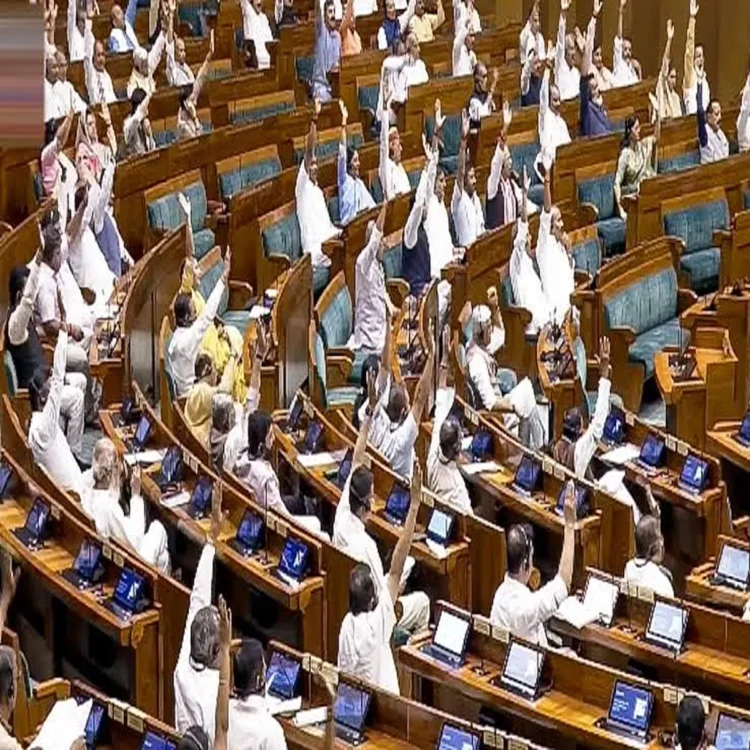
Minister Questions Rahul Gandhi’s Conduct
Speaking during the debate, Jitendra Singh alleged that Rahul Gandhi had used language that was not suitable for parliamentary proceedings. He questioned whether the Congress leader was familiar with established parliamentary conventions and said the remarks made during the discussion were disappointing, particularly when the issue under consideration directly affected the country’s youth.
Referring to a controversial expression previously used by Rahul Gandhi, the minister asked whether such words were intended for young people preparing for public examinations. According to Singh, Parliament should have been focused on improving the proposed legislation rather than allowing political exchanges to overshadow the discussion.
BJP Renews Demand for Apology
The remarks came after Bharatiya Janata Party members reiterated their demand that Rahul Gandhi apologize for comments he had earlier made about Union Home Minister Amit Shah. The issue had triggered prolonged protests and repeated interruptions inside the Lok Sabha during previous proceedings.
Government members maintained that political disagreements should not lower the standards of parliamentary debate, particularly while discussing legislation affecting millions of students and job aspirants.
Response on Protest Allegations
Jitendra Singh also addressed allegations related to the handling of protests in Delhi. Rejecting claims that security personnel had opened fire on demonstrators, he stated that no bullets were fired and that only tear gas had been used to manage the situation.
He further explained that any order related to the use of force during law-and-order situations falls under the authority of the local magistrate rather than a Union minister. Therefore, he argued, questions suggesting ministerial approval for such actions were factually incorrect.
Remarks on Protest Near Prime Minister’s Residence
During his speech, the minister also referred to the Congress protest held outside Prime Minister Narendra Modi’s official residence at 7 Lok Kalyan Marg. He claimed Rahul Gandhi’s actions reflected disappointment over not becoming Prime Minister and suggested that the demonstration carried political symbolism.
According to Singh, Rahul Gandhi remained outside the Prime Minister’s residence despite being advised that such conduct did not suit the constitutional position of the Leader of the Opposition. The minister used the incident to criticize the Congress leader’s political approach during the parliamentary debate.
Amendment Bill Brings Much Tougher Penalties
The Public Examination (Prevention of Unfair Means) Amendment Bill, 2026 introduces significantly stricter punishment for offences linked to examination malpractice and paper leaks.
Under the amended provisions, individuals found guilty of using unfair means in public examinations could face imprisonment ranging from a minimum of five years to a maximum of ten years. The maximum financial penalty has also been increased substantially from ₹10 lakh to ₹50 lakh.
The legislation also targets organizations and service providers involved in examination-related offences. Such entities may now face fines of up to ₹5 crore, while the period during which they can be barred from conducting public examinations has been extended from four years to eight years.
Faster Investigation and Trial Process
The amended law also focuses on speeding up the legal process in paper leak cases. It authorizes the Central Government to establish a Special Task Force dedicated to investigating examination-related crimes.
In addition, the Bill introduces a new provision requiring investigations to be completed within two months. Cases will be heard by designated Special Fast Track Courts, with day-to-day hearings and an objective of completing trials within three months after the filing of the charge sheet. The legislation also provides for the appointment of Special Public Prosecutors for every Special Fast Track Court handling offences under the Act.