
Environment – Green India Challenge Begins Ninth Edition With Major Godavari Plantation Drive
Environment – The Green India Challenge (GIC) has officially launched its ninth edition with an ambitious plan to expand ecological restoration across the Godavari river basin. The campaign began with the plantation of 1,000 bamboo saplings at Babhali village in Dharmabad Taluka of Maharashtra’s Nanded district, marking the start of a long-term environmental initiative focused on restoring river ecosystems through public participation.
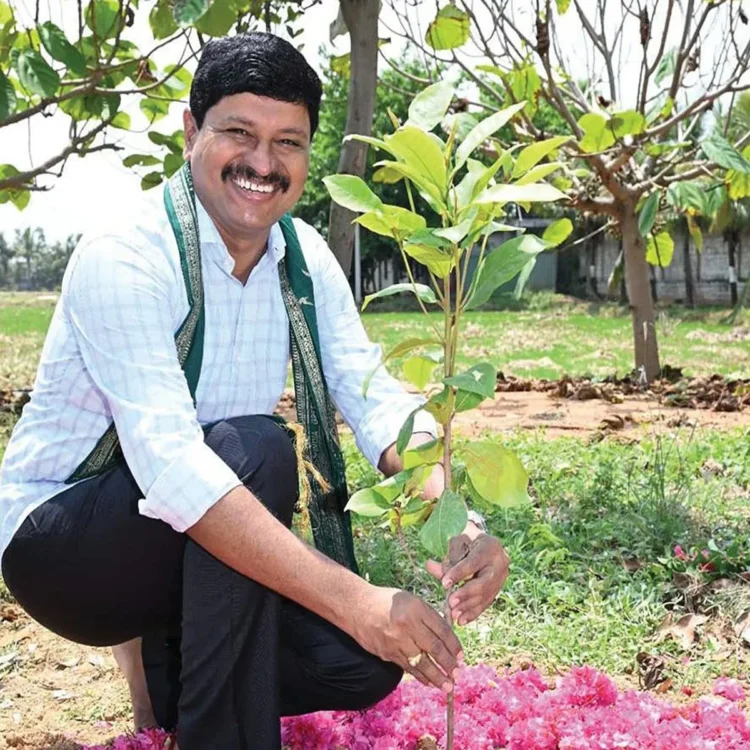
Campaign Launched on a Significant Occasion
The ninth edition was inaugurated on Friday, coinciding with the 50th birthday of Bharat Rashtra Samithi (BRS) Working President KT Rama Rao. According to an official statement, the initiative represents one of India’s largest citizen-driven programmes dedicated to restoring river basin ecosystems while encouraging widespread community involvement.
Green India Challenge founder and former Member of Parliament Joginipally Santosh Kumar led the inaugural plantation event. The programme was attended by Igniting Minds Organisation founder Mardi Karunakar Reddy, Green India Challenge Co-Founder Sanjevall Raghavendra Yadav, members of the Youth for Godavari movement, students, farmers, women’s groups, environmental experts, Forest Department officials, Gram Panchayat representatives, public representatives, and hundreds of volunteers.
Target of 9.9 Million Native Trees
As part of the new edition, the organisation has announced a goal of planting and maintaining 9.9 million native trees with the support of nearly five million volunteers. The plantations will be carried out across the Godavari, Manjara, and Pranahita river basins.
The programme aims to establish a continuous green corridor stretching along both banks of the Godavari River from Basar in Telangana to Trimbakeshwar in Maharashtra. Organisers believe the initiative will help improve biodiversity, strengthen river ecosystems, and increase resilience against climate-related challenges.
Addressing Environmental Challenges
The campaign’s launch in Maharashtra reflects the increasing environmental concerns facing the Deccan region. Officials noted that Marathwada has experienced an almost 4-degree Celsius increase in temperatures this year, adding pressure on water resources, soil quality, and agricultural sustainability.
The organisation said rising temperatures, declining groundwater levels, soil erosion, and reduced moisture have highlighted the need for restoration projects that combine environmental protection with active participation from local communities. To address these concerns, the Green India Challenge has adopted a river basin restoration strategy focused on planting native tree species suited to local conditions.
Why Bamboo Was Chosen
The campaign commenced with bamboo plantation because of the plant’s ecological and economic advantages. Bamboo’s strong underground rhizome network helps stabilise riverbanks, reduces soil erosion, improves groundwater recharge, and absorbs carbon dioxide at a rapid rate.
Native species such as Dendrocalamus strictus and Bambusa bambos have been selected as they are well adapted to the Deccan Plateau’s climate. Apart from environmental benefits, these varieties are also expected to create sustainable livelihood opportunities for farming communities in the region.
Growing Citizen-Led Environmental Movement
Established in 2018, the Green India Challenge has evolved into one of the world’s largest voluntary environmental campaigns. Inspired by Telangana’s Haritha Haram programme, the movement follows its “3-3-3” approach, encouraging participants to plant three saplings, care for them for three years, and motivate three more people to join the effort.
According to the organisation, more than 44 million citizens have participated so far, resulting in the plantation of over 196 million saplings without any statutory mandate, demonstrating the impact of voluntary environmental action.
Long-Term Vision for River Conservation
The latest campaign will be coordinated by the Igniting Minds Organisation through its Youth for Godavari initiative. Students, NSS and NCC volunteers, youth groups, and community organisations from Maharashtra, Telangana, and Andhra Pradesh will take part in plantation drives while also monitoring the survival of saplings through geo-tagging and regular maintenance.
Speaking during the launch, Joginipally Santosh Kumar said rivers depend on healthy forests and community care for their long-term survival. He added that the bamboo plantations symbolise an investment in the future of the Godavari basin and reaffirmed the organisation’s commitment to planting one billion trees by October 15, 2031, marking the birth centenary of Bharat Ratna Dr APJ Abdul Kalam. The initiative is also aligned with several United Nations Sustainable Development Goals, including clean water, climate action, life on land, and global partnerships.