
UN – Guterres Urges Stronger Global Action to Prevent Mass Atrocities
UN – United Nations Secretary-General Antonio Guterres has cautioned that escalating conflicts, growing impunity and rapid technological change are increasing the risk of mass atrocities across the world. He urged governments and international institutions to respond early, warning that inaction can allow preventable crises to become irreversible tragedies.
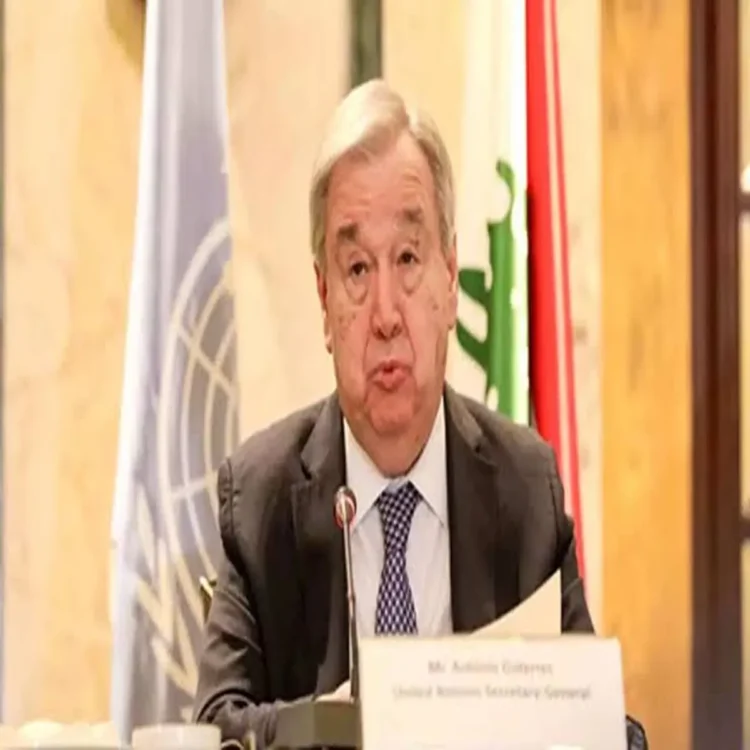
Addressing the UN General Assembly through his chief of staff, Earle Courtenay Rattray, Guterres said the international community was witnessing serious violations of international law in many regions. He said the weakening of accountability had created conditions in which perpetrators of violence often act without fear of consequences.
Conflicts becoming longer and more interconnected
According to the UN chief, more than 120 conflicts were recorded globally in 2025, with many becoming increasingly difficult to resolve. He said modern conflicts are lasting longer, involving more actors and often spreading instability beyond national borders.
Guterres noted that these crises are no longer isolated events. Political tensions, humanitarian emergencies, displacement, economic disruption and regional rivalries are frequently linked, making collective action more important than ever.
He said the international commitment known as the Responsibility to Protect remains essential in addressing such risks. The principle was adopted by world leaders 21 years ago to protect people from genocide, war crimes, ethnic cleansing and crimes against humanity.
Technology adds new risks for civilian populations
The secretary-general also raised concerns over the growing use of advanced technology in conflict zones. He said increasingly autonomous weapons systems, including drones, can cause widespread harm when used against civilian populations.
Digital platforms were also identified as a growing source of danger. Hate speech, false information and coordinated disinformation campaigns can now spread rapidly online, potentially deepening divisions and encouraging violence against vulnerable communities.
Guterres said warning signs are frequently visible before large-scale atrocities occur, but the response is often delayed or inadequate. He called on countries to strengthen systems that identify threats early and take practical steps before violence intensifies.
States retain primary responsibility for protection
Under the Responsibility to Protect framework, each government has the primary duty to safeguard people living within its borders. Guterres said national authorities must work to prevent violence, protect human rights and ensure that communities are not targeted because of their identity.
When governments are unable or unwilling to protect their populations, UN member states have agreed to consider collective action that is timely, decisive and consistent with the UN Charter.
He said prevention begins within countries but can be reinforced through international cooperation. This includes supporting institutions, promoting accountability, improving early-warning mechanisms and helping states meet their obligations under international law.
UN report reviews progress and future priorities
The discussion at the General Assembly focused on the 18th report issued since the Responsibility to Protect commitment was established. The report reviews progress made over the past two decades and outlines measures aimed at strengthening the principle during a period marked by geopolitical uncertainty and instability.
Guterres said the protection of civilians and the prevention of atrocities are central to the mission of the United Nations. He encouraged member states to adopt and implement key international legal instruments, including the Convention on the Prevention and Punishment of the Crime of Genocide.
He called for atrocity prevention to become a permanent and universal practice rather than a response used only after violence has already begun.