
Earthquake – Venezuela Rescue Teams Find Man Alive Eight Days After Quakes
Earthquake – Venezuela earthquake rescue operations continued to deliver rare moments of hope on Thursday, when emergency workers pulled a 43-year-old security guard alive from the wreckage of a collapsed building eight days after two powerful earthquakes struck the country.
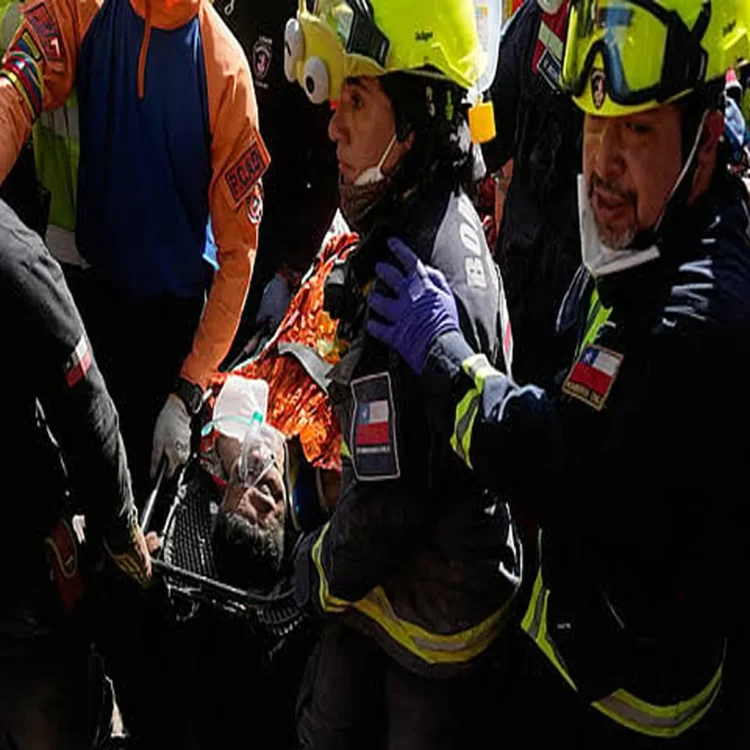
Rescue workers recover survivor from destroyed building –
Hernan Gil was rescued from the remains of a seven-storey building in Catia La Mar, a coastal community severely damaged in the June 24 disaster. The operation brought together rescue teams from Venezuela, Chile, the United States, Portugal, Costa Rica, El Salvador and Mexico.
AFP journalists at the site reported scenes of celebration as rescuers embraced and applauded after Gil was carried out on a stretcher. His wife, Gusbimar Gonzalez, described the rescue as a miracle while teams continued working to bring him to safety.
A complex operation beneath the rubble
Gil had remained trapped in a confined area inside the building, where he had been working when the earthquakes struck. Rescue crews spent three days attempting to reach him, supplying water through a hose and providing oxygen through a tube.
During the final stage, around 30 people cleared debris from the building’s parking area while two rescuers dug a tunnel measuring about three metres. Cristian Vera, who led the Chilean rescue team, said locating and reaching the trapped man had been difficult.
The rescue followed another extraordinary discovery earlier in the week, when a three-year-old boy was found alive six days after the earthquakes. However, emergency personnel say the chances of finding more survivors are becoming increasingly limited as time passes.
Death toll rises as search efforts continue
The Venezuelan government said the confirmed death toll had reached 2,595, while more than 12,400 people had been injured. The United Nations estimates that up to 50,000 people may still be unaccounted for, although authorities have not released an official figure for those missing.
The twin earthquakes, measured at magnitudes 7.2 and 7.5, caused extensive destruction across several areas, including La Guaira, north of Caracas. Satellite analysis from NASA indicates that nearly 60,000 buildings may have been damaged or destroyed.
Many structures in the worst-hit districts have been searched and marked with the letter “D,” indicating that no signs of life were found inside. Relatives, volunteers and rescue teams are now increasingly focused on recovering victims from collapsed homes and apartment blocks.
Families face worsening humanitarian conditions
Thousands of survivors remain without permanent shelter. Officials say about 13,000 people have been displaced, with many sleeping in tents, public parks, vacant land and temporary shelters.
In the Los Corales area, Hernan Sandoval continued searching for his eight-year-old son, Ronald, as well as his nephew Leo, 8, and niece Victoria Madera, 10, who were trapped when the La Gambarra residential complex collapsed. Sandoval said he had continued looking despite the emotional toll of the disaster.
Search-and-rescue workers say the first 72 hours after a building collapse are usually the most critical for locating survivors. Cesar Gonzalez, a Mexican firefighter working with search dogs, said hopes had diminished sharply in recent days, although teams were continuing to inspect areas where signs of life might still be possible.
Aid agencies seek support for displaced residents
The humanitarian crisis is deepening as food, drinking water and medical supplies become harder to access. Hospitals are under growing pressure, and health specialists have warned that overcrowded shelters could increase the risk of disease outbreaks.
The World Food Programme has appealed for $50 million to provide food assistance to around 500,000 people in Venezuela for three months. Aid queues have expanded in several affected communities, where residents are relying heavily on volunteers and donations.
Maria Arteaga, a 33-year-old mother of four, said her family had lost nearly everything. She was preparing to sleep in a makeshift shelter on a football field, using tarps and a Venezuelan flag for cover.