
India Growth – India’s Economy Shows Strong Long-Term Momentum Despite Global Challenges
India Growth – India’s economy continues to demonstrate resilience even as global uncertainties and periodic slowdowns affect markets worldwide. According to Rahul Bajoria, Managing Director and Head of India and ASEAN Economic Research at Bank of America, the country’s medium-term economic outlook remains encouraging, supported by steady investments, improving productivity, and healthy financial fundamentals.
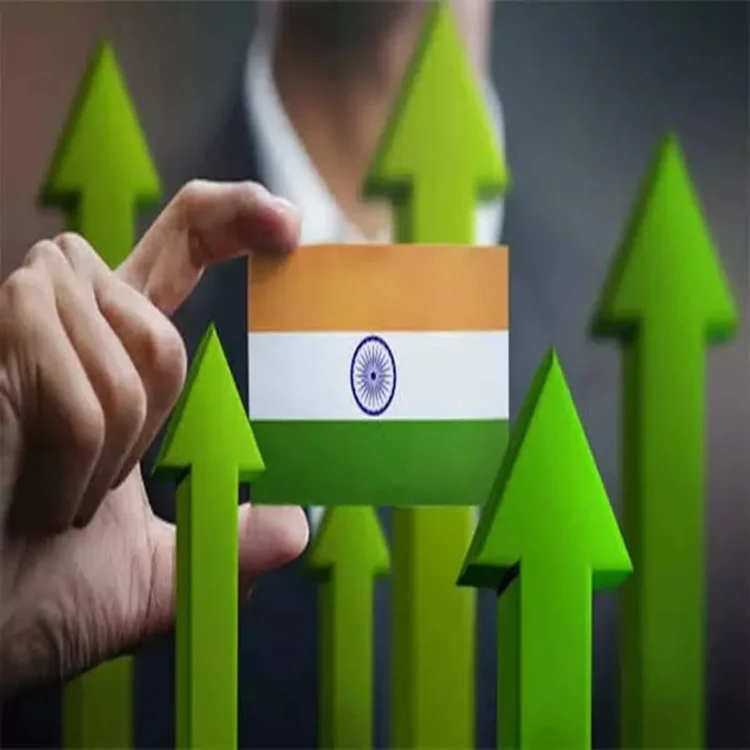
Growth Story Extends Beyond Statistics
Bajoria dismissed the perception that India’s economic progress exists only in official data. He said the country’s development is visible across cities and towns through expanding infrastructure projects, rising construction activity, and continuous employment opportunities for young people. These real-world indicators, he noted, reflect an economy that continues to move forward despite a challenging international environment.
Global Disruptions Have Tested Emerging Economies
He acknowledged that India, along with several emerging markets, has experienced repeated supply-side disruptions since the COVID-19 pandemic. These events have created temporary obstacles for businesses and investment decisions, but they have not changed the country’s broader growth direction. According to Bajoria, economic cycles naturally fluctuate, and recent years have been shaped by one global challenge after another, requiring businesses and policymakers to adapt.
Investment Activity Remains Consistent
Despite external pressures, investment spending has maintained a steady pace. Bajoria pointed out that both government-led infrastructure development and private sector investments continue to support economic expansion. Although private investment has not reached the rapid levels witnessed during the 2005-08 period, he believes the present investment cycle is healthier because it is developing within sustainable financial limits rather than excessive risk-taking.
Balanced Expansion Supports Long-Term Stability
Bajoria explained that India’s measured investment approach has contributed to stronger productivity while reducing the likelihood of economic imbalances. Instead of focusing on whether annual growth reaches seven or seven-and-a-half percent, he suggested evaluating the broader trend of sustained expansion. Over time, this consistent momentum creates a compounding effect that strengthens the country’s long-term economic foundation.
Healthy Financial Position Strengthens Outlook
Another positive factor supporting India’s future growth is the relatively healthy financial condition of both companies and households. Bajoria observed that corporate and household balance sheets remain stable, providing greater resilience during periods of global uncertainty. In his view, the biggest challenge to India’s economy has been repeated external shocks rather than structural weaknesses within the country itself.
He added that if geopolitical tensions and other international disruptions begin to ease, India’s growth trajectory could improve further and provide a more favourable environment for businesses and investors.
Foreign Investment Data Requires Broader Perspective
Addressing concerns surrounding foreign direct investment, Bajoria cautioned against drawing conclusions solely from lower net FDI figures. He explained that gross foreign investment entering India has remained close to historically strong levels. At the same time, higher capital outflows have reflected overseas investments by Indian companies and fund repatriation by existing foreign investors, making the overall picture more complex than headline numbers suggest.
Investor Confidence Expected to Improve
Bajoria also noted that investor sentiment towards India has strengthened after a period when North Asian markets attracted greater attention due to artificial intelligence-driven investment trends. He believes there is now less pessimism surrounding India’s economic prospects, with the country’s fundamentals continuing to appear resilient.
Looking ahead, he expects India’s corporate earnings and overall growth cycle to gain momentum as global geopolitical uncertainties gradually subside. Lower energy prices over the coming months could further improve business conditions, enhance corporate profitability, and provide additional support for economic expansion.
He concluded that investors should remain focused on India’s structural growth story rather than reacting to short-term market fluctuations, as the country’s medium-term outlook continues to remain fundamentally strong.