
Arunachal Floods – Thousands Affected as Flash Floods Cut Off 14 Villages
Arunachal Floods – Flash floods and landslides triggered by heavy rainfall have disrupted normal life in Arunachal Pradesh’s Lower Siang district, affecting thousands of residents. Authorities are carrying out rescue and restoration work while assessing the full scale of the damage.
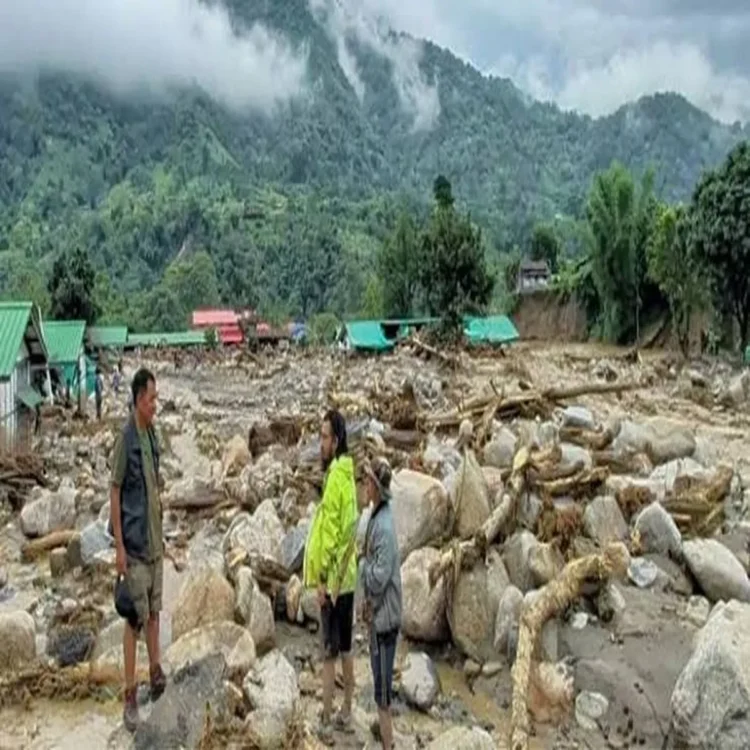
Heavy rainfall has left more than 3,100 people impacted across 14 villages in Lower Siang district of Arunachal Pradesh, according to officials. The widespread flooding and landslides have severely damaged farmland, homes, and essential public infrastructure, particularly in the Nari-Koyu Assembly constituency. Despite the large-scale destruction, officials confirmed that no deaths or injuries have been reported so far.
Relief Teams Rush to Restore Connectivity
The district administration said multiple villages have become inaccessible after roads were washed away or blocked by landslides. Communities including Tabiripo Saku, Loglu, Rotte, Rame, and Koyu Village remain isolated, with nearly 500 households facing major transportation difficulties.
Emergency response teams involving the Indian Army, Indo-Tibetan Border Police (ITBP), Border Roads Organisation (BRO), state police, and local volunteers have been deployed across the affected region. Restoration of damaged roads has been taken up on priority to reconnect stranded villages and ensure the movement of relief supplies.
Agriculture Suffers Extensive Damage
Officials said the flooding has caused serious losses to agricultural land, particularly wet rice cultivation, which supports the livelihoods of many local families. Large sections of paddy fields and horticulture plantations have been damaged, raising concerns about the long-term economic impact on farming communities.
Residents from the worst-hit villages reported that powerful floodwaters swept away productive farmland, making it difficult for many families who depend almost entirely on agriculture for their income.
Villagers Forced to Leave Their Homes
People living in severely affected areas were compelled to evacuate as floodwaters entered residential settlements. Many families sought temporary shelter in nearby paddy field huts after leaving their homes behind. Some remained stranded for several hours before assistance reached them.
Local residents also reported that several vehicles were carried away by the fast-moving water. In addition, many livestock, including pigs and poultry, were lost during the flooding, adding to the financial hardship faced by villagers.
Essential Infrastructure Destroyed
The disaster caused major damage to public infrastructure throughout the affected region. In Rotte village, the suspension bridge connecting the community was washed away, while culverts and approach roads were heavily damaged, leaving the village completely isolated.
Authorities also confirmed that drinking water facilities were destroyed in several locations. Electricity infrastructure suffered significant losses after power poles and transmission lines were swept away, disrupting power supply across multiple villages.
During the emergency, two houses were also destroyed after a fire broke out while the residents had already evacuated because of the flooding.
Government Begins Damage Assessment
Officials said detailed surveys are now underway to determine the full extent of losses suffered by residents. The assessment will help the administration prepare compensation packages and rehabilitation plans for affected families.
Meanwhile, local residents and student organisations have urged the government to accelerate the restoration of road connectivity, construct temporary bridges, provide food supplies, and quickly restore drinking water and electricity services. Relief operations are expected to continue until access is restored and basic services return to normal across all affected villages.