
Security – Israeli Military Operation in Southern Syria Raises Fresh Border Tensions
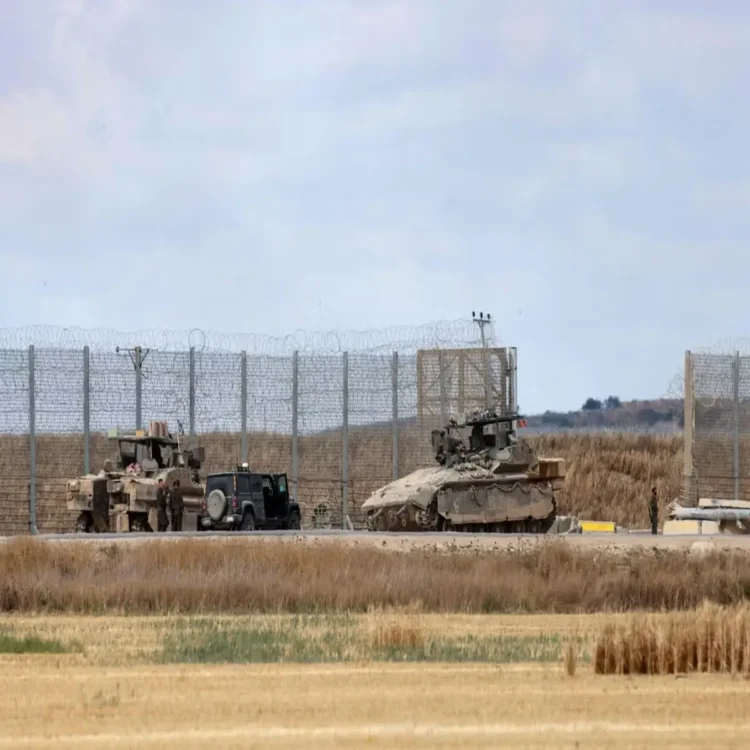
Security – Residents of the southern Syrian town of Abdin faced renewed anxiety after Israeli military forces entered the area, prompting a confrontation that briefly disrupted the village. According to local accounts, people attempted to stop armored vehicles by placing rocks across roads, while several young residents threw stones in an effort to prevent the patrol from advancing. The incident unfolded near the United Nations-monitored buffer zone, an area that has remained highly sensitive since Israeli forces assumed control.
Residents Describe Military Activity
Witnesses said tensions escalated after Israeli troops reportedly fired warning shots into walls and open spaces near protesters before artillery shells landed around the village. Although there were no reports of injuries, many families left their homes as a precaution. By the following day, a significant number of residents had not yet returned, fearing additional military operations in the coming days.
Local resident Mohammad al-Hassan said Israeli patrols have become a regular occurrence in the village. He claimed military vehicles frequently enter residential areas, inspect houses, and force entry into homes if no one responds to knocks at the door. According to him, these visits have created fear among families, particularly women and children, who often panic during such operations.
Israeli Position on the Buffer Zone
Israel maintains that its military presence in southern Syria is necessary to protect its borders from potential attacks by armed groups. Israeli forces moved into the U.N.-patrolled buffer zone in December 2024 after former Syrian President Bashar Assad was removed from power during an insurgent offensive. While officials initially described the deployment as temporary, senior Israeli leaders have since indicated that the military intends to retain control of the area for the foreseeable future.
The expanded deployment is part of Israel’s broader security approach adopted after the October 2023 Hamas-led attacks. Since then, Israeli forces have carried out operations in Gaza, parts of Lebanon, and southern Syria, describing these areas as strategic buffer zones designed to reduce future security threats.
Syrian Government Criticizes Israeli Actions
Syrian interim President Ahmad al-Sharaa has repeatedly urged Israel to withdraw from the territory, which the United Nations identifies as covering approximately 235 square kilometers. Syrian authorities also condemned the reported shelling and military entry into Abdin, calling the operation a violation of Syrian territory.
The confrontation in Abdin followed another security incident reported less than a day earlier. The Israeli military announced that armed individuals had been killed during an operation in southern Syria, though it initially released few details about the event.
Conflicting Accounts of Separate Security Incident
An Israeli military official later stated that two militants suspected of planning an attack against Israeli soldiers had been killed. The official did not disclose the precise location of the operation.
Meanwhile, Imad Hassoun, the mayor of the Syrian village of Hadar, said two unidentified individuals traveling in a pickup truck south of the village died in an attack and that Israeli forces later removed their bodies. He noted that the victims were not local residents and said villagers would have recognized them if they had belonged to the community.
Regarding the events in Abdin, the Israeli military stated that armed militants had opened fire toward one of its positions, adding that no Israeli personnel were injured during the incident.
Border Communities Face Growing Uncertainty
Residents had hoped that talks reportedly mediated by the United States between Israeli and Syrian representatives in France would ease tensions and improve security conditions. However, with little visible progress from those discussions, uncertainty continues to affect daily life across the border region.
Limited employment opportunities, shortages of electricity and water, and ongoing security concerns have encouraged many families to relocate. The nearest Syrian government security checkpoint is around 10 kilometers from Abdin, leaving many residents feeling isolated.
Farmer Sobhi al-Tawlbi said agricultural work has become increasingly difficult because access to farmland and water resources has been disrupted. He appealed for greater government assistance and called on the international community to encourage efforts aimed at reducing military confrontations in the area.
Many people living near the border say they simply want stability after more than a decade of conflict that devastated Syria. Residents continue to express hope that conditions will improve and that they can remain in their communities without the constant fear of renewed violence.