
BRICS – India Showcases Women-Led Development Model at 2026 Chairship Meeting
BRICS – India has begun its BRICS Chairship with a strong emphasis on expanding women-led development through governance, digital inclusion, entrepreneurship, and sustainable growth.
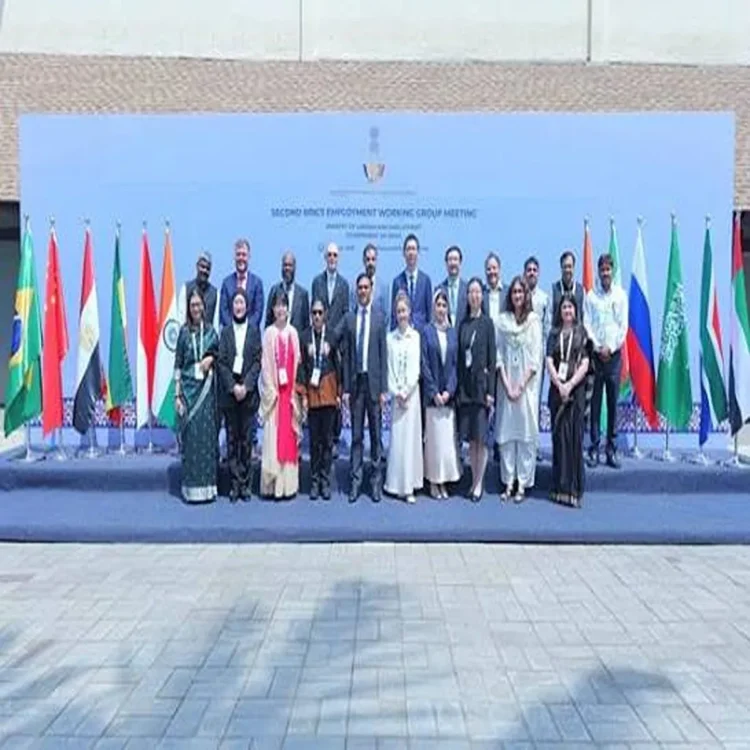
India officially assumed the BRICS Chairship on January 1, 2026, under the theme “Building for Resilience, Innovation, Cooperation and Sustainability.” As part of its agenda, the country is presenting a practical framework focused on women-led development. Rather than highlighting isolated achievements, India aims to demonstrate a governance model that has reached millions of women and can be adapted by other nations according to their own development priorities.
Women-Led Development Becomes a National Priority
Over the past decade, India has steadily expanded policies designed to place women at the center of economic and social development. During its G20 Presidency in 2023, the country promoted the concept of women-led development, encouraging a shift from viewing women only as beneficiaries of welfare schemes to recognizing them as active decision-makers in governance, business, and community leadership. The upcoming BRICS discussions in Kochi will focus on how such large-scale implementation can benefit women across urban and rural regions alike.
Cultural Foundations and Political Representation
India’s approach also reflects its long-standing cultural traditions that recognize women as symbols of strength, wisdom, and prosperity. While these values have historical roots, current policies seek to translate them into greater participation in public life.
Women now make up nearly half of all elected representatives in Panchayati Raj Institutions, creating one of the world’s largest groups of elected women leaders at the grassroots level. The Nari Shakti Vandan Adhiniyam, 2023, further strengthens political participation by providing one-third reservation for women in Parliament and State Legislative Assemblies.
Digital Systems Strengthen Direct Benefits
Technology has played a significant role in improving the delivery of government welfare programmes. Through Digital Public Infrastructure and Aadhaar-linked Direct Benefit Transfers, financial assistance is transferred directly into beneficiaries’ bank accounts, reducing delays and minimizing leakages.
One example is the Pradhan Mantri Matru Vandana Yojana, under which more than 4.26 crore mothers have received maternity assistance exceeding ₹20,060 crore through direct transfers linked to Aadhaar-enabled accounts.
Self-Help Groups Drive Rural Economic Growth
India has also built one of the world’s largest networks of women’s community institutions under the Deendayal Antyodaya Yojana-National Rural Livelihoods Mission (DAY-NRLM). More than 10.05 crore rural women are connected through over 90.90 lakh Self-Help Groups, helping improve financial inclusion, entrepreneurship, and livelihood opportunities.
Many women have also become Business Correspondent Agents, popularly known as BC Sakhis, delivering banking services including deposits, loans, remittances, and pension facilities in remote villages. Their role represents a transition from receiving financial assistance to providing essential financial services within their communities.
Entrepreneurship Expands New Opportunities
Government initiatives continue to encourage women to move beyond traditional livelihoods into entrepreneurship. Under the Lakhpati Didi programme, around 1.48 crore women associated with Self-Help Groups had achieved annual incomes of at least ₹1 lakh by June 2025.
A National Campaign on Entrepreneurship launched in January 2026 aims to train an additional 50 lakh women with support from 50,000 Community Resource Persons. Women also account for nearly 69 percent of loans sanctioned under the Pradhan Mantri Mudra Yojana and 84 percent of beneficiaries under the Stand-Up India scheme. Among more than 2.12 lakh startups recognized by DPIIT, over 1.02 lakh include at least one woman director or partner.
Employment and Climate Participation
Women’s participation in India’s labour force has increased significantly, rising from 23.3 percent in 2017-18 to 41.7 percent in 2023-24, while female unemployment has declined from 5.6 percent to 3.2 percent during the same period. Policymakers are now placing greater emphasis on improving income quality and expanding higher-skilled employment opportunities.
The BRICS women’s agenda also highlights climate resilience, food security, and nutrition. Across different regions of India, women contribute valuable local knowledge in agriculture, water conservation, and environmental management. Programmes such as Mission Poshan 2.0 rely on women-led Anganwadi networks to improve nutrition outcomes, while initiatives like Namo Drone Didi equip women with technical skills to operate agricultural drones, creating new avenues for skilled employment.
Local Products and Global Market Access
India is also promoting women-led enterprises through the One District One Product initiative, which currently covers 1,102 products across 761 districts. Women’s collectives are helping transform traditional crafts, handloom products, GI-tagged goods, and regional food items into branded products with growing export potential.
Support measures, including dedicated retail space at airports under the AVSAR scheme and a separate Government e-Marketplace storefront for women-led enterprises, are intended to improve market access while encouraging sustainable local production.
India to Present Its Development Framework at BRICS
At the BRICS Ministerial Meeting scheduled in Kochi this July, India plans to present its women-led development framework as a practical model based on governance, digital inclusion, financial empowerment, entrepreneurship, and community participation. The country also intends to exchange ideas with fellow BRICS members, learning from their experiences while sharing its own policy framework for inclusive and sustainable development.