
KashmirPolitics – Congress Faces Internal Criticism Over Tharoor’s Srinagar Remarks
KashmirPolitics – Fresh political debate has emerged in Jammu and Kashmir after senior Congress leader and Member of Parliament Shashi Tharoor described recent developments in the Union Territory as signs of encouraging progress toward normalcy following a meeting with Lieutenant Governor Manoj Sinha in Srinagar.
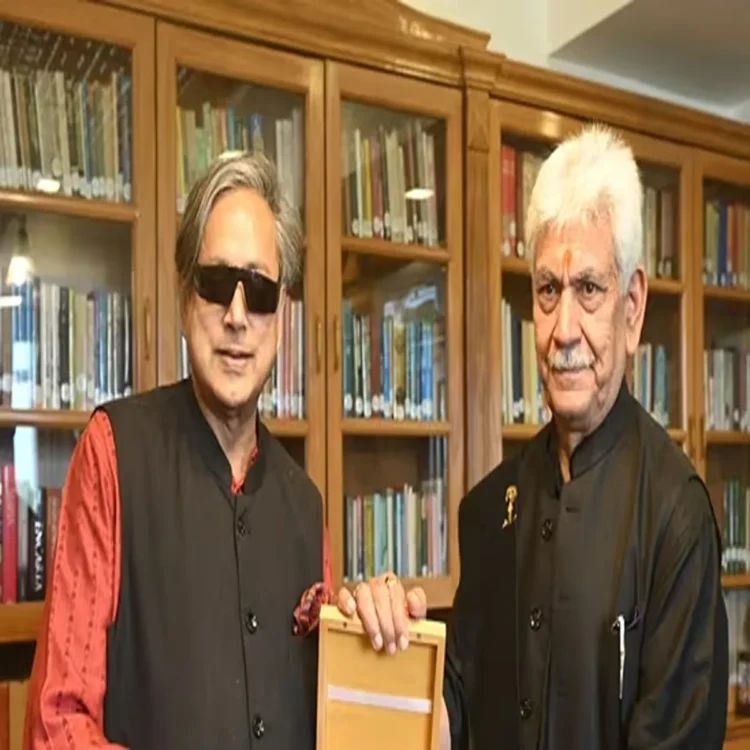
Tharoor’s Remarks After Srinagar Meeting
Tharoor met Lieutenant Governor Manoj Sinha at Lok Bhavan in Srinagar and later shared details of the interaction on social media. He said the discussion focused on the prevailing situation in Jammu and Kashmir and what he viewed as positive movement toward normalcy.
According to Tharoor, the meeting left him with a sense of optimism. He also referred to interactions taking place between the Lieutenant Governor and representatives of local literary and women’s organizations, describing them as constructive outreach efforts. While acknowledging that several challenges remain unresolved, the Congress MP said he departed with a more positive assessment of the situation than he had held in recent months.
Notably, no official statement regarding the meeting was released by the Lieutenant Governor’s office.
Congress Leaders Question Assessment
Tharoor’s observations quickly drew criticism from within his own party in Jammu and Kashmir. Congress spokesperson Ravindra Sharma publicly questioned the MP’s assessment and suggested that a broader engagement with local residents would have provided a clearer understanding of conditions on the ground.
Sharma argued that many people in the region had expected Tharoor to interact not only with government representatives but also with ordinary citizens and party workers. He pointed to the continuing demand for the restoration of statehood and said local Congress members would have welcomed an opportunity to discuss their concerns directly with the parliamentarian.
Student Leader Raises Concerns
Further criticism came from Nasir Khuehami, national convenor of the Jammu and Kashmir Students Association, who expressed disappointment over what he described as a limited engagement during the visit.
Khuehami said many residents had hoped the Congress MP would meet students, unemployed youth, civil society groups, opposition voices and other stakeholders. According to him, such interactions would have provided a broader perspective on the social, political and economic challenges facing the region.
He argued that public representatives should actively seek conversations with people affected by issues such as unemployment, recruitment controversies and delays in examinations. In his view, meaningful political engagement requires listening to a wide range of opinions, including those that may challenge official narratives.
Debate Over the Meaning of Normalcy
Khuehami also questioned the interpretation of “normalcy” in Jammu and Kashmir, saying the term should not be measured solely through administrative indicators or public messaging. He maintained that concerns related to democratic participation, political representation and employment opportunities continue to influence public sentiment in the region.
The student leader stated that many young people remain frustrated by recruitment-related issues and the lack of broader political dialogue. He argued that these matters should form part of any serious assessment of conditions in Jammu and Kashmir.
Calls for Wider Public Engagement
Emphasizing the role of elected representatives, Khuehami said members of Parliament have a responsibility to amplify the concerns of communities that feel unheard. He maintained that effective advocacy begins with direct interaction and careful listening to people affected by ongoing challenges.
The exchange has highlighted differing perspectives on the current situation in Jammu and Kashmir, with supporters of greater engagement arguing that discussions about progress must also include voices from civil society, youth groups and political stakeholders. The debate continues to underline the complex nature of public and political discourse in the region.