
ConflictReport – Global State Conflicts Reach Unprecedented Level Since 1945
ConflictReport – The number of armed conflicts involving governments around the world climbed to its highest level in decades during 2025, according to a new international study released on Tuesday. Researchers reported that last year witnessed more state-related conflicts than any other year since records began following the end of the Second World War. The findings also highlighted a dramatic rise in violence directed at civilian populations, raising concerns among conflict analysts about worsening global instability.
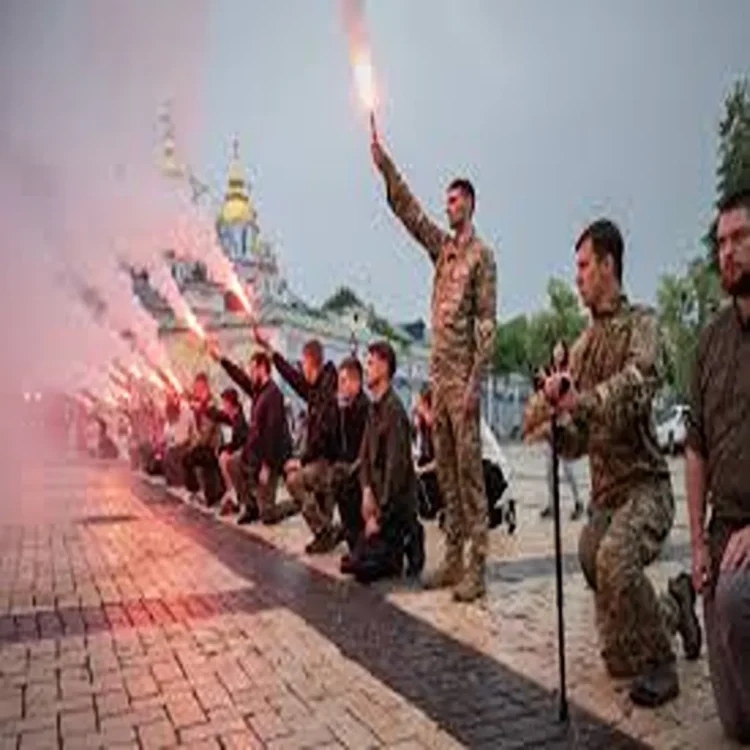
Record Number of State-Based Conflicts
The latest Conflict Trends assessment, published by the Peace Research Institute Oslo (PRIO), documented 65 active conflicts involving at least one state during 2025. Researchers described the figure as the highest recorded since 1946. The report suggests that ongoing geopolitical tensions and regional disputes contributed significantly to the increase.
Interstate confrontations also rose sharply, reaching eight separate conflicts during the year. This represented a substantial jump compared with the previous year. Among the conflicts cited were military tensions between India and Pakistan, border-related clashes involving Afghanistan and Pakistan, disputes between Cambodia and Thailand, Russia’s continuing military campaign in Ukraine, and Israeli military actions targeting locations in Syria.
Researchers Express Concern Over Escalation
PRIO researcher Siri Aas Rustad said the latest figures offered little room for optimism. According to her assessment, the scale and intensity of contemporary conflicts make the current global security environment particularly alarming. She noted that previous years often contained at least some encouraging developments, but the latest data reflected a troubling trend across multiple regions.
The study found that approximately 245,000 people lost their lives due to direct combat or politically motivated violence during 2025. This placed the year among the deadliest periods recorded since the Cold War ended.
Civilian Death Toll Rises Dramatically
One of the report’s most concerning findings was the steep increase in attacks specifically targeting civilians. Around 76,500 civilian deaths were linked to deliberate acts of violence, a significant rise from roughly 14,200 recorded in 2024.
Researchers attributed much of this increase to the ongoing conflict in Sudan. Fighting between the Sudanese military and paramilitary groups intensified, particularly in the Darfur region. The city of El-Fasher experienced prolonged violence, including sieges and mass killings, with estimates suggesting that about 60,000 people may have died as a result.
Multiple Major Wars Driving Global Violence
The report noted that only two years since the end of the Cold War recorded higher levels of bloodshed: 1994, during the genocide in Rwanda, and 2021, when intense fighting occurred in Ethiopia’s Tigray region.
Rustad explained that several large-scale conflicts have been unfolding simultaneously in recent years, creating a sustained period of global instability. Unlike previous eras, where one major conflict might decline before another emerged, recent years have seen overlapping crises continuing at high intensity across different regions.
Africa Remains Most Affected Region
The research relied on data compiled by the Uppsala Conflict Data Program (UCDP), which operates through Uppsala University. The database categorizes organized violence into three areas: conflicts involving states, conflicts between non-state actors, and violence deliberately directed against civilians.
According to the findings, Africa remained the region with the largest number of state-related conflicts, accounting for 29 cases. Asia ranked second, followed by the Middle East, the Americas, and Europe.
Growing Global Polarisation Highlighted
The report also examined broader international developments influencing conflict patterns. Rustad identified Israel as one of the countries heavily involved in multiple conflict arenas, citing military activities linked to Gaza, Syria, Lebanon, Iran, and Houthi forces.
She further argued that increasing geopolitical divisions among major powers are contributing to a more fragmented international environment. Rustad pointed to rising trade barriers and weakening international cooperation, suggesting that institutions designed to manage global disputes are facing increasing challenges. According to her assessment, growing political divisions are making collective responses to international crises more difficult and contributing to a more polarized world order.