
UNReform – India Calls for Broader Security Council Changes to Meet Modern Challenges
UNReform – India has reiterated its demand for comprehensive reforms within the United Nations Security Council, arguing that limited changes made decades ago have failed to address the realities of today’s world. Speaking at the UN General Assembly, India’s Permanent Representative P. Harish said that meaningful reform would require expanding both permanent and non-permanent membership categories rather than relying on minor adjustments.
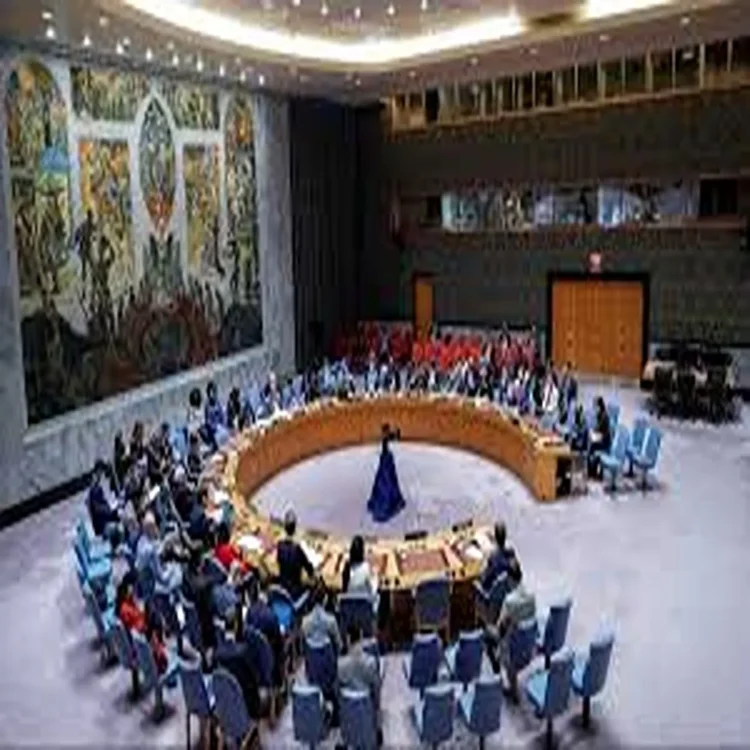
India Pushes for Structural Changes
Addressing discussions on the Security Council’s annual report, Harish stated that the council’s current framework no longer reflects contemporary global realities. According to him, the modest reforms introduced during the 1960s, which only increased the number of non-permanent members, did little to alter the institution’s core functioning or decision-making structure.
He emphasized that any serious effort to modernize the Security Council must include the addition of new permanent members alongside an expansion of non-permanent seats. Such measures, he argued, would help make the body more representative and effective in responding to present and future international challenges.
Legacy Structure Remains Intact
The Security Council continues to operate under a system largely designed in 1945, when the United Nations was established following World War II. At that time, five major Allied powers secured permanent seats and veto authority within the council, creating a power structure that remains unchanged today.
Although a reform in 1965 increased the council’s overall membership from 11 to 15 by adding non-permanent seats, the composition of the permanent members was left untouched. India maintains that this adjustment failed to address broader concerns regarding representation and balance within the organization’s most influential decision-making body.
Growing Global Landscape Raises Representation Questions
Since the UN’s founding, the international landscape has undergone significant transformation. Membership in the organization has expanded from 51 countries in 1945 to 193 member states today. During the same period, several nations, including India, have emerged as major economic and geopolitical players with increasing influence on global affairs.
India argues that the Security Council has not evolved at the same pace as these changes. Concerns over regional representation have also intensified, particularly regarding Africa, which currently lacks permanent representation despite hosting a large number of UN-mandated peacekeeping missions.
Transparency and Accountability Also Highlighted
Apart from advocating institutional reform, India raised concerns about the format of the Security Council’s annual report submitted to the General Assembly. Harish noted that the document should provide deeper analysis of the council’s performance, including areas where improvements may be necessary in fulfilling its responsibility to maintain international peace and security.
He suggested that the report should move beyond procedural summaries and offer a more detailed assessment of the council’s effectiveness, challenges, and operational outcomes.
Need for Better Reporting on Peacekeeping Operations
India also pointed to gaps in the way peacekeeping activities are covered in the annual report. While acknowledging that peacekeeping remains one of the Security Council’s most important tools for maintaining stability, Harish said the current reporting format provides limited information about operational challenges, mandate reviews, and implementation issues.
According to India’s position, more detailed reporting would improve transparency and help member states better understand the effectiveness of ongoing peacekeeping missions and the obstacles they face in conflict zones.
As discussions on UN reform continue, India remains among the countries advocating for a broader restructuring of the Security Council, arguing that a more representative and accountable body is essential for addressing the increasingly complex challenges confronting the international community.