
MonsoonAlert – Red Warnings Issued as Intense Rain Batters Northern Kerala
MonsoonAlert – Heavy monsoon showers continued to affect large parts of Kerala on Saturday, prompting weather authorities to issue the season’s first red alert for several districts in the northern region of the state. The persistent downpour has increased concerns over flooding, landslides, and disruptions to daily life as rainfall activity gains strength.
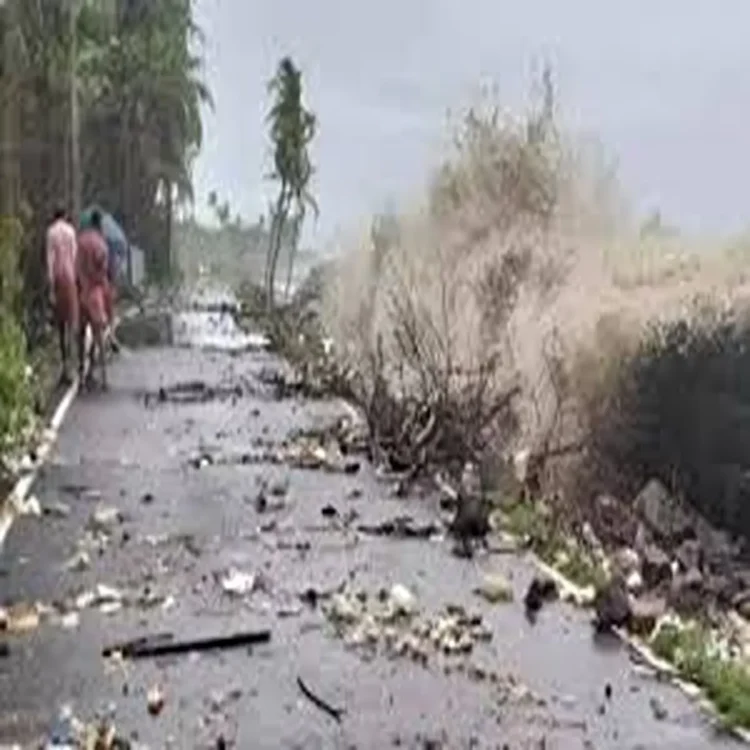
Red Alert Declared in Five Northern Districts
According to the India Meteorological Department (IMD), red alerts have been announced for the districts of Malappuram, Kozhikode, Wayanad, Kannur, and Kasaragod due to the likelihood of extremely heavy rainfall. Weather officials have also indicated that some districts may continue to remain under red alert conditions on Sunday as the monsoon system remains active.
Meanwhile, orange alerts have been placed in Idukki, Thrissur, Ernakulam, Kottayam, Palakkad, and Pathanamthitta, signaling the possibility of very heavy rain. Alappuzha, Kollam, and Thiruvananthapuram are currently under yellow alert, with authorities advising residents to stay informed about changing weather conditions.
Strong Winds Cause Localized Damage
The strengthening monsoon has already led to several weather-related incidents across Kerala. In Kozhikode city, powerful winds accompanied the rain during the morning hours, resulting in trees being uprooted at multiple locations. Emergency teams were deployed to clear affected areas and restore normal movement where required.
Officials continue to monitor the situation closely as strong winds and continuous rainfall increase the risk of infrastructure damage and transportation disruptions.
Authorities Issue Precautionary Measures
With weather conditions becoming increasingly severe, state authorities have released a series of safety instructions aimed at minimizing risks to residents. People residing in areas vulnerable to landslides, mudslides, and sudden flooding, particularly in hilly regions, have been advised to move to safer locations during daylight hours.
Residents living in low-lying areas that frequently experience waterlogging have also been encouraged to relocate to designated relief shelters if necessary. Disaster management teams remain on alert across the state to respond quickly to emergencies.
Public Advised to Avoid Risk-Prone Locations
Officials have strongly discouraged people from entering rivers, lakes, and other water bodies during periods of heavy rainfall. Activities such as swimming, fishing, and crossing overflowing streams are considered particularly dangerous under current conditions.
The public has also been urged to postpone visits to waterfalls, hill stations, trekking routes, and other tourist destinations until weather conditions improve. Sudden increases in water levels and unstable terrain can pose serious safety hazards during intense monsoon spells.
Riverbank Residents Asked to Stay Vigilant
The Central Water Commission has advised communities living near riverbanks to remain alert as water levels may rise rapidly following continuous rainfall. Authorities have warned motorists and commuters to exercise caution while travelling through areas located near water bodies.
Special attention has also been drawn to roads where falling trees, weakened branches, or damaged electrical lines may create additional risks during storms. Local administrations are coordinating with emergency services to ensure a quick response wherever needed.
Emergency Support Available Round the Clock
To assist residents facing weather-related emergencies, 24-hour control rooms have been activated. People requiring immediate help can contact emergency helpline numbers 1077 and 1070, which remain operational throughout the day and night.
Importance of the Monsoon Season
Kerala traditionally serves as the gateway for the southwest monsoon, marking the beginning of India’s crucial four-month rainy season. The performance of the monsoon plays a significant role in shaping agricultural output, rural livelihoods, food supply trends, and broader economic activity.
A substantial portion of India’s farmland relies on seasonal rainfall rather than irrigation systems. As a result, the intensity, timing, and distribution of monsoon rains remain critical factors influencing crop production and overall economic growth across the country.