
WaterQuality – Rising Pollution Threatens Health and Ecosystem of Godavari Tributary
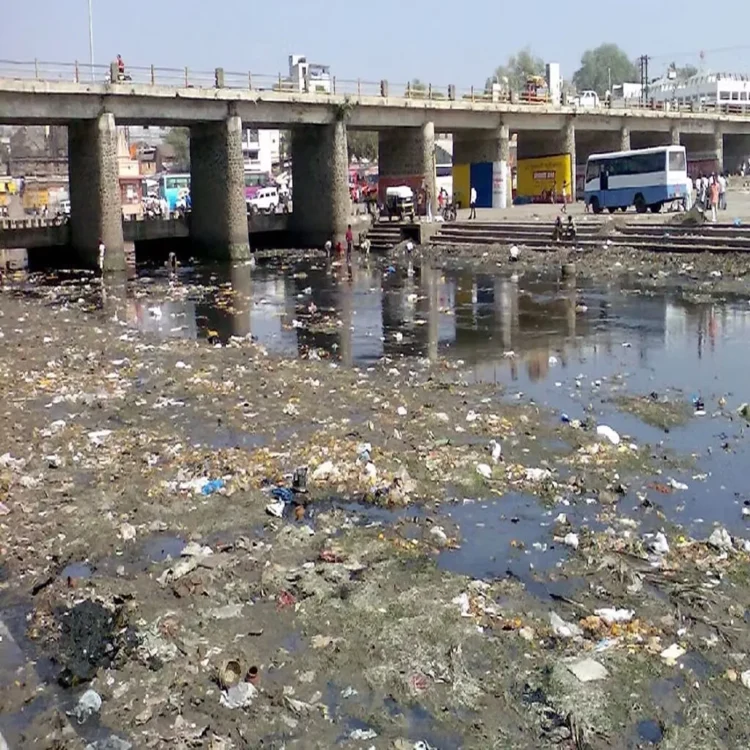
aterQuality – Growing concerns are being raised over the declining condition of a key water channel connected to the Vasista Godavari River in Andhra Pradesh’s West Godavari district after recent findings highlighted severe pollution and potential health hazards. The issue drew wider attention after Deputy Chief Minister Pawan Kalyan voiced concern about the contamination, cautioning that people visiting the river for religious purposes could face health risks if exposed to polluted water.
Study Reveals Multiple Water Quality Violations
A scientific assessment conducted by YN College in Narasapuram found that several crucial water quality indicators were far beyond acceptable standards. The study recorded turbidity levels at 16.8 mg per litre, exceeding the recommended limit of 10 mg per litre. Similarly, Total Dissolved Solids (TDS) reached an alarming 20,746 mg per litre, which is more than ten times higher than the permissible threshold of 2,000 mg per litre.
Researchers also found water hardness at 4,402 mg per litre, significantly surpassing the accepted limit of 600 mg per litre. These findings indicate substantial deterioration in water quality and raise concerns about its suitability for human use without proper treatment.
Chemical Contaminants Raise Additional Concerns
The report highlighted elevated concentrations of several chemical elements. Magnesium levels were measured at 937 mg per litre, nearly nine times above the accepted limit. Chloride content reached 7,206 mg per litre, far exceeding the standard limit of 1,000 mg per litre.
Iron concentrations were recorded at 0.189 mg per litre, while aluminium levels stood at 0.623 mg per litre. Experts noted that prolonged exposure to such contaminated water could create challenges for both environmental sustainability and public health.
Presence of Harmful Microorganisms Detected
Environmental specialists and healthcare professionals expressed concern over the discovery of disease-causing microorganisms in the water. Among the contaminants identified was E. coli, a bacterium commonly associated with waterborne illnesses.
According to experts, the presence of such microorganisms increases the possibility of infections and other health complications, particularly for individuals who come into direct contact with the river water during religious activities or daily usage.
Untreated Wastewater Identified as Major Source
Specialists attribute much of the pollution to the continuous release of untreated sewage and the dumping of solid waste along the riverbanks. Narasapuram currently receives around 9 million litres of drinking water every day. However, the town reportedly lacks a dedicated sewage treatment facility.
As a result, nearly 3 million litres of wastewater are believed to be entering the Vasista Godavari system daily without adequate treatment. Environmental observers warn that this practice not only threatens public health but also impacts aquatic life and the long-term sustainability of the river ecosystem.
Authorities Recommend Immediate Action
Speaking on the issue, Andhra Pradesh Pollution Control Board Executive Engineer A. Seetharamachandra Murthy said the department has proposed the establishment of sewage treatment plants in Palakollu, Narasapuram, Bhimavaram and Tanuku. The projects are intended to reduce pollution entering regional water bodies.
He explained that the responsibility for implementing these facilities rests with local urban authorities. Financial assistance may be available through Central Government programmes, including the AMRUT scheme, to support the development of the required infrastructure.
Water Requires Treatment Before Consumption
Murthy stated that the present condition of the river makes the water unsuitable for direct consumption without proper purification. He also explained the broader drainage network in the region, noting that agricultural runoff carried by the Gostani Drain merges with the Yanamadurru Drain before eventually reaching Upputeru and flowing into the Bay of Bengal.
Experts stress that coordinated efforts involving local administrations, environmental agencies and public participation will be necessary to restore water quality and safeguard one of the region’s most significant river systems.