
Cricket – Randhir Singh Remembered as Pioneer of Indian Shooting Administration
Cricket – Veteran Indian sports administrator Randhir Singh, widely regarded as one of the most influential figures in Indian Olympic history, passed away in New Delhi on Wednesday at the age of 79 after prolonged health complications. His death marks the end of a decades-long association with Indian and Asian sports administration, particularly in the field of shooting.
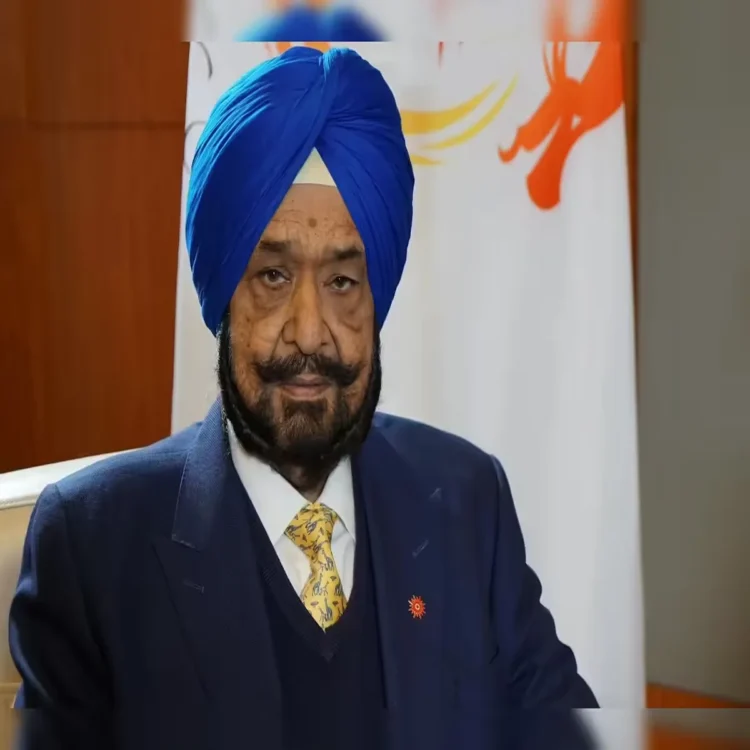
Singh had reportedly been under medical care for several days before he died at his residence. He is survived by his wife Vinita and daughters Mahima, Sunaina and Rajeshwari Singh, who has also represented India in shooting competitions at the international level.
Long Association With Asian Olympic Movement
In recent months, Singh had stepped down from his role as President of the Olympic Council of Asia due to declining health. He had taken charge of the continental body in 2024 for a four-year tenure after previously serving as its Secretary General for more than two decades between 1991 and 2015.
Throughout his administrative career, Singh remained deeply involved in the Olympic movement across Asia. His experience and ability to maintain working relationships across sporting bodies made him one of the most respected voices in international sports governance.
The National Rifle Association of India expressed grief over his passing and described him as a major force behind the growth of shooting sports in the country. NRAI Secretary Rajiv Bhatia said Singh’s contribution to Indian sports administration and the Olympic ecosystem would always be remembered by athletes and officials alike.
Historic Asian Games Achievement
Apart from his work as an administrator, Singh also enjoyed a successful competitive career in shooting. He became India’s first Asian Games gold medallist in shooting after winning the trap event at the 1978 Bangkok Asian Games. The achievement brought him national recognition and later earned him the Arjuna Award in 1979.
His Olympic journey stretched across multiple editions of the Games. Singh was associated with the Indian contingent at the Tokyo Olympics in 1964 as a reserve shooter and later represented the country in Mexico City, Munich, Montreal, Moscow and Los Angeles.
At a time when shooting infrastructure in India was still developing, Singh emerged as one of the few Indian athletes competing consistently on the world stage. His performances helped bring greater visibility to the sport during the 1970s and 1980s.
Influential Role in Indian Sports Governance
Singh’s administrative influence extended far beyond shooting. He served as Secretary General of the Indian Olympic Association from 1987 to 2010, a period during which Indian sports underwent several organisational changes.
He also held positions within the International Olympic Committee between 2001 and 2014 in different capacities. In 2003, he was appointed as the IOC representative to the World Anti-Doping Agency, reflecting the trust placed in him by the international sporting community.
Sports officials often viewed Singh as a consensus-builder who could navigate the complicated and frequently divided structure of Indian sports administration. His calm approach and understanding of Olympic systems earned him respect both in India and abroad.
Royal Lineage and Sporting Family Legacy
Born into the Patiala royal family, Singh was a descendant of Maharaja Bhupinder Singh, who was also associated with Indian cricket. Despite his royal background, Singh built his own identity through sport and administration.
His contribution to Indian shooting continues through his daughter Rajeshwari Singh, who has won medals at major international events, including a silver medal at the 2022 Asian Games and a gold medal at the 2016 Asian Shooting Championships.
Several former athletes, administrators and sports organisations paid tribute to Singh following news of his death, acknowledging his role in shaping modern Indian shooting and strengthening India’s standing in Asian sports administration.