
CauveryDispute – Supreme Court Rejects Tamil Nadu Review Plea in Mekedatu Matter
CauveryDispute – The Supreme Court has refused to reconsider its earlier ruling in the long-running Mekedatu dispute, dealing another setback to the Tamil Nadu government in its legal challenge against Karnataka’s proposed reservoir and drinking water project on the Cauvery River.
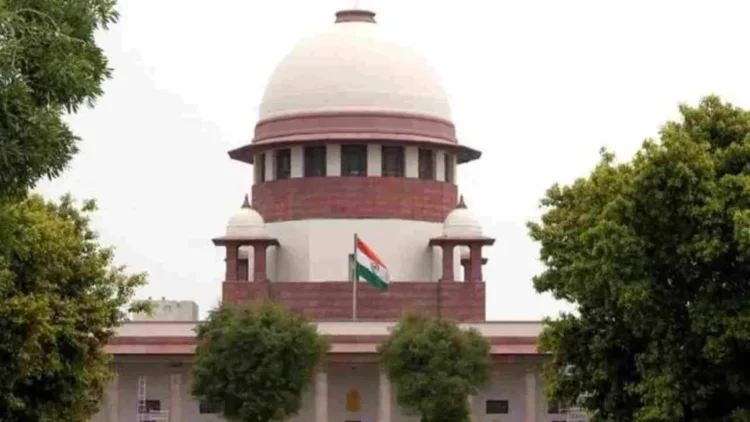
Court Declines Review Petition
A three-judge bench led by Chief Justice Surya Kant dismissed the review petition filed by the Tamil Nadu government, stating that there were no valid reasons to reopen the judgment delivered on November 13, 2025. The bench also rejected a separate request seeking an open court hearing instead of proceedings conducted in judges’ chambers.
In its order dated May 21, 2026, the court stated that it had carefully examined the submissions and supporting documents placed before it. After reviewing the material, the bench concluded that the petition did not present sufficient grounds for reconsideration of the earlier verdict.
The order further clarified that all related pending applications connected to the matter would also stand disposed of following the dismissal of the review plea.
Background of the Mekedatu Project Dispute
The legal dispute traces back to 2018, when the Tamil Nadu government approached the apex court challenging permission granted by the Central Water Commission to Karnataka Cauvery Neeravari Nigam Limited. The approval allowed the Karnataka government undertaking to prepare a Detailed Project Report for the proposed Mekedatu Balancing Reservoir and Drinking Water Project.
Tamil Nadu had sought an immediate stay on the approval issued on November 22, 2018. It also requested directions to the Central Water Commission under the Ministry of Water Resources to withdraw the communication granting clearance for preparation of the project report.
The proposed project has remained politically and legally sensitive because it concerns the sharing and management of Cauvery river water between Karnataka and Tamil Nadu, two states that have witnessed prolonged disputes over water allocation for decades.
Earlier Supreme Court Observation
The Supreme Court had already dismissed Tamil Nadu’s original petition in November 2025. At that time, the bench observed that Karnataka intended to build a dam across the Cauvery River at Mekedatu as part of a balancing reservoir and drinking water initiative.
The court had then noted that Tamil Nadu’s challenge was based on what it described as a misunderstanding of the legal position, pointing out that the issue was already under examination by an expert committee constituted to study the matter.
The bench had also emphasized that states are entitled to utilize water allocated to them according to their own administrative and developmental priorities. However, it added that interference by another state could arise only if the quantity of water legally allotted to it was adversely affected.
Tamil Nadu’s Argument in Review Plea
Seeking reconsideration of the ruling, the Tamil Nadu government filed a review petition in December 2025. The state argued that neither the Cauvery Water Disputes Tribunal award nor the Supreme Court’s 2018 judgment validating the tribunal’s allocation had granted approval for the Mekedatu project.
According to Tamil Nadu, the November 2025 judgment contradicted earlier legal findings related to the Cauvery water-sharing arrangement and therefore required judicial review.
The review matter was later scheduled before Chief Justice Surya Kant along with Justices K. Vinod Chandran and Vipul M. Pancholi in April 2026.
Plea for Open Court Hearing Rejected
Ahead of the scheduled proceedings, counsel representing the Tamil Nadu government filed an application requesting that the matter be heard in open court instead of through chamber proceedings.
However, the Supreme Court declined that request as well. In its final order, the bench made it clear that there was no justification either for an open court hearing or for revisiting the previous judgment delivered in the case.
The latest ruling effectively closes the review proceedings for now, while the broader Mekedatu project debate is expected to continue at administrative and political levels due to its significance in the ongoing Cauvery river water-sharing issue.