
Mekedatu Project – Supreme Court Rejects Tamil Nadu Review Plea Again
Mekedatu Project – The Supreme Court has dismissed a review petition filed by the Tamil Nadu government in connection with the Mekedatu reservoir dispute, while also refusing its request for the matter to be heard in open court instead of judges’ chambers.
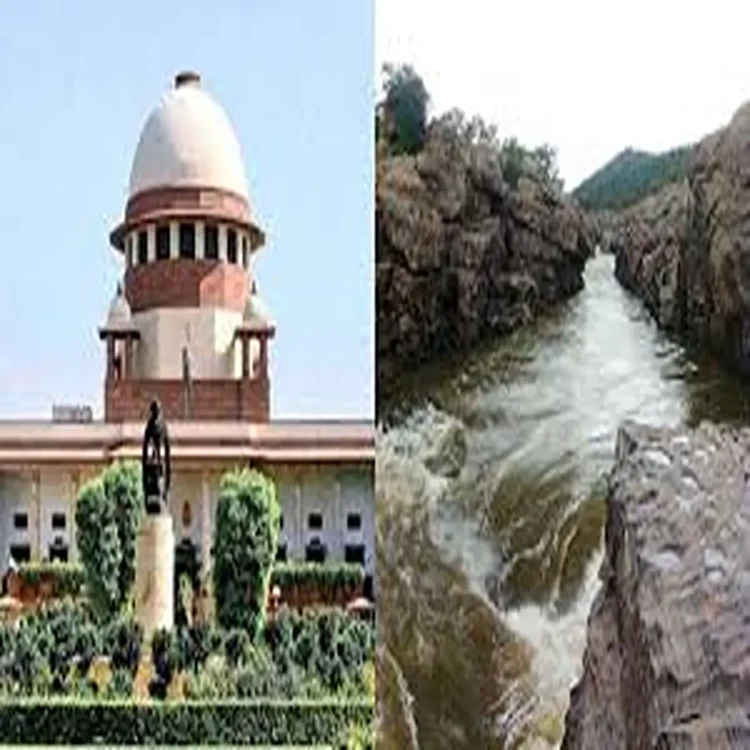
The decision was delivered by a three-judge bench led by Chief Justice Surya Kant. The bench concluded that the petition did not present adequate grounds to reconsider the court’s earlier ruling issued on November 13, 2025. Along with dismissing the review petition, the court also disposed of all related pending applications linked to the matter.
Background of the Mekedatu Dispute
The legal dispute traces back to 2018, when the Tamil Nadu government approached the Supreme Court challenging the approval granted by the Central Water Commission to Karnataka Cauvery Neeravari Nigam Limited. The approval allowed the Karnataka-based agency to prepare a Detailed Project Report for the proposed Mekedatu Balancing Reservoir and Drinking Water Project across the Cauvery River.
Tamil Nadu had sought an immediate stay on the permission issued on November 22, 2018. It also requested the court to direct the Central Water Commission under the Ministry of Water Resources to withdraw the approval letter granted to the Karnataka undertaking.
According to Tamil Nadu, the proposed project raised concerns regarding the management and distribution of Cauvery river water among the basin states.
Earlier Supreme Court Observations
The Supreme Court had already dismissed Tamil Nadu’s original petition in November 2025. While delivering that judgment, the bench observed that Karnataka intended to construct a balancing reservoir and drinking water project at Mekedatu on the Cauvery River.
The court had stated that Tamil Nadu’s objections were based on a misunderstanding because the issue was already under examination by an expert committee assigned to evaluate the project and its implications.
The bench further clarified that each state possesses the authority to utilise water allocated to it according to its own requirements. At the same time, the court added that intervention by another state would become relevant only if the allocated share of water to that state was adversely affected.
Tamil Nadu’s Review Petition
Following the November 2025 verdict, the Tamil Nadu government filed a review petition before the Supreme Court on December 11, 2025. The state argued that neither the Cauvery Water Disputes Tribunal award nor the Supreme Court’s earlier 2018 judgment had granted approval for the Mekedatu project.
Tamil Nadu contended that the November 2025 judgment conflicted with earlier judicial findings related to the Cauvery dispute. On that basis, the state requested the apex court to reconsider its previous decision.
The review petition was later scheduled for consideration before Chief Justice Surya Kant and Justices K. Vinod Chandran and Vipul M. Pancholi in chamber proceedings on April 15, 2026.
Plea for Open Court Hearing Rejected
Before the review petition came up for consideration, counsel representing the Tamil Nadu government submitted a separate application seeking an open court hearing instead of a chamber review process.
The application was filed on April 13, 2026, arguing that the matter involved significant public importance and therefore deserved detailed hearing in open court.
However, in its final order dated May 21, 2026, the Supreme Court declined the request. The bench stated that it had thoroughly examined the review petition along with the documents placed on record and found no valid reason to reopen or reconsider the earlier judgment.
The court reiterated that the petition failed to establish sufficient legal grounds warranting a review of the November 13, 2025 order. As a result, both the plea for an open court hearing and the review petition itself were rejected.
The ruling marks another important development in the long-running Cauvery river dispute involving Karnataka and Tamil Nadu, particularly concerning the proposed Mekedatu reservoir project and interstate water management issues.